BEN-TO: WHEN ECONOMIC SURVIVAL MEETS SYSTEMATIC COMPETITION PSYCHOLOGY
Before you read another word, answer these questions honestly:
What economic competitions are you approaching through random effort instead of systematic strategy?
How does your avoidance of competitive psychology limit your survival capability in scarcity situations?
When resources become scarce, do you have a system—or just hope?
What would systematic advantage development look like in your most competitive environment?
Five years from now, when you look back at this moment, will you be grateful you developed competitive strategy—or regretful you relied on random effort?
What up world, Xavier Savage here from xperformancelab.com.
Competition without systematic strategy creates chaos. Competition WITH strategic economic understanding creates Ben-To—proof that authentic survival requires understanding scarcity psychology rather than random conflict or convenient resource distribution.
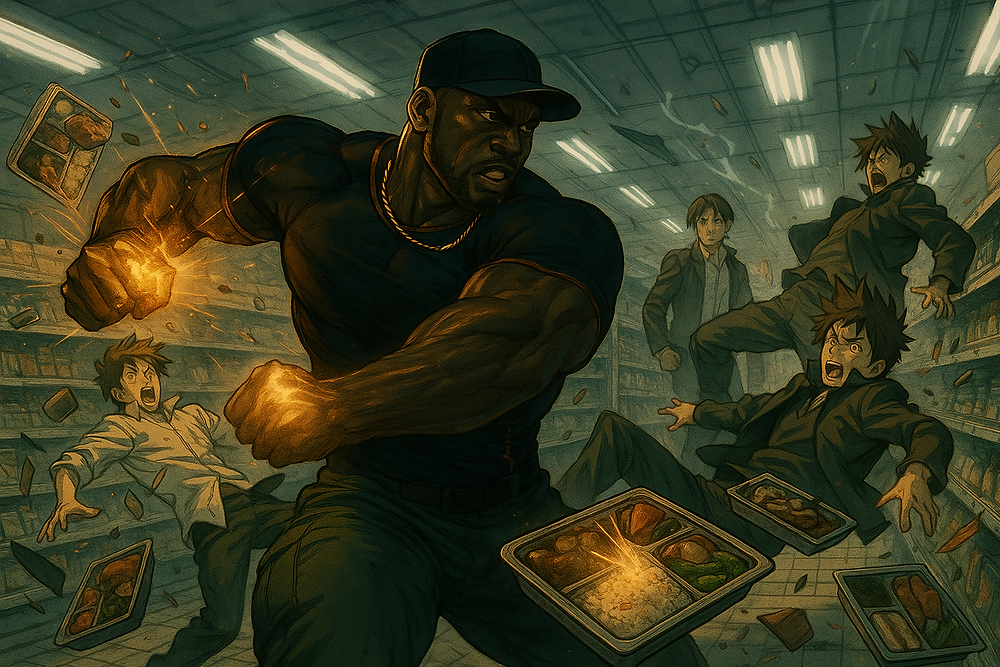
I’m analyzing why this anime serves as unexpected masterclass in scarcity economics and systematic competitive psychology. While most people dismiss Ben-To as silly comedy, it actually demonstrates how authentic economic survival operates through strategic competition when resources become scarce and competitive pressure intensifies.
Your body is your first kingdom. Your competitive strategy is your first economic weapon. Most people enter competitions randomly and wonder why they lose systematically. Ben-To shows the alternative.
THE XPL ENERGY TIER FRAMEWORK
This post is for Level III readers. If you’re still approaching competition randomly, this analysis will expose your gaps.
XPL PERSPECTIVE FRAMEWORK
BEN-TO RATING BREAKDOWN
Story/Plot Development: Level III: Execution (🛠️🛠️🛠️/5)
Ben-To constructs its discount bento battle narrative like systematic exploration of scarcity economics through resource competition. Each battle examines different aspects of how economic survival requires strategic advantage development rather than random conflict.
What the series understands:
-
Scarcity creates automatic competition
-
Competition without system is just chaos
-
Those who understand the rules win consistently
-
Those who don’t lose consistently—and never know why
The “wars” over half-price bento boxes aren’t comedy—they’re competitive economics scaled down to digestible size. Every principle that applies in markets, industries, and careers applies in the supermarket at 8 PM.
XPL Performance Physics: Law 3—Systems Beat Intensity Over Time. The wolves who win bento battles aren’t the hungriest or strongest. They’re the ones who understand the system—timing, positioning, psychology, tactics.
Savage Command: “Every competition has a system. Learn it or lose by it.”
Character Development: Level III: Execution (🛠️🛠️🛠️/5)
Sato’s evolution demonstrates how authentic competitive capability requires systematic understanding of scarcity psychology rather than random fighting.
His arc:
Phase 1—Naive Entry: He stumbles into a bento war ignorant of rules, customs, or strategy. He loses immediately and violently.
Phase 2—Forced Learning: He discovers there’s an entire hidden world of competitive structure. The wolves aren’t crazy—they’re organized.
Phase 3—Systematic Development: He studies the rules, observes the veterans, learns the psychology, develops his own approach.
Phase 4—Integration: He becomes a recognized competitor, not through raw ability, but through understanding how the competition actually works.
Phase 5—Mastery Potential: By the end, he’s not just competing—he’s contributing to the system, teaching others, becoming part of the structure.
XPL Performance Physics: Law 2—Identity Precedes Outcome. Sato had to become someone who understood competition before he could win consistently. The identity shift enabled the capability.
Identity Mirror: What competitions are you entering without understanding the system? What identity do you need to become to win?
Animation/Fight Quality: Level III: Execution (🛠️🛠️🛠️/5)
David Production delivers competitive combat that serves economic themes rather than action spectacle. Fight sequences demonstrate strategic competition rather than random violence.
What the fights communicate:
-
Every competitor has a style reflecting their strategy
-
Victory comes from understanding, not just power
-
The system rewards those who respect it
-
Chaos benefits no one long-term
Training translation: This is what competition looks like when participants understand the game. Not random brawling—structured conflict with rules, customs, and consequences.
The Chain doesn’t negotiate. Neither should your competitive strategy.
Overall Impact/Rewatchability: Level III: Execution (🛠️🛠️🛠️/5)
Ben-To rewards analysis like studying competitive psychology rewards economic understanding. Multiple viewings reveal competition strategies that surface watchers miss.
What rewatching reveals:
-
Early cues about who understands the system
-
Strategic layers in seemingly random battles
-
Character development through competitive evolution
-
The hidden rules that govern every interaction
Savage Command: “Study what rewards rewatch. Competitive principles compound; random conflict fades.”
🔥 FULL ASSAULT: SYSTEMATIC EXCELLENCE VS. POPULAR TRASH
💀 Nuclear Option:
Ben-To accomplishes what most economic anime fail at: presenting authentic scarcity competition that requires systematic understanding rather than random conflict.
The competition mechanics the series exposes:
Principle 1—Scarcity creates automatic structure.
Wherever resources are limited and demand exceeds supply, competition emerges. Not as choice—as inevitability. The bento boxes are scarce; therefore, there will be war.
Principle 2—Competition generates its own rules.
The wolves didn’t decide to have a system. The system emerged from repeated competition. Those who survived developed customs, hierarchies, and protocols that reduced chaos and increased predictability.
Principle 3—Rule-followers outperform rule-breakers.
Newcomers who ignore the customs lose consistently. The system rewards those who learn it, not those who fight it. This isn’t about obedience—it’s about understanding the actual game.
Principle 4—Positioning beats power.
The strongest fighter doesn’t always win. The one who positions best—closest to the shelves, fastest to react, most aware of timing—wins consistently. Strategy beats raw capability.
Principle 5—Reputation is currency.
Wolves with established reputations win before fighting. Newcomers must prove themselves. Reputation compounds advantage over time.
Compare this to typical competition narratives:
-
Underdog magic: The newcomer wins through heart, not understanding
-
Raw power solves everything: Strength trumps strategy
-
Rules are obstacles: Breaking rules is rebellion, not stupidity
-
Competition is negative: The goal is to eliminate competition, not understand it
Ben-To refuses every convenience. Competition is real, rules exist for reason, and understanding the system is the only path to consistent victory.
The Mirror: What economic competitions are you approaching through random effort instead of systematic strategy?
The Chain: Your avoidance of competitive psychology limits your survival capability. Break the pattern.
⚡ DEEP CUT: CHARACTER DEVELOPMENT PSYCHOLOGY
Sato: The Everyman Learning the System
Sato represents what happens when someone discovers competition has rules they never imagined.
His psychology entering:
-
Assumes competition is random
-
Thinks victory comes from desire
-
Believes fairness is built-in
-
Has no concept of competitive systems
The shattering:
His first bento war destroys every assumption. He’s not just beaten—he’s annihilated without understanding how. The wolves don’t just win; they operate at a level he can’t perceive.
The learning curve:
Observation: He watches. He notices patterns—who positions where, when they move, how they interact.
Questioning: He asks veterans. Most won’t explain, but some drop hints about the unwritten rules.
Practice: He enters battles not to win, but to learn. Each loss teaches something new.
Integration: He develops his own style based on understanding, not imitation.
Contribution: Eventually, he becomes someone who helps others learn—completing the cycle from ignorant to integrated.
XPL Performance Physics: Law 4—Recovery Drives Adaptation. Sato grows between battles, processing what he learned, adjusting his approach. The competition provides pressure; the reflection provides growth.
Identity Mirror: What systems are you trying to learn without observation, questioning, practice, and reflection?
The Wolves: Different Competitive Archetypes
The veteran wolves represent different competitive strategies that Ben-To uses to explore economic psychology.
The Strategist (Sen):
Wins through positioning and timing. Understands the system completely and exploits every advantage. Rarely needs to fight because positioning makes victory inevitable.
Lesson: The best competition is won before it starts.
The Brawler (Monar):
Wins through overwhelming presence. Less strategic, more intimidating. Relies on reputation and force rather than positioning.
Lesson: Raw power works until you meet someone who understands the system better.
The Specialist (Ume):
Wins through technique and precision. Has developed specific skills that create advantage in particular situations. Less flexible but devastating in her element.
Lesson: Specialization creates advantage in specific contexts. Know your context.
The Veteran (Ayame):
Wins through experience and adaptability. Has seen everything, adapted to everything, survived everything. Can shift strategies based on situation.
Lesson: Experience compounds. Those who survive long enough learn everything.
XPL Application: Your competitive environment contains all these archetypes. Which are you? Which do you need to become?
⚡ DEEP CUT: WORLD-BUILDING & SYSTEMS THINKING
The Supermarket as Economic Laboratory
Ben-To constructs its supermarket setting like systematic competition laboratory where economic survival requires strategic advantage rather than random conflict.
The environment’s structural elements:
Fixed timing: Half-price stickers appear at predictable times. Those who know the schedule win. Those who don’t lose before arriving.
Limited supply: Only so many bento boxes exist. Scarcity is real and non-negotiable. No amount of desire creates more product.
Competitive density: Multiple wolves compete for the same resources. The ratio of competitors to resources determines intensity.
Spatial dynamics: Shelf positioning, store layout, entrance locations—all create advantages for those who understand them.
Social hierarchy: Veterans have preferred positions. Newcomers must earn the right to compete from advantageous spots.
XPL Application: Every competitive environment has these structural elements. Markets have timing (economic cycles). Resources have limits (supply constraints). Competitors have density (industry saturation). Space has dynamics (geographic advantage). Hierarchy exists (incumbency advantage).
Savage Command: “Study your competitive environment like a supermarket. The structure is there whether you see it or not.”
The Unwritten Rules
Ben-To‘s genius is making explicit what usually remains implicit—the unwritten rules that govern all competition.
Rule 1—Don’t interfere with active battles.
When two wolves are competing, others wait their turn. Interference invites collective response. This is mutual deterrence—everyone benefits from order, so everyone enforces it.
Rule 2—Respect hierarchy.
Veterans have priority in positioning. Newcomers who challenge without earning the right face unified opposition. Hierarchy reduces conflict by establishing who competes when.
Rule 3—Victory must be earned.
No shortcuts. No deals. No bypassing the competition. The system only works when everyone plays by the same rules.
Rule 4—Losers learn or leave.
Those who lose repeatedly eventually stop competing. The system self-selects for those who understand it. This isn’t cruelty—it’s efficiency.
Rule 5—The system serves everyone.
Wolves protect the system because the system protects them. Without rules, competition becomes chaos where no one wins consistently. Order benefits all participants.
XPL Performance Physics: Law 7—Accountability Structures Determine Execution Rates. The unwritten rules create accountability. Violators face consequences. The system works because everyone enforces it.
Savage Command: “Every competition has unwritten rules. Learn them before you break them.”
🔍 SURFACE SCAN: TRAINING/STRATEGY PHILOSOPHY
Ben-To demonstrates how economic survival in competitive environments requires specific capabilities that casual participants never develop.
What the series teaches about competitive strategy:
1. Understand the actual game.
Most competitors mistake surface activity for the real competition. The bento battle isn’t about fighting—it’s about positioning, timing, and awareness. The fighting is just what happens when positioning fails.
Application: In your industry, what’s the real competition? Not the obvious one—the underlying game that determines who wins before the visible contest starts.
2. Position before you compete.
The wolves who win consistently aren’t the best fighters—they’re the ones in the right place at the right time. Positioning creates victory before engagement.
Application: Where are you positioned in your competitive environment? Are you in locations that create advantage, or are you fighting from劣势 every time?
3. Timing is strategy.
Half-price time is predictable. Those who know it win. Those who don’t lose. Simple as that.
Application: What timing patterns govern your competition? When do opportunities appear? When do competitors weaken? When should you strike?
4. Reputation compounds.
Veteran wolves win before fighting because newcomers know they’ll lose. Reputation is accumulated advantage that requires no energy to deploy.
Application: What reputation are you building? Does it make future competition easier or harder?
5. The system rewards system-respecters.
Wolves who protect the rules benefit from the rules. Those who break rules face collective enforcement. The system isn’t your enemy—it’s your tool if you understand it.
Application: Are you fighting your competitive system or learning to use it? One approach leads to consistent loss; the other leads to consistent advantage.
XPL Performance Physics: Law 3—Systems Beat Intensity Over Time. The wolves who understand the bento system win consistently with less effort than those who fight it randomly.
Savage Command: “Train for your actual competitive environment, not the one you wish existed.”
🔥 FULL ASSAULT: LEGACY & IMPACT
💀 Nuclear Option:
Ben-To influenced how anime portrays competition by showing that even absurd conflicts have structure, rules, and psychology worth studying.
What it accomplished:
Demystified competition: Showed that every competitive environment generates its own logic. Understanding that logic is the only path to consistent victory.
Normalized systematic thinking: Presented strategy as accessible, not elite. Anyone can learn the rules; most just don’t bother.
Demonstrated scarcity psychology: Made explicit what economics teaches implicitly—scarcity creates competition, competition creates structure, structure rewards understanding.
Respected the audience: Trusted viewers to recognize depth beneath surface comedy. Those who dismiss Ben-To as silly miss everything; those who study it learn something.
The influence:
Later series incorporated competitive psychology elements, showing that understanding systems matters more than raw capability. Food Wars!, Kakegurui, even elements of Classroom of the Elite build on foundations Ben-To helped establish.
Savage Command: “Build authentic economic survival capability through systematic competition, not random conflict.”
The Throne: Most people who dismiss Ben-To as “silly comedy” are revealing their inability to recognize systematic competition psychology. They prefer random conflict because it requires no learning. Which are you?
THE MASTERY SYMBOLS
🔗 The Chain: Your competitive understanding connects to your survival capability. Weak understanding, weak survival. Strong understanding, strong survival.
🪞 The Mirror: When you watch Sato learn the system, do you see any reflection of your own competitive education? What systems are you still fighting instead of learning?
👑 The Throne: How will you develop systematic competitive advantage in your most important competitions?
FINAL STRATEGIC ASSESSMENT
Ben-To asks questions most narratives avoid:
What if competition has rules you don’t see? Not hidden rules, but emergent rules—structures that arose from repeated interaction and now govern everything.
What if your losses aren’t random? What if you’re losing consistently because you refuse to learn the system?
What if understanding the game matters more than playing hard?
What if the absurd comedy contains more economic truth than serious dramas?
Savage Command: “Build authentic economic survival capability through systematic competition and strategic advantage development.”
Savage Command: “Develop competitive psychology understanding that serves systematic advantage rather than random effort.”
Savage Command: “Choose systematic competition over random conflict that avoids strategic advantage work.”
IDENTITY MIRROR QUESTIONS
What economic competitions are you approaching through random effort instead of systematic strategy?
How does your avoidance of competitive psychology limit your survival capability in scarcity situations?
What systematic competitive approaches do you need for authentic economic survival rather than random effort?
When do you choose random conflict over systematic competition that requires strategic advantage development?
Where are you seeking convenient distribution instead of building authentic economic capability through systematic competition?
What systems in your competitive environment have you not yet learned?
What would systematic advantage development look like in your most important competition?
ACTION TRIGGER QUESTIONS
What’s one competition you’ll start studying systematically instead of entering randomly?
What timing patterns govern your competitive environment—do you know them?
Where are you positioned disadvantageously that you could reposition?
What reputation are you building that will compound future advantage?
Who understands your competitive system better than you—what can you learn from them?
What unwritten rules have you been breaking without knowing?
RESOURCE DROP
Follow my daily insights on Instagram @xperformancelab and YouTube @xperformancelab.
For those in Houston demanding the highest level of training, in-person sessions are available at VFit Gym, 5535 Richmond Ave, Houston, TX.
Elite online training systems at xperformancelab.com.
Take the Archetype Quiz to discover your specific body type protocol: xperformancelab.com/quiz
Inertia Over Inspiration. Always.
Execute.