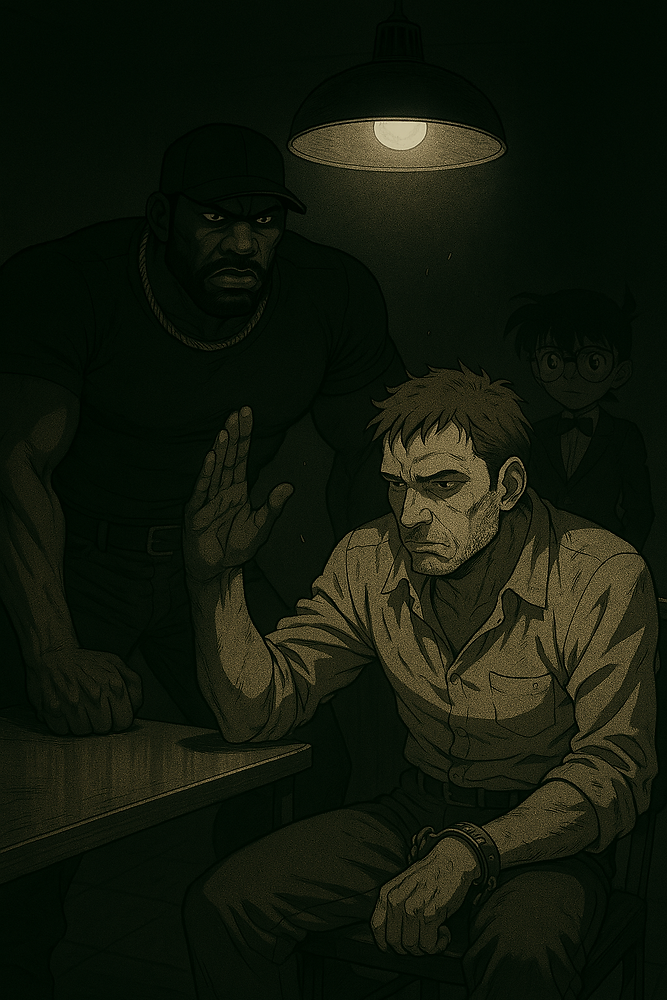
Case Closed: Anime Review
CASE CLOSED: WHEN INVESTIGATION MEETS DEDUCTIVE EXCELLENCE
Before you read another word, answer these questions honestly:
What problems in your life are you approaching through gut feeling instead of methodical analysis?
How does your preference for quick answers prevent you from developing real investigative skill?
When faced with complexity, do you wait for insight or work through the evidence?
What would disciplined observation look like in your daily decision-making?
Five years from now, when you look back at this moment, will you be grateful you learned to think—or regretful you settled for guessing?
What up world, Xavier Savage here from xperformancelab.com.
Investigation without method creates guesswork. Investigation WITH disciplined reasoning creates Case Closed—proof that authentic detective work requires evidence analysis and logical deduction rather than convenient intuition or dramatic revelation.
I’m analyzing why Detective Conan represents thinking mastery disguised as mystery entertainment. While most detective stories rely on convenient clues and dramatic timing, Case Closed demonstrates how real investigation operates through disciplined observation and logical deduction. The mystery isn’t magic—it’s method applied with precision.
Your body is your first kingdom. Your mind is your first detective. Every day presents puzzles—problems to solve, decisions to make, situations to read. Most people guess. Conan thinks.
THE XPL ENERGY TIER FRAMEWORK
| Level | Focus | Icon | Client State |
|---|---|---|---|
| Level I: Awareness | Exposure | 🪞 | “I didn’t know what I didn’t know” |
| Level II: Activation | Questioning | ⚡ | “Maybe what I’ve been doing isn’t working” |
| Level III: Execution | Deployment | 🛠️ | “I execute regardless of how I feel” |
| Level IV: Elite Mode | Mastery | 🔥 | “How can I extract 10% more from this system?” |
| Level V: Peak Mastery | Integration | 🧠 | “Discipline is my default setting” |
This post is for Level IV readers. If you’re still guessing your way through problems, this analysis will expose your gaps.
XPL PERSPECTIVE FRAMEWORK
| Intensity | Icon | Purpose | When To Use |
|---|---|---|---|
| 🔍 | Surface Scan | Quick observations | Intro/transitions |
| ⚡ | Deep Cut | Tactical analysis | Main sections |
| 🔥 | Full Assault | Controversial takes | Hot takes/criticism |
| 💀 | Nuclear Option | Destroying sacred cows | Obliterating popular opinions |
CASE CLOSED RATING BREAKDOWN
Story/Plot Development: Level IV: Elite Mode (🔥🔥🔥🔥/5)
Case Closed constructs its detective narrative like exploration of deductive reasoning through logical puzzle solving. Each case examines how authentic investigation requires disciplined observation and evidence analysis rather than convenient intuition.
What the series understands:
-
Evidence doesn’t confess—it must be interpreted
-
Observation is a skill, not a gift
-
Logic eliminates possibilities until truth remains
-
The obvious answer is usually wrong
Conan doesn’t solve cases because he’s lucky or psychic. He solves them because he looks where others glance, thinks where others react, and connects where others see coincidence.
XPL Performance Physics: Law 3—Process Beats Luck Over Time. Intuition wins occasionally. Method wins consistently. Conan’s track record isn’t genius—it’s process.
Savage Command: “Look where others glance. Think where others react. Connect where others see coincidence.”
Character Development: Level III: Execution (🛠️🛠️🛠️/5)
Conan’s character demonstrates how investigation requires disciplined observation and logical reasoning rather than convenient detective intuition.
His dual existence:
As Shinichi: Teenage detective already operating at elite level. His reputation precedes him. But reputation without process is just stories.
As Conan: Forced into child’s body, he can’t rely on authority or reputation. He must solve through pure reasoning—and let others take credit.
The arc:
Phase 1—Natural Talent: Young Shinichi solves cases through quick thinking. Works—until it doesn’t.
Phase 2—Forced Humility: Trapped in child’s body, he can’t reveal himself. Must work through others, plant ideas, let them shine.
Phase 3—Process Refinement: Without authority, only evidence speaks. He learns to make cases so tight that anyone presenting them looks brilliant.
Phase 4—Integration: He becomes someone who values truth over credit, process over recognition. The identity shift enables deeper capability.
XPL Performance Physics: Law 2—Identity Precedes Outcome. Conan had to stop being “genius detective” and become “truth-seeker who happens to be genius.” The shift enabled method over ego.
Identity Mirror: What problems are you approaching through gut feeling instead of methodical analysis?
Animation/Fight Quality: Level III: Execution (🛠️🛠️🛠️/5)
TMS Entertainment delivers functional animation that serves investigation themes rather than action spectacle. Visual design supports observation and deduction rather than dramatic presentation.
What the visuals communicate:
-
Clues are visible if you look
-
Perspective reveals what others miss
-
The same scene tells different stories to different observers
-
Attention is the only weapon that matters
Training translation: This is what investigation looks like. Not dramatic reveals—quiet observation that others overlook.
The Chain doesn’t negotiate. Neither should your attention to detail.
Overall Impact/Rewatchability: Level IV: Elite Mode (🔥🔥🔥🔥/5)
Case Closed rewards analysis like studying deductive reasoning rewards logical thinking. Multiple viewings reveal investigation techniques that surface watchers miss.
What rewatching reveals:
-
Clues planted episodes before resolution
-
Misdirection techniques you fell for
-
Logical chains you didn’t follow
-
The gap between watching and observing
Savage Command: “Study what rewards rewatch. Thinking principles compound; mystery spectacle fades.”
🔥 FULL ASSAULT: PROCESS EXCELLENCE VS. POPULAR TRASH
💀 Nuclear Option:
Case Closed accomplishes what most detective anime fail at: presenting authentic investigation that requires evidence analysis and logical reasoning rather than convenient intuition or dramatic revelation.
What the series understands about investigation:
Principle 1—Evidence doesn’t speak for itself.
Clues require interpretation. The same evidence can support multiple theories. The detective’s job isn’t collecting facts—it’s arranging them into truth.
Principle 2—Observation is trained, not gifted.
Conan notices what others miss because he’s trained himself to look differently. Attention is a muscle. Most people’s observation is atrophied.
Principle 3—Logic eliminates, not proves.
You can’t prove a theory directly. You can eliminate alternatives until only one remains. Truth is what’s left after you remove everything false.
Principle 4—The obvious is usually wrong.
First impressions are designed to mislead. The visible story is rarely the real story. Investigation means looking past what’s presented.
Principle 5—Process beats genius.
Conan’s track record isn’t about being smarter—it’s about having a method that works regardless of mood, energy, or inspiration.
Compare this to typical detective narratives:
-
Psychic intuition: Detective just knows
-
Convenient confession: Culprit explains everything at the end
-
Dramatic reveal: Timing over logic
-
Genius solves all: Smart person, not good process
Case Closed refuses every shortcut. Clues are hidden. Motives are complex. Solutions require work. The satisfaction comes from following the logic, not from being surprised.
The Mirror: What problems are you approaching through gut feeling instead of methodical analysis?
The Chain: Your preference for quick answers prevents real investigative skill. Break the pattern.
⚡ DEEP CUT: CHARACTER DEVELOPMENT PSYCHOLOGY
Conan: The Genius Who Can’t Take Credit
Conan’s character represents investigation through disciplined observation and logical reasoning rather than convenient intuition.
His psychological entry state:
-
Confident in abilities
-
Used to recognition
-
Solves through natural talent
-
Ego tied to reputation
The transformation:
Being trapped in a child’s body forces evolution:
Phase 1—Frustration: He has answers but can’t speak them. Adults dismiss him. His brilliance is invisible.
Phase 2—Adaptation: He learns to work through others—planting ideas, guiding questions, letting them discover what he already sees.
Phase 3—Process over Ego: Without credit as motivation, only truth matters. He solves because problems need solving, not because he needs to be known as solver.
Phase 4—Mastery: His methods become so refined that anyone following his logic arrives at same conclusion. The process works independently of him.
XPL Performance Physics: Law 4—Recovery Drives Adaptation. Each case teaches something. Each failure refines approach. The growth happens between mysteries, not during them.
Identity Mirror: What would you solve if you didn’t need credit?
Ran and Kogoro: Different Ways of Seeing
The supporting cast represents different observation modes:
Kogoro—The “Sleeping Detective”:
-
Solves when Conan knocks him out and speaks through him
-
Takes credit for work he didn’t do
-
Believes he’s brilliant while being completely dependent
-
Represents people who think they’re thinkers but are actually vehicles for others’ thoughts
Ran—The Emotional Observer:
-
Notices things Conan misses (because she sees people, not just clues)
-
Her emotional intelligence complements his logical reasoning
-
Represents different but equally valid observation mode
The Detective Boys—Developing Eyes:
-
Children learning to observe
-
Make mistakes, miss clues, jump to conclusions
-
Show that observation is trained, not born
The lesson: Multiple ways of seeing exist. The best investigators integrate them all.
⚡ DEEP CUT: WORLD-BUILDING & INVESTIGATIVE THINKING
The Cases as Logic Laboratories
Each episode of Case Closed functions as a self-contained lesson in investigative thinking:
The formula:
-
Normal situation presented
-
Crime occurs
-
Clues revealed (but not highlighted)
-
Multiple suspects introduced
-
Conan observes, deduces, eliminates
-
Solution revealed through logical chain
What makes it effective:
-
Viewers have same information as Conan
-
Solution is always possible to guess—if you’re paying attention
-
Misdirection mirrors real investigation (people lie, evidence misleads)
-
Logic, not luck, determines outcome
XPL Application: This is how you train thinking. Not through abstract exercises, but through repeated exposure to problems with solvable structures.
Savage Command: “Every problem is a case. Treat it like one.”
The Black Organization: The Unsolved Thread
The overarching plot—Conan’s search for the organization that shrunk him—represents something most detective stories miss:
Some cases don’t close.
The Black Organization appears, does damage, and vanishes. Conan gets closer but never quite catches them. Cases go cold. Witnesses die. Evidence disappears.
The lesson:
Investigation isn’t always victory. Sometimes it’s patience. Sometimes it’s waiting. Sometimes it’s accepting that some truths take years—and some never come.
XPL Application: Your biggest problems may not have quick solutions. That doesn’t mean you stop investigating.
🔍 SURFACE SCAN: TRAINING/STRATEGY PHILOSOPHY
Case Closed demonstrates how authentic problem-solving requires specific capabilities that quick-fix thinking never develops.
What the series teaches about investigation:
1. Look where others glance.
Most people see without observing. They register presence without detail. Conan notices shoes, jewelry, posture, breathing—details that tell stories.
Application: What details are you missing in your problems? What’s visible but not noticed?
2. Question everything.
Characters assume. Conan questions. Why that expression? Why that position? Why that reaction? Assumptions are investigation killers.
Application: What are you assuming that needs questioning?
3. Eliminate possibilities.
You can’t prove truth directly. You can eliminate falsehoods until only truth remains. This is logic as filtration.
Application: What possibilities have you not eliminated? What falsehoods are you still carrying?
4. Motive matters.
Evidence tells what happened. Motive tells why. Without why, what is incomplete. People do things for reasons. Find the reason, find the truth.
Application: In your problems, what are the motives? Not just of others—of yourself.
5. Timing reveals truth.
Alibis, opportunities, sequences—timing exposes lies. Someone who claims to be elsewhere but can’t account for minutes is lying.
Application: What timing discrepancies in your life reveal truth you’re avoiding?
6. Process beats genius.
Conan solves consistently because he has method, not because he’s smart. Method works when genius sleeps.
Application: Do you have a problem-solving method, or do you just think harder?
XPL Performance Physics: Law 3—Process Beats Luck Over Time. Intuition wins occasionally. Method wins consistently.
Savage Command: “Develop method, not just mind.”
🔥 FULL ASSAULT: LEGACY & IMPACT
💀 Nuclear Option:
Case Closed influenced detective anime to understand that authentic investigation requires evidence analysis rather than convenient intuition or dramatic revelation.
What it accomplished:
Normalized logical deduction: Showed that thinking, not guessing, solves mysteries
Trained audience attention: Viewers learn to look for clues, question assumptions, follow logic
Respected viewer intelligence: Solutions are solvable—if you’re paying attention
Demonstrated process value: Conan’s method works; his genius is secondary
The influence:
Every detective anime since owes something to Case Closed. Psycho-Pass, Death Note, Monster—all build on foundations this series established.
Savage Command: “Build authentic investigation capability through evidence analysis and logical reasoning, not convenient intuition.”
The Throne: Most people who find Case Closed “too long” or “repetitive” are revealing their inability to appreciate disciplined thinking. They want mysteries solved for them, not thinking modeled for them. Case Closed refuses that comfort.
THE MASTERY SYMBOLS
🔗 The Chain: Your thinking connects to your outcomes. Weak thinking, weak outcomes. Strong thinking, strong outcomes. No shortcuts.
🪞 The Mirror: When you watch Conan observe what others miss, do you see any reflection of your own attention? What details are you walking past?
👑 The Throne: How will you develop investigative thinking in your daily problem-solving?
FINAL STRATEGIC ASSESSMENT
Case Closed asks questions most narratives avoid:
What if you have all the clues and still miss the answer?
What if observation is a skill you’ve never trained?
What if your assumptions are the real mystery?
What if solving problems required method, not just mind?
Savage Command: “Build authentic investigation capability through evidence analysis and logical reasoning, not convenient intuition.”
Savage Command: “Develop methodical problem-solving that serves truth-seeking rather than dramatic insight that ignores evidence.”
Savage Command: “Choose logical reasoning over convenient intuition that avoids investigation complexity.”
IDENTITY MIRROR QUESTIONS
What problems are you approaching through gut feeling instead of methodical analysis?
How does your preference for quick answers prevent you from developing real investigative skill?
What investigation approaches do you need for authentic problem-solving rather than convenient intuition?
When do you choose dramatic insight over methodical analysis that requires disciplined observation?
Where are you seeking quick satisfaction instead of building authentic capability through evidence analysis?
What would you solve if you didn’t need credit?
What details are you walking past every day?
ACTION TRIGGER QUESTIONS
What’s one problem you’ll investigate methodically this week instead of guessing?
What assumptions need questioning?
What timing discrepancies in your life reveal truth you’re avoiding?
Who sees what you miss—what can you learn from them?
What’s your problem-solving method?
Where are you looking when you should be observing?
RESOURCE DROP
Follow my daily insights on Instagram @xperformancelab and YouTube @xperformancelab.
For those in Houston demanding the highest level of training, in-person sessions are available at VFit Gym, 5535 Richmond Ave, Houston, TX.
Elite online training systems at xperformancelab.com.
Take the Archetype Quiz to discover your specific body type protocol: xperformancelab.com/quiz
Inertia Over Inspiration. Always.
Execute.
Ready to transform in Houston? Book your identity engineering consultation. In-person sessions available. Online coaching open nationwide.
Scroll to unlock levels
Level V Achieved
Now live it.
Unlocked

Xavier Savage
Founder, XPERFORMANCELAB
I do not shape muscle. I shape structure. The person you become is the person you construct.
Related Insights

Naruto Review: A Masterpiece Despite Some Cultural Blind Spots
Naruto Surpasses Dragon Ball Z (Despite Some Cultural Blind Spots) What up world, Xavier here from xperformancelab.com . Let me be clear...
One Punch Man: Anime Review
One Punch Man: When Peak Performance Meets Existential Boredom - The Cost of Excellence Peak performance without worthy challenges...

Rurouni Kenshin: Anime Review
Rurouni Kenshin: When Redemption Philosophy Meets Systematic Atonement Redemption without systematic action is wishful thinking....