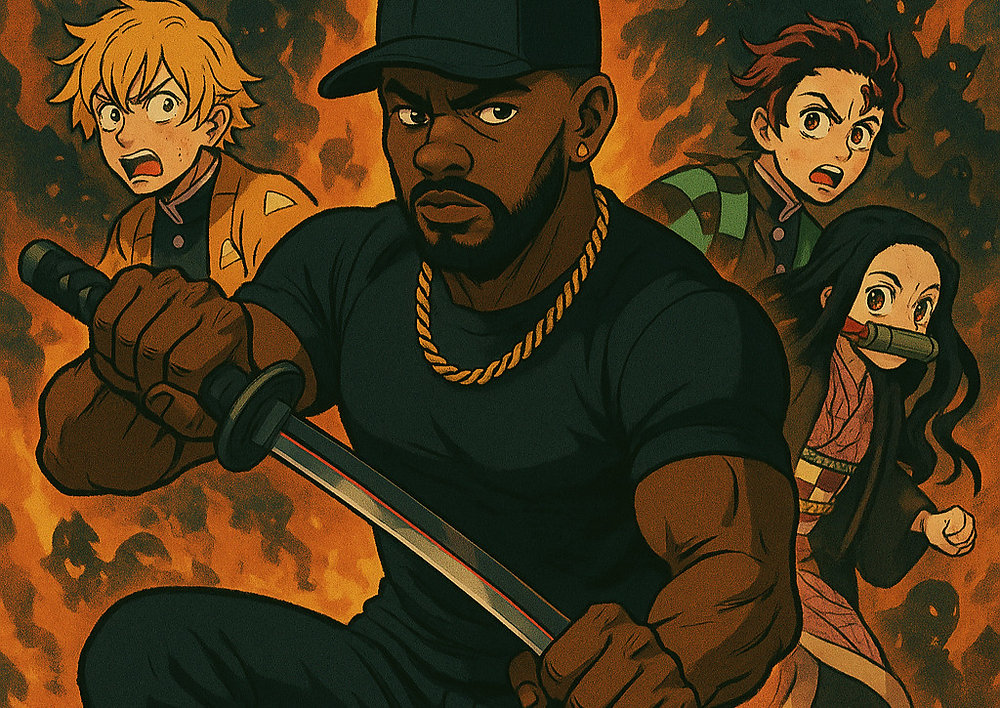
DEMON SLAYER: WHEN TRADITIONAL VALUES MEAN BREATHING MASTERY — Level IV: Elite Mode
Before you read another word, answer these questions honestly:
What traditional principles in your development are you abandoning instead of applying with discipline?
How does your search for dramatic power prevent you from building real capability through fundamentals?
When you train, do you seek magical solutions or master the basics?
What would strength look like if it came from breathing, not just effort?
Five years from now, when you look back at this moment, will you have mastered fundamentals or chased shortcuts?
What up world, Xavier Savage here from xperformancelab.com.
Tradition without application creates stagnation. Tradition WITH technique mastery creates Demon Slayer—proof that authentic strength requires honoring foundational principles while developing capability through disciplined breathing and deliberate practice.
I’m breaking down why this anime represents breathing mastery disguised as supernatural swordsmanship. While most series present special techniques as magical power, Demon Slayer demonstrates how real capability emerges through respiratory conditioning and methodical technique refinement. The breathing isn’t mystical—it’s physiological optimization.
Your body is your first kingdom. Your breath is your first power. Tanjiro doesn’t win through rage or hidden potential. He wins through breath control, technique mastery, and refusing to abandon his values when things get hard.
THE XPL ENERGY TIER FRAMEWORK
This post is for Level IV readers. If you’re still looking for magical shortcuts instead of mastering fundamentals, this analysis will confront you.
XPL PERSPECTIVE FRAMEWORK
DEMON SLAYER RATING BREAKDOWN
Story/Plot Development: Level III: Execution (🛠️🛠️🛠️/5)
Demon Slayer constructs its traditional narrative like exploration of breathing technique mastery and capability development through family values and structured training progression.
What the series understands:
-
Fundamentals aren’t optional—they’re everything
-
Technique without breath control is just movement
-
Mastery comes through repetition, not revelation
-
Values shape capability as much as training
The story doesn’t reinvent the wheel. It perfects it. Tanjiro’s journey is familiar—loss, training, growth, purpose. What sets it apart is the depth of the fundamentals.
XPL Performance Physics: Law 3—Process Beats Intensity Over Time. Tanjiro doesn’t win through emotional outbursts. He wins through breath control, technique precision, and refusing to abandon form when pressure mounts.
Savage Command: “Master the basics until they’re not basics anymore—they’re you.”
Character Development: Level IV: Elite Mode (🔥🔥🔥🔥/5)
Tanjiro’s evolution demonstrates how authentic strength requires breathing mastery and technique development while maintaining traditional values.
His arc:
Phase 1—The Provider: Before tragedy, his identity is family caretaker. This foundation of responsibility shapes everything.
Phase 2—The Grieving: Loss could break him. Instead, it directs him. Purpose emerges from pain.
Phase 3—The Student: Urokodaki’s training isn’t glamorous. Repetition, conditioning, fundamentals. Tanjiro doesn’t complain—he absorbs.
Phase 4—The Practitioner: Every battle refines technique. Every opponent teaches something. Growth through application, not accumulation.
Phase 5—The Integration: By the end, his values and his technique are inseparable. He fights like he lives—with compassion, precision, and unwavering commitment.
The supporting cast represents different relationships to fundamentals:
-
Nezuko: Values preserved despite transformation. She’s proof that who you are transcends what you become.
-
Zenitsu: Talent without confidence. His potential is enormous—his psychology is the barrier.
-
Inosuke: Raw power without technique. He learns that intensity without precision has ceiling.
-
Rengoku: Mastery integrated with humanity. He shows what’s possible when fundamentals and values align.
-
Urokodaki: The teacher who understands that fundamentals are the only shortcut.
XPL Performance Physics: Law 2—Identity Precedes Outcome. Tanjiro’s identity as “protector” and “brother” determines every choice. His power serves his values; his values don’t bend for power.
Identity Mirror: What traditional principles in your development are you abandoning instead of applying with discipline?
Animation/Fight Quality: Level V: Peak Mastery (🧠🧠🧠🧠🧠/5)
Ufotable delivers animation mastery that serves breathing technique themes through spectacular visual storytelling that demonstrates capability development rather than random supernatural power.
What the visuals communicate:
-
Water Breathing isn’t magic—it’s visualized technique
-
Every form has purpose, position, intention
-
The beauty serves the brutality; the brutality serves the story
-
You can see the breath in every movement
The fights: Not just spectacle—instruction. Watch Tanjiro’s footwork, his timing, his recovery. These are lessons in combat fundamentals disguised as entertainment.
Training translation: This is what mastery looks like when visualization meets execution. The animation doesn’t just show—it teaches.
The Chain doesn’t negotiate. Neither should your commitment to form.
Overall Impact/Rewatchability: Level IV: Elite Mode (🔥🔥🔥🔥/5)
Demon Slayer rewards analysis like studying breathing technique rewards capability understanding. Multiple viewings reveal conditioning strategies and development techniques that surface watchers miss.
What rewatching reveals:
-
Early training that later battles reward
-
Breath cues hidden in every fight
-
Character foundations that determine outcomes
-
That the “simple” techniques were always the most important
Savage Command: “Study what rewards rewatch. Fundamental depth compounds; flashy moments fade.”
🔥 FULL ASSAULT: BREATHING MASTERY VS. POWER FANTASY
💀 Nuclear Option:
Demon Slayer accomplishes what most supernatural anime fail at: presenting authentic capability development that requires breathing mastery and technique refinement rather than convenient supernatural power.
What the series understands about strength:
Principle 1—Breath is foundation.
Every technique, every movement, every victory begins with breath control. Lose your breath, lose the fight. This isn’t metaphor—it’s physiology.
Principle 2—Fundamentals aren’t optional.
Tanjiro spends months on basic forms before ever facing a demon. No shortcuts, no exceptions, no complaints. Mastery requires foundation.
Principle 3—Technique requires repetition.
Water Breathing isn’t learned—it’s absorbed. Through hundreds, thousands of repetitions, the forms become reflex. Thinking ends; acting begins.
Principle 4—Values shape capability.
Tanjiro’s compassion isn’t weakness—it’s strength. His empathy lets him read opponents, understand motives, find openings that pure aggression misses.
Principle 5—Growth through application, not accumulation.
Every battle refines technique. Every opponent teaches something. Power isn’t collected—it’s developed through use.
Compare this to typical power narratives:
-
Dragon Ball Z: Screaming louder = getting stronger
-
Naruto: Hidden power revealed at convenient moments
-
Bleach: New transformations when plot demands
Demon Slayer refuses every shortcut. Strength comes from breath, fundamentals, repetition, and values. Nothing else.
The Mirror: What traditional principles in your development are you abandoning instead of applying with discipline?
The Chain: Your search for dramatic power prevents real capability through fundamentals. Break the pattern.
⚡ DEEP CUT: CHARACTER PSYCHOLOGY
Tanjiro: The Integration of Values and Violence
Tanjiro’s psychology is what makes him revolutionary.
His baseline:
Deep compassion: He feels for everyone—even enemies. This isn’t weakness; it’s information. He understands opponents because he empathizes with them.
Unshakeable values: His commitment to Nezuko, to protecting others, to his principles never wavers. This consistency is his anchor.
Learner’s mindset: Every battle teaches him something. Every opponent shows him something. He grows because he’s always learning.
His empathy as strategy:
Most fighters see opponents. Tanjiro sees people—their pain, their history, their motivation. This understanding lets him predict, counter, and connect.
The paradox: His compassion makes him more effective, not less. He wins because he understands, not despite understanding.
XPL Application: Your “weaknesses” might be strengths in disguise. Tanjiro’s empathy would be liability for most fighters. For him, it’s advantage.
Zenitsu: The Barrier of Self-Doubt
Zenitsu represents what happens when talent meets psychological limitation.
His psychology:
Enormous potential: His Thunder Breathing is legitimate. When unconscious, he’s elite. When conscious, he’s paralyzed.
Self-doubt as prison: He believes he’s weak. This belief becomes reality—until he stops believing.
The split: Unconscious Zenitsu is who he could be. Conscious Zenitsu is who he thinks he is. The gap is everything.
XPL Application: Your self-concept determines your capability. Change what you believe, change what you can do.
Inosuke: Raw Power Hitting Ceiling
Inosuke represents intensity without technique.
His psychology:
Pure aggression: He fights like he lives—head down, charging forward, overwhelming.
Technique ceiling: Raw power works until it doesn’t. Eventually, precision beats intensity. Technique beats force.
The learning curve: He must learn that fighting isn’t just about being stronger. It’s about being smarter.
XPL Application: Intensity has ceiling. Technique doesn’t. Train both.
Rengoku: Mastery Integrated
Rengoku represents what’s possible when fundamentals and values align.
His psychology:
Complete commitment: His “UMAI!” isn’t just catchphrase—it’s philosophy. Find joy in everything, including death.
Technique mastery: His Flame Breathing is perfected through decades of practice. Not talent—training.
Value integration: His principles and his fighting are inseparable. He doesn’t have values; he is his values.
The tragedy: Rengoku’s death is meaningful because his life was. He showed what’s possible. That’s enough.
XPL Application: You don’t have to win to matter. You have to embody.
⚡ DEEP CUT: WORLD-BUILDING & TRAINING SYSTEMS
The Demon Slayer Corps as Training Institution
The Corps provides structure for capability development.
What the system provides:
Clear progression path: From novice to Hashira, the path is known. What’s required is demonstrated.
Specialized training: Different Breathing Forms for different bodies, different temperaments.
Mentorship structure: Every slayer learns from someone further along. Knowledge transferred, not discovered.
Real consequences: Training failures mean death. The stakes create focus.
XPL Application: Your development needs structure, progression, mentorship, and stakes. Without these, growth is random.
Breathing Forms as Capability Framework
The Breathing techniques aren’t just powers—they’re methodology.
What the forms represent:
Water Breathing: Adaptability, flow, response. Tanjiro’s default because he’s responsive, not rigid.
Flame Breathing: Aggression, intensity, forward pressure. Rengoku’s choice because he’s committed, not cautious.
Thunder Breathing: Speed, precision, decisive action. Zenitsu’s potential when he stops hesitating.
Beast Breathing: Instinct, raw power, overwhelming force. Inosuke’s path until he learns technique.
The principle: Your technique should fit your nature. Form follows function; function follows identity.
🔍 SURFACE SCAN: TRAINING/STRATEGY PHILOSOPHY
Demon Slayer demonstrates how authentic capability requires specific approaches that shortcut-seeking never teaches.
What the series teaches about fundamentals:
1. Breath is foundation.
Every technique, every movement, every victory begins with breath control. Lose your breath, lose the fight.
Application: What’s your equivalent of breath—the fundamental you’re neglecting?
2. Fundamentals aren’t optional.
Tanjiro spends months on basics. No shortcuts, no exceptions. Mastery requires foundation.
Application: What basics are you skipping?
3. Technique requires repetition.
Hundreds, thousands of repetitions until forms become reflex. Thinking ends; acting begins.
Application: What have you repeated enough to own?
4. Values shape capability.
Tanjiro’s compassion isn’t weakness—it’s information. His values make him more effective.
Application: What values could become capability instead of limitation?
5. Growth through application.
Every battle refines technique. Every opponent teaches something. Power is developed through use.
Application: Where are you applying what you’re learning?
6. Form follows function; function follows identity.
Your technique should fit your nature. Water for Tanjiro, Flame for Rengoku, Thunder for Zenitsu.
Application: Does your training match who you are?
XPL Performance Physics: Law 3—Process Beats Intensity Over Time. Fundamentals practiced daily beat intensity applied occasionally.
Savage Command: “Master the basics until they’re not basics anymore—they’re you.”
🔥 FULL ASSAULT: LEGACY & IMPACT
💀 Nuclear Option:
Demon Slayer influenced supernatural anime to understand that authentic strength requires breathing mastery rather than convenient magical power.
What it accomplished:
Normalized fundamentals: Proved that basics, not breakthroughs, build strength
Demonstrated breathing’s power: Showed respiratory conditioning as legitimate capability
Respected traditional values: Values and violence can coexist
Refused shortcuts: Every victory earned through preparation, not convenience
The influence:
Every series emphasizing technique and fundamentals since owes something to Demon Slayer. Its approach to breathing, training, and values integration set standards for the genre.
Savage Command: “Build authentic strength through breathing mastery and technique development. Choose fundamentals over fantasy.”
The Throne: Most people who dismiss Demon Slayer‘s breathing techniques as “simple” are revealing their inability to appreciate conditioning. They prefer magical power that avoids mastery work.
THE MASTERY SYMBOLS
🔗 The Chain: Your fundamentals connect to your capability. Strong fundamentals, strong capability. Weak fundamentals, weak capability. No exceptions.
🪞 The Mirror: When you watch Tanjiro practice basic forms, do you see any reflection of your own training? What fundamentals are you neglecting?
👑 The Throne: How will you master the basics instead of chasing shortcuts?
FINAL STRATEGIC ASSESSMENT
Demon Slayer asks questions most narratives avoid:
What if strength comes from breath, not rage?
What if fundamentals matter more than breakthroughs?
What if technique requires repetition, not revelation?
What if your values could make you stronger?
What if the basics were always enough—you just never mastered them?
Savage Command: “Build authentic strength through breathing mastery and technique development, not power fantasy.”
Savage Command: “Develop respiratory conditioning that serves capability rather than seeking shortcuts.”
Savage Command: “Choose fundamentals with disciplined application over convenient power that avoids mastery.”
IDENTITY MIRROR QUESTIONS
What traditional principles in your development are you abandoning instead of applying with discipline?
How does your search for dramatic power prevent you from building real capability through fundamentals?
What breathing and technique approaches do you need for authentic development rather than seeking supernatural shortcuts?
When do you choose convenient power over breathing mastery that requires disciplined technique development?
Where are you seeking magical solutions instead of building capability through fundamentals that demand conditioning?
What’s your equivalent of breath—the fundamental you’re neglecting?
What basics are you skipping?
ACTION TRIGGER QUESTIONS
What’s one fundamental you’ll master this month instead of chasing shortcuts?
What have you repeated enough to own?
What values could become capability instead of limitation?
Where are you applying what you’re learning?
Does your training match who you are?
RESOURCE DROP
Follow my daily insights on Instagram @xperformancelab and YouTube @xperformancelab.
For those in Houston demanding the highest level of training, in-person sessions are available at VFit Gym, 5535 Richmond Ave, Houston, TX.
Elite online training systems at xperformancelab.com.
Take the Archetype Quiz to discover your specific body type protocol: xperformancelab.com/quiz
Inertia Over Inspiration. Always.
Execute.