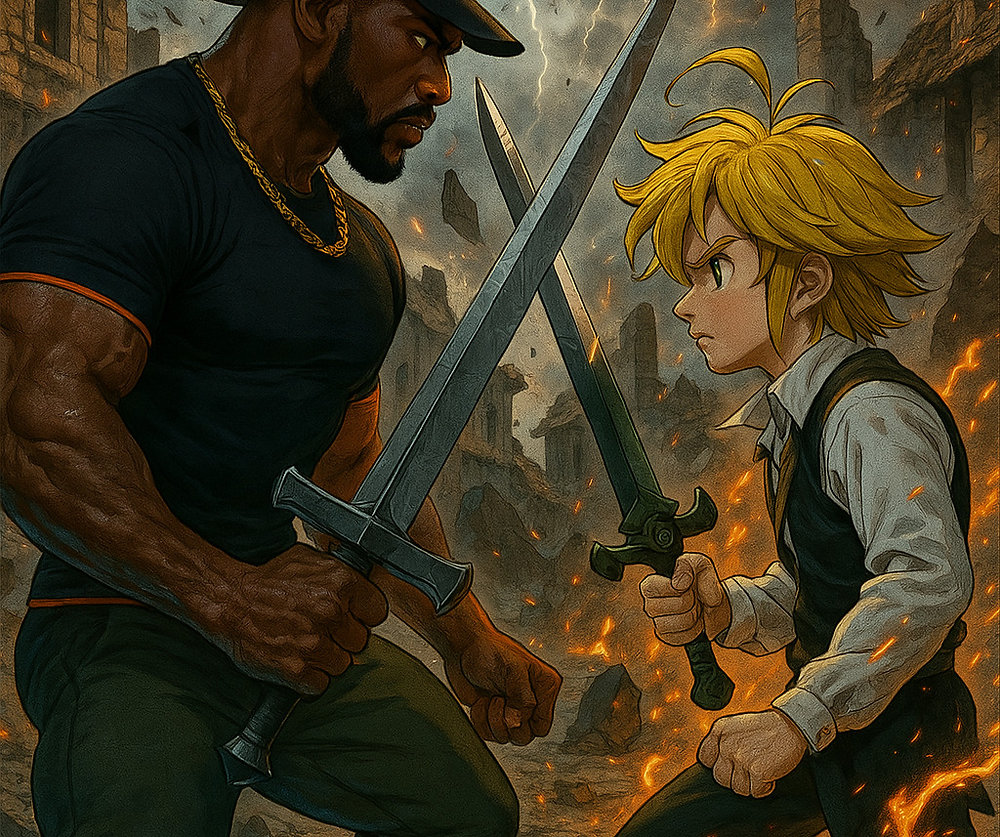
The Seven Deadly Sins: Anime Review
Ready to transform in Houston? Book your identity engineering consultation. In-person sessions available. Online coaching open nationwide.
# THE SEVEN DEADLY SINS: WHEN POWER FANTASY MEETS AUTHENTIC BROTHERHOOD — Level IV: Elite Mode
—
**Before you read another word, answer these questions honestly:**
What aspects of your character are you hiding from your closest allies instead of integrating into authentic relationship dynamics?
How does your need for moral comfort prevent you from developing bonds that accept complexity?
When your people fail, do you distance yourself or double down?
What would brotherhood look like if it required accepting everyone’s darkness rather than pretending it doesn’t exist?
Five years from now, when you look back at this moment, will you have built bonds that survive truth—or relationships that required constant hiding?
—
What up world, Xavier Savage here from xperformancelab.com.
While everyone’s still defending *Dragon Ball Z*’s mindless power scaling or pretending *Death Note* represents sophisticated storytelling, I’m analyzing a series that delivers authentic brotherhood dynamics through strategic power deployment: *The Seven Deadly Sins*.
This isn’t your typical fantasy adventure anime, and it damn sure isn’t sanitized heroism for people who think redemption should come without sacrifice. The series operates like elite tactical unit restoration—designed to demonstrate how authentic brotherhood requires accepting each member’s darkness while serving collective objectives.
While *Sword Art Online* presents friendship as convenient plot advancement, *Seven Deadly Sins* explores how real brotherhood demands commitment through moral complexity and strategic sacrifice.
**Your body is your first kingdom.** Your brothers are your first army. The Sins are named for their worst qualities—and those qualities make them unstoppable together. This isn’t irony. This is *strategy*.
—
## THE XPL ENERGY TIER FRAMEWORK
| Level | Focus | Icon | Client State |
|——-|——–|——|————–|
| **Level I: Awareness** | Exposure | 🪞 | “I didn’t know what I didn’t know” |
| **Level II: Activation** | Questioning | ⚡ | “Maybe what I’ve been doing isn’t working” |
| **Level III: Execution** | Deployment | 🛠️ | “I execute regardless of how I feel” |
| **Level IV: Elite Mode** | Mastery | 🔥 | “How can I extract 10% more from this system?” |
| **Level V: Peak Mastery** | Integration | 🧠 | “Discipline is my default setting” |
**This post is for Level IV readers.** If you’re still looking for friends who are as uncomplicated as you pretend to be, this analysis will confront you.
—
## XPL PERSPECTIVE FRAMEWORK
| Intensity | Icon | Purpose | When To Use |
|———–|——|———|————-|
| 🔍 | Surface Scan | Quick observations | Intro/transitions |
| ⚡ | Deep Cut | Tactical analysis | Main sections |
| 🔥 | Full Assault | Controversial takes | Hot takes/criticism |
| 💀 | Nuclear Option | Destroying sacred cows | Obliterating popular opinions |
—
## SEVEN DEADLY SINS RATING BREAKDOWN
### Story/Plot Development: Level IV: Elite Mode (🔥🔥🔥🔥/5)
The series constructs its narrative like team restoration mission—gathering scattered members, rebuilding trust, confronting past failures that destroyed unit cohesion. The plot progression follows logical brotherhood reconstruction rather than convenient adventure progression.
**What the series understands:**
– Elite teams don’t form by accident—they’re *assembled*
– Trust must be rebuilt, not assumed
– Past failures are assets, not liabilities—if integrated correctly
– Brotherhood means accepting what each person actually is, not what you wish they were
The Sins are scattered because their unit broke under pressure. The entire series is about reassembly—not pretending the break never happened, but building something stronger from the pieces.
**XPL Performance Physics: Law 7—Accountability Structures Determine Execution Rates.** The Sins don’t work because they’re friends. They work because they’re *accountable*—to each other, to their mission, to the oaths they’ve sworn. Friendship without accountability is just sentiment.
**Savage Command:** “Brotherhood isn’t found. It’s *forged*—through pressure, through failure, through refusing to quit on each other.”
—
### Character Development: Level IV: Elite Mode (🔥🔥🔥🔥/5)
Each Sin represents a different approach to power, loyalty, and redemption. Meliodas demonstrates how authentic leadership requires accepting personal darkness while protecting collective objectives.
**Meliodas—The Leader Who Carries Everything:**
Immortal, ancient, burdened by millennia of loss. His cheerful exterior is armor. His willingness to sacrifice himself for his team isn’t heroism—it’s *strategy*. He knows his value and deploys it accordingly.
**Ban—The Immortal Seeking Meaning:**
Stole immortality to save someone he loved—and failed anyway. His theft, his violence, his chaos all stem from that original wound. The team doesn’t fix him. They just make his wandering meaningful.
**King—The Protector Who Failed:**
Let his people die while protecting a girl. His guilt shapes every choice. The Sins don’t absolve him—they fight beside him anyway.
**Diane—The Giant Who Wants to Belong:**
Caught between worlds, too big for one, too different for another. Her loyalty to the team is her anchor.
**Gowther—The Doll Learning Humanity:**
Literally incapable of feeling, yet desperate to understand. His arc explores whether morality requires emotion—or whether duty can suffice.
**Merlin—The Genius Beyond Morality:**
Her power serves her purposes, not anyone’s ethics. The team accepts this because her purposes sometimes align with theirs.
**Escanor—The Man Who Becomes God at Noon:**
Pride made flesh—and genuinely worthy of that pride at his peak. His tragedy is the gap between who he is at noon and who he is at any other time.
**XPL Performance Physics: Law 2—Identity Precedes Outcome.** Each Sin’s power flows from who they are. They don’t become different people to serve the team. They become *more themselves*—and that’s what makes them unstoppable together.
**Identity Mirror:** What aspects of your character are you hiding from your closest allies instead of integrating into authentic relationship dynamics?
—
### Animation/Fight Quality: Level IV: Elite Mode (🔥🔥🔥🔥/5)
A-1 Pictures and Studio Deen deliver spectacular combat that serves character development and brotherhood themes. Fight sequences demonstrate individual power while emphasizing team coordination and mutual support.
**What the fights communicate:**
– Individual strength matters—but team coordination wins
– Each Sin fights differently because each *is* different
– Combined attacks require trust that can’t be faked
– When one falls, another covers—always
**Training translation:** This is what elite teams look like under pressure. Not individuals showing off—individuals making each other more effective.
**The Chain doesn’t negotiate.** Neither should your commitment to your people.
—
### Overall Impact/Rewatchability: Level IV: Elite Mode (🔥🔥🔥🔥/5)
*Seven Deadly Sins* rewards analysis like studying team dynamics rewards systematic thinking. Multiple viewings reveal brotherhood layers and loyalty mechanisms that surface watchers miss.
**What rewatching reveals:**
– Early trust-building that later battles reward
– How each Sin’s darkness serves team objectives
– The moments when brotherhood was tested—and held
– Why some bonds break and others bend
**Savage Command:** “Study what rewards rewatch. Brotherhood compounds; spectacle fades.”
—
## 🔥 FULL ASSAULT: AUTHENTIC BROTHERHOOD VS. SANITIZED FRIENDSHIP
**💀 Nuclear Option:**
*The Seven Deadly Sins* accomplishes what most friendship anime fail at: presenting authentic brotherhood that requires accepting each member’s moral complexity rather than sanitizing character flaws for comfortable consumption.
**What the series understands about brotherhood:**
**Principle 1—Every member carries darkness.**
The Sins aren’t named ironically. Each embodies a quality society condemns. The series asks: what if those qualities could serve instead of destroy?
**Principle 2—Acceptance isn’t approval.**
The team doesn’t endorse each other’s worst choices. They just don’t let those choices define who someone is *now*. There’s a difference between understanding and excusing.
**Principle 3—Brotherhood requires seeing clearly.**
Meliodas knows exactly what each Sin has done. He doesn’t look away. Brotherhood built on illusion collapses when truth emerges. Brotherhood built on truth survives anything.
**Principle 4—Loyalty is tested, not assumed.**
The Sins don’t trust each other because they’re friends. They’re friends because they’ve been *tested*—and didn’t break.
**Principle 5—Sacrifice is the currency.**
Every member has paid for their place. Blood, time, freedom, morality—all spent. Brotherhood isn’t free. It’s the most expensive thing you’ll ever buy.
**Compare this to typical friendship narratives:**
– **Convenient allies:** People who show up exactly when needed
– **Sanitized heroes:** Flaws that don’t really matter
– **Unearned loyalty:** Trust without testing
– **Friendship power-ups:** Emotional bonds that magically increase capability
*Seven Deadly Sins* refuses every shortcut. Brotherhood is work. Trust is earned. Darkness is real—and can be redirected, not erased.
**The Mirror:** What aspects of your character are you hiding from your closest allies instead of integrating?
**The Chain:** Your need for moral comfort prevents bonds that can survive truth. Break the pattern.
—
## ⚡ DEEP CUT: CHARACTER PSYCHOLOGY
### Meliodas: The Burden of Eternal Leadership
Meliodas represents what it costs to lead when you’ve seen everyone you love die—multiple times.
**His psychology:**
**Infinite patience:** He’s waited millennia. He can wait for any of them to heal, to grow, to return.
**Strategic sacrifice:** He offers himself because he’s the only one who can survive losing himself. This isn’t martyrdom—it’s *resource allocation*.
**Cheerful armor:** His smile protects them from the weight he carries. They don’t need to know how heavy it is.
**The cost:** He’s watched everyone die. Everyone. And kept going. This isn’t strength—it’s *sentence without parole*.
**XPL Application:** True leadership often means carrying what others can’t see. The question isn’t whether you can bear it—it’s whether you can bear it *and still smile*.
—
### Ban: The Man Who Chose Wrong and Keeps Choosing
Ban’s arc is one of the most psychologically rich in anime.
**His crime:** Stole immortality to save Elaine. She died anyway.
**His punishment:** Can’t die, can’t join her, can’t stop trying.
**His redemption arc:** Not becoming good—becoming *useful* to people who accept that he’ll never be good.
**The lesson:** You don’t have to be worthy of redemption. You just have to keep showing up for people who let you.
—
### Escanor: The Tragedy of Conditional Power
Escanor represents what most power fantasies ignore: the gap between your peak and your baseline.
**His truth:** From midnight to noon, he’s the strongest human alive. From noon to midnight, he’s a trembling wreck.
**His courage:** He shows up anyway. Every day. Knowing he’ll spend half of it terrified.
**His pride:** Not arrogance—*accurate assessment* of his noon self. He knows what he is at peak and doesn’t apologize.
**The lesson:** Your capability isn’t constant. What matters is what you do with what you have when you have it.
—
## ⚡ DEEP CUT: WORLD-BUILDING & TEAM SYSTEMS
### The Sins as Complementary Capabilities
The Seven Deadly Sins aren’t just a team—they’re a *system*.
**Meliodas:** Frontline commander, emotional anchor, ultimate sacrifice option
**Ban:** Immortal scout, infiltration specialist, can take hits no one else can
**King:** Area control, defensive屏障, strategic support
**Diane:** Heavy assault, terrain manipulation, raw power deployment
**Gowther:** Psychological warfare, intelligence gathering, memory manipulation
**Merlin:** Strategic magic, force multiplication, the “solve anything” button
**Escanor:** Ultimate trump card, available only at specific times
**What makes the system work:**
– No redundant capabilities
– Each member covers others’ weaknesses
– Trust enables coordination
– Individual excellence serves collective objectives
**XPL Application:** Your team should work like this. Not people who like each other—people whose capabilities *multiply* when combined.
**Savage Command:** “Build teams where the whole exceeds the sum. Anything less is just a group.”
—
### The Holy War as Stress Test
The ongoing conflict isn’t just plot—it’s *pressure*.
**What pressure reveals:**
– Who breaks
– Who bends
– Who holds
– Who runs
Every member faces moments where leaving would be easier. The ones who stay become brothers.
**XPL Application:** You don’t know who your people are until pressure tests them. And they don’t know you until pressure tests you.
—
## 🔍 SURFACE SCAN: TRAINING/STRATEGY PHILOSOPHY
*Seven Deadly Sins* demonstrates how authentic brotherhood requires specific approaches that sanitized friendship never teaches.
### What the series teaches about team dynamics:
**1. Acceptance isn’t approval.**
The team doesn’t endorse each other’s sins. They just don’t let those sins define who someone is *now*.
**Application:** Who in your life have you written off based on past failures?
—
**2. Trust must be tested.**
The Sins trust each other because they’ve been through hell together. Not because they had a conversation about feelings.
**Application:** What have you survived with your people? If nothing, why do you trust them?
—
**3. Darkness can be directed.**
Each Sin’s quality can serve destruction or protection. The difference isn’t the quality—it’s *direction*.
**Application:** What aspects of yourself are you trying to eliminate instead of redirect?
—
**4. Sacrifice is the currency.**
Everyone has paid. Everyone continues to pay. Brotherhood isn’t free.
**Application:** What are you willing to pay for your people? What aren’t you?
—
**5. The whole exceeds the sum.**
Alone, each Sin is formidable. Together, they’re unstoppable. Not because they add—because they *multiply*.
**Application:** Do your relationships add to your capability or multiply it?
—
**6. Brotherhood survives truth.**
The Sins know each other’s worst moments. They stay anyway. Brotherhood built on illusion collapses when truth emerges.
**Application:** What truths are you hiding that, if revealed, would destroy your relationships?
—
**XPL Performance Physics: Law 7—Accountability Structures Determine Execution Rates.** The Sins don’t work because they’re friends. They work because they’re *accountable*.
**Savage Command:** “Build bonds that survive truth. Anything else is just performance.”
—
## 🔥 FULL ASSAULT: LEGACY & IMPACT
**💀 Nuclear Option:**
*The Seven Deadly Sins* influenced friendship anime to understand that authentic brotherhood requires accepting moral complexity rather than sanitized relationship dynamics.
**What it accomplished:**
**Normalized moral ambiguity:** Showed that heroes can have real darkness
**Demonstrated team complementarity:** Proved that different capabilities multiply when combined
**Explored loyalty’s cost:** Brotherhood requires payment—and keeps requiring it
**Rejected convenient friendship:** Trust must be earned and tested, not assumed
**The influence:**
Every team-based fantasy since owes something to this series. *Fairy Tail*, *Black Clover*, even elements of *My Hero Academia*’s class dynamics build on foundations *Seven Deadly Sins* helped establish.
**Savage Command:** “Build brotherhood that accepts moral complexity. Choose authentic loyalty over comfortable simplicity.”
**The Throne:** Most people who find *Seven Deadly Sins* “morally problematic” are revealing their inability to engage with authentic brotherhood. They want friendship without darkness, loyalty without cost. This series refuses that comfort.
—
## THE MASTERY SYMBOLS
**🔗 The Chain:** Your brothers connect to your capability. Strong bonds, strong capability. Weak bonds, weak capability. No shortcuts.
**🪞 The Mirror:** When you watch the Sins fight together, do you see any reflection of your own team dynamics? What would it take to multiply instead of just add?
**👑 The Throne:** How will you build brotherhood that accepts moral complexity and survives truth?
—
## FINAL STRATEGIC ASSESSMENT
*The Seven Deadly Sins* asks questions most narratives avoid:
**What if your worst qualities could serve your best purposes?**
**What if brotherhood required accepting darkness, not ignoring it?**
**What if trust must be tested, not assumed?**
**What if loyalty costs more than you want to pay?**
**What if the whole could exceed the sum—if you’d stop hiding?**
**Savage Command:** “Build brotherhood that accepts moral complexity. Integrate individual darkness into collective strength.”
**Savage Command:** “Choose authentic loyalty over comfortable relationship simplicity.”
**Savage Command:** “Your team should multiply your capability, not just add to it.”
—
## IDENTITY MIRROR QUESTIONS
What aspects of your character are you hiding from your closest allies instead of integrating?
How does your need for moral comfort prevent you from developing bonds that accept complexity?
What areas of your life need integration of individual complexity into collective objectives?
When do you seek sanitized friendship instead of authentic brotherhood that requires accepting darkness?
Where are you choosing relationship simplicity over loyalty that demands accepting everyone’s essential nature?
Who in your life have you written off based on past failures?
What have you survived with your people? If nothing, why do you trust them?
—
## ACTION TRIGGER QUESTIONS
What’s one truth you’re hiding that, if revealed, would test your bonds?
What aspect of yourself have you been trying to eliminate that could be redirected?
What are you willing to pay for your people? What aren’t you?
Do your relationships add to your capability or multiply it?
Who covers your weaknesses? Whose weaknesses do you cover?
—
## RESOURCE DROP
Follow my daily insights on Instagram **@xperformancelab** and YouTube **@xperformancelab**.
For those in Houston demanding the highest level of training, in-person sessions are available at **VFit Gym, 5535 Richmond Ave, Houston, TX**.
Elite online training systems at **xperformancelab.com**.
Take the Archetype Quiz to discover your specific body type protocol: **xperformancelab.com/quiz**
—
**Inertia Over Inspiration. Always.**
**Execute.**
Scroll to unlock levels
Level V Achieved
Now live it.
Unlocked

Xavier Savage
Founder, XPERFORMANCELAB
I do not shape muscle. I shape structure. The person you become is the person you construct.
Related Insights
Psycho-Pass: Anime Review
Psycho-Pass: When Surveillance State Meets Systematic Freedom - Dystopian Excellence Freedom without psychological awareness creates...
Angel Beats!: Anime Review
Angel Beats!: When Afterlife Psychology Meets Systematic Acceptance Training Resistance without systematic understanding creates endless...
Durarara!!: Anime Review
Durarara!!: When Urban Networks Meet Systematic Information Warfare Information without systematic control creates chaos. Information...