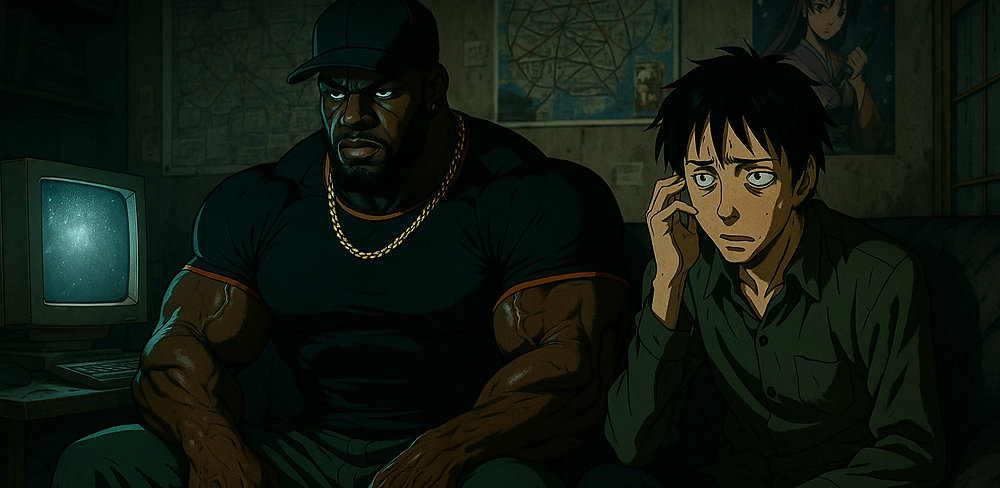
Welcome to the NHK: Anime Review
Ready to transform in Houston? Book your identity engineering consultation. In-person sessions available. Online coaching open nationwide.
# WELCOME TO THE NHK: WHEN SOCIAL ISOLATION MEETS RELENTLESS SELF-DESTRUCTION — Level V: Peak Mastery
—
**Before you read another word, answer these questions honestly:**
What elaborate justification systems are you maintaining to avoid necessary psychological work?
How does your intelligence serve your avoidance patterns rather than your growth?
When you imagine “getting better,” do you expect a breakthrough—or are you willing to do the slow, ugly work?
What avoided responsibilities are you hoping will solve themselves?
Five years from now, when you look back at this moment, will you have confronted your patterns—or built better excuses?
—
What up world, Xavier Savage here from xperformancelab.com.
While everyone’s still defending *Dragon Ball Z*’s escapist power fantasies or pretending *Death Note* represents deep psychological analysis, I’m dissecting a series that delivers brutal honesty about social withdrawal and relentless self-sabotage: *Welcome to the NHK*.
This isn’t your typical slice-of-life anime, and it damn sure isn’t comfortable viewing for people who prefer their psychological exploration sanitized. The series operates like intensive psychological autopsy of modern social dysfunction—uncomfortable, unflinching, and designed to force viewers to confront their own patterns of avoidance and self-destruction.
While *Sword Art Online* presents escapism as heroic adventure, *NHK* exposes escapism as psychological prison that requires deliberate intervention to escape.
**Your body is your first kingdom.** Your mind is your first battleground. Satou has created an elaborate fortress of conspiracy theories, victim narratives, and avoidance strategies. The fortress keeps nothing out—it keeps *him* in.
—
## THE XPL ENERGY TIER FRAMEWORK
| Level | Focus | Icon | Client State |
|——-|——–|——|————–|
| **Level I: Awareness** | Exposure | 🪞 | “I didn’t know what I didn’t know” |
| **Level II: Activation** | Questioning | ⚡ | “Maybe what I’ve been doing isn’t working” |
| **Level III: Execution** | Deployment | 🛠️ | “I execute regardless of how I feel” |
| **Level IV: Elite Mode** | Mastery | 🔥 | “How can I extract 10% more from this system?” |
| **Level V: Peak Mastery** | Integration | 🧠 | “Discipline is my default setting” |
**This post is for Level V readers.** If you’re still protecting your excuses instead of examining your patterns, this analysis will confront you.
—
## XPL PERSPECTIVE FRAMEWORK
| Intensity | Icon | Purpose | When To Use |
|———–|——|———|————-|
| 🔍 | Surface Scan | Quick observations | Intro/transitions |
| ⚡ | Deep Cut | Tactical analysis | Main sections |
| 🔥 | Full Assault | Controversial takes | Hot takes/criticism |
| 💀 | Nuclear Option | Destroying sacred cows | Obliterating popular opinions |
—
## WELCOME TO THE NHK RATING BREAKDOWN
### Story/Plot Development: Level V: Peak Mastery (🧠🧠🧠🧠🧠/5)
*NHK* constructs its narrative like documentation of psychological breakdown and recovery cycles. Satou’s journey through hikikomori lifestyle, conspiracy theories, and failed attempts at social reintegration follows authentic psychological patterns rather than convenient plot progression.
**What the series understands:**
– Recovery isn’t linear—it’s two steps forward, three steps back
– Intelligence often serves avoidance, not solution
– Conspiracy theories are comfort, not explanation
– The most dangerous prison is the one you build yourself
Satou doesn’t have a single “rock bottom” moment. He has dozens—each followed by a return to familiar patterns. The series understands that real change isn’t dramatic; it’s *exhausting*.
**XPL Performance Physics: Law 3—Process Beats Intensity Over Time.** Satou’s recovery attempts fail because he wants breakthrough, not process. He wants the NHK conspiracy to be true because external blame is easier than internal work.
**Savage Command:** “Your excuses aren’t protecting you. They’re *imprisoning* you. The door was never locked.”
—
### Character Development: Level V: Peak Mastery (🧠🧠🧠🧠🧠/5)
Satou Tatsuhiro represents one of anime’s most brutally honest character studies—an exploration of how intelligent people become trapped in cycles of self-destruction and social withdrawal.
**His psychology:**
**Intelligence as trap:** He’s smart enough to construct elaborate justifications, not smart enough to see through them. His mind is his enemy.
**Conspiracy as comfort:** The NHK conspiracy theory blames an external organization for his isolation. This is easier than accepting that no one is keeping him inside.
**Fantasy as escape:** Dating sims, anime, delusions—all provide the feeling of connection without the risk. He chooses simulation over reality because simulation can’t reject him.
**Shame as engine:** His shame about his situation drives further isolation. He’s trapped by what he feels about being trapped.
**The cycle:**
Isolation → Shame → Escapist fantasy → Deeper isolation → More shame → More elaborate fantasy
**Misaki’s role:**
She’s not a savior. She’s as damaged as he is. Her project to “save” Satou is really an attempt to give her own life meaning. The series understands that codependency isn’t solution—it’s *another problem*.
**The supporting characters** represent different failure modes:
– **Yamazaki:** Escapism through otaku culture, delusions of creative success
– **Hitomi:** Escapism through fantasy, seeking rescue that won’t come
– **The MLM recruiters:** Escapism through get-rich-quick fantasies
– **The online friends:** Connection without presence, community without responsibility
**XPL Performance Physics: Law 2—Identity Precedes Outcome.** Satou’s identity as “victim of the NHK conspiracy” determines every choice. Change the identity, change the pattern.
**Identity Mirror:** What elaborate justification systems are you maintaining to avoid necessary psychological work?
—
### Animation/Fight Quality: Level III: Execution (🛠️🛠️🛠️/5)
Gonzo delivers understated animation that serves psychological realism rather than spectacular presentation. The visual style reflects the mundane reality of social isolation—deliberately unglamorous and psychologically authentic.
**What the visuals communicate:**
– Satou’s apartment is a prison, not a home
– The outside world is bright, intimidating, overwhelming
– Fantasy sequences are visually distinct—and always disappointing compared to reality
– The mundane is the message: this is what depression looks like
**Training translation:** Real psychological struggle isn’t cinematic. It’s boring, repetitive, and exhausting. The animation refuses to make it entertaining.
**The Chain doesn’t negotiate.** Neither should your confrontation with reality.
—
### Overall Impact/Rewatchability: Level V: Peak Mastery (🧠🧠🧠🧠🧠/5)
*NHK* rewards analysis like intensive therapy rewards honest self-examination. Multiple viewings reveal psychological patterns and self-sabotage mechanisms that surface watchers miss completely.
**What rewatching reveals:**
– Early signs of every relapse, visible only in retrospect
– How each character enables the others’ delusions
– The moments when change was possible—and why it failed
– That the series isn’t about escaping, but about *choosing to stay*
**Savage Command:** “Study what rewards rewatch. Psychological depth compounds; entertainment fades.”
—
## 🔥 FULL ASSAULT: PSYCHOLOGICAL HONESTY VS. COMFORTABLE FANTASY
**💀 Nuclear Option:**
*Welcome to the NHK* accomplishes what most psychological anime fail at completely: presenting authentic mental health struggles without romanticizing them or providing convenient solutions.
**What the series understands about self-destruction:**
**Principle 1—Intelligence serves avoidance.**
Satou is smart enough to construct elaborate justifications, not smart enough to see through them. His mind builds prisons, then calls them protection.
**Principle 2—Conspiracy is comfort.**
Blaming the NHK is easier than accepting responsibility. External enemies are comforting because they can be fought. The enemy inside can’t be defeated—only transformed.
**Principle 3—Fantasy is withdrawal.**
Dating sims, anime, delusions—all provide the feeling of connection without the risk. But connection without risk isn’t connection—it’s *simulation*.
**Principle 4—Shame deepens isolation.**
Satou is trapped not by his situation, but by what he feels about his situation. Shame prevents reaching out. Isolation deepens shame. The cycle feeds itself.
**Principle 5—Recovery isn’t dramatic.**
There’s no breakthrough moment. No sudden enlightenment. Just slow, ugly, repetitive work. The series refuses to pretend otherwise.
**Principle 6—Codependency isn’t solution.**
Misaki’s “help” is really her own pathology. Two broken people don’t make each other whole—they just create more complex brokenness.
**Compare this to typical psychological narratives:**
– **Breakthrough fantasy:** One moment changes everything
– **External blame:** It’s society’s/family’s/trauma’s fault
– **Romanticized struggle:** Suffering as beautiful
– **Convenient rescue:** Someone saves you
*NHK* refuses every comfort. Recovery is work. Responsibility is yours. Suffering isn’t beautiful—it’s just suffering. And no one is coming to save you.
**The Mirror:** What elaborate justification systems are you maintaining to avoid necessary psychological work?
**The Chain:** Your intelligence serves your avoidance patterns rather than your growth. Break the pattern.
—
## ⚡ DEEP CUT: CHARACTER PSYCHOLOGY
### Satou: The Prisoner Who Built His Own Cell
Satou’s psychology is more complex than simple laziness or depression.
**His intelligence as trap:**
**Pattern recognition:** He sees patterns everywhere. The NHK conspiracy is pattern recognition gone wrong—seeing agency where there’s only chaos.
**Rationalization engine:** Every failure gets explained. Every relapse gets justified. His mind is a factory producing excuses.
**Fantasy construction:** He can imagine escape so vividly that imagination replaces action. Why risk real rejection when you can simulate acceptance?
**His shame cycle:**
**Phase 1—Isolation:** Withdraw from social contact. Less risk, less pain.
**Phase 2—Shame:** Feel shame about isolation. “Normal people” aren’t like this.
**Phase 3—Escape:** Dating sims, anime, delusions—anything to escape shame.
**Phase 4—Deeper isolation:** Fantasy reinforces that real connection is unnecessary. The cycle repeats.
**His potential for change:**
Satou isn’t beyond help. He’s just beyond *easy* help. The series shows moments where change is possible—and shows him choosing not to change. This is the hardest truth: sometimes we stay trapped because staying is easier.
**XPL Application:** Your patterns are choices. Every day you maintain them, you’re choosing them again.
—
### Misaki: The Savior Who Needs Saving
Misaki represents the complexity of “help.”
**Her psychology:**
– Her own trauma drives her need to “save” others
– Project Satou gives her life meaning and purpose
– She needs him to need her
– Her help comes with strings—whether she admits it or not
**The dynamic:**
She offers conditional salvation: participate in her project, follow her rules, be her success story. This isn’t genuine help—it’s *transaction*.
**The uncomfortable truth:**
Misaki is as trapped as Satou. She just has a different cage. Her cage is the need to be needed. His cage is the need to avoid. Together, they reinforce each other’s prisons.
**XPL Application:** Be careful who you let “help” you. Their help may serve them, not you.
—
### Yamazaki: The Escapist Who Won’t Admit It
Yamazaki represents the otaku path—escapism through creation fantasies.
**His psychology:**
– Dreams of being a successful creator
– Does almost nothing to achieve it
– Judges Satou while being equally stuck
– His superiority is armor against his own failure
**The tragedy:**
Yamazaki could create. He has talent, energy, opportunity. But creation requires risk, and risk means possible failure. So he criticizes instead of creating.
**XPL Application:** Judging others’ failures is easier than risking your own.
—
## ⚡ DEEP CUT: WORLD-BUILDING & PSYCHOLOGICAL SYSTEMS
### The Apartment as Psychological Prison
Satou’s apartment isn’t just a setting—it’s *character*.
**What the space communicates:**
**Familiarity as trap:** Every corner is known, every surface comfortable. The apartment is a cage lined with softness.
**Outside as threat:** The door represents everything terrifying—rejection, judgment, failure, exposure.
**Inside as retreat:** But retreat to what? Loneliness, stagnation, decay. The apartment doesn’t protect—it *preserves*.
**XPL Application:** Your comfort zone isn’t protection. It’s preservation of who you are—including what needs to change.
—
### The Conspiracy as Psychological Defense
The NHK conspiracy theory serves clear psychological functions:
**Externalizes blame:** It’s not my fault—it’s *their* fault
**Creates meaning:** I’m not just stuck—I’m a *target*
**Provides purpose:** Fighting the conspiracy gives direction
**Prevents action:** If the conspiracy is real, individual effort is futile
**XPL Application:** What conspiracies have you created to explain your stagnation? What would happen if they weren’t real?
—
## 🔍 SURFACE SCAN: TRAINING/STRATEGY PHILOSOPHY
*NHK* demonstrates how authentic psychological recovery requires specific approaches that comfortable self-help never teaches.
### What the series teaches about breaking patterns:
**1. Recovery isn’t linear.**
Satou makes progress, then loses it. Tries again, fails again. This isn’t weakness—it’s *reality*. The question isn’t whether you’ll fall; it’s whether you’ll get up.
**Application:** What relapses have you treated as failures instead of data?
—
**2. Intelligence can be enemy.**
Satou’s mind constructs elaborate justifications for staying stuck. Smarter doesn’t mean freer. Sometimes it means better at being trapped.
**Application:** How does your intelligence serve your avoidance?
—
**3. External blame is comfort.**
The NHK conspiracy feels better than responsibility. Blaming something external is easier than changing something internal.
**Application:** What are you blaming that you should be owning?
—
**4. Fantasy prevents action.**
Dating sims, delusions, daydreams—all provide the feeling without the risk. But feeling without risk isn’t living—it’s *simulation*.
**Application:** What fantasies are preventing real action?
—
**5. Shame deepens isolation.**
Satou is trapped by what he feels about being trapped. Shame prevents reaching out. Isolation deepens shame. The cycle must be broken somewhere.
**Application:** Where is shame keeping you isolated?
—
**6. No one is coming to save you.**
Misaki isn’t a savior. She’s another broken person. The series’ hardest truth: you save yourself, or you don’t get saved.
**Application:** Who are you waiting for that isn’t coming?
—
**XPL Performance Physics: Law 2—Identity Precedes Outcome.** Satou’s identity as “victim” determines his choices. Change the identity, change the pattern.
**Savage Command:** “Confront your patterns or they’ll confront you forever.”
—
## 🔥 FULL ASSAULT: LEGACY & IMPACT
**💀 Nuclear Option:**
*Welcome to the NHK* influenced discussions about mental health, social isolation, and personal responsibility in communities willing to engage with complex psychological themes.
**What it accomplished:**
**Normalized uncomfortable psychology:** Showed mental health struggles without romanticization
**Refused easy answers:** No breakthrough, no savior, no simple solution
**Exposed self-deception:** Laid bare how intelligence serves avoidance
**Demanded responsibility:** For all the external factors, the work is still yours
**The influence:**
Every honest portrayal of mental health in anime since owes something to *NHK*. *March Comes in Like a Lion*, *Recovery of an MMO Junkie*, even elements of *Evangelion*’s psychological depth build on foundations this series established.
**Savage Command:** “Choose psychological honesty over comfortable self-deception. Confront your patterns or stay trapped.”
**The Throne:** Most people who find *NHK* “too depressing” are revealing their discomfort with examining their own avoidance patterns. They want psychological content that confirms their excuses, not challenges them.
—
## THE MASTERY SYMBOLS
**🔗 The Chain:** Your patterns connect to your outcomes. Break the pattern, change the outcome. Maintain the pattern, stay trapped.
**🪞 The Mirror:** When you watch Satou build his elaborate justifications, do you see any reflection of your own excuses? What conspiracies have you created?
**👑 The Throne:** How will you confront your patterns without waiting for someone to save you?
—
## FINAL STRATEGIC ASSESSMENT
*Welcome to the NHK* asks questions most narratives avoid:
**What if your intelligence serves your prison?**
**What if your comfort zone is just a comfortable cage?**
**What if no one is coming to save you?**
**What if recovery isn’t dramatic—just exhausting?**
**What if you’re choosing to stay trapped, every day?**
**Savage Command:** “Confront your avoidance patterns instead of seeking external solutions. Choose psychological honesty over comfortable self-deception.”
**Savage Command:** “Engage with avoided responsibilities through action, not understanding.”
**Savage Command:** “Your excuses aren’t protecting you. They’re *imprisoning* you.”
—
## IDENTITY MIRROR QUESTIONS
What elaborate justification systems are you maintaining to avoid necessary psychological work?
How does your intelligence serve your avoidance patterns rather than your growth?
What avoided responsibilities require engagement rather than comfortable understanding?
When do you seek therapeutic validation instead of action to address underlying patterns?
Where are you choosing comfortable self-deception over psychological honesty that demands personal responsibility?
What conspiracies have you created to explain your stagnation?
Who are you waiting for that isn’t coming?
—
## ACTION TRIGGER QUESTIONS
What’s one pattern you’ll stop justifying and start addressing this week?
What fantasy is preventing real action?
Where is shame keeping you isolated?
What are you blaming that you should be owning?
How does your intelligence serve your avoidance?
—
## RESOURCE DROP
Follow my daily insights on Instagram **@xperformancelab** and YouTube **@xperformancelab**.
For those in Houston demanding the highest level of training, in-person sessions are available at **VFit Gym, 5535 Richmond Ave, Houston, TX**.
Elite online training systems at **xperformancelab.com**.
Take the Archetype Quiz to discover your specific body type protocol: **xperformancelab.com/quiz**
—
**Inertia Over Inspiration. Always.**
**Execute.**
Scroll to unlock levels
Level V Achieved
Now live it.
Unlocked

Xavier Savage
Founder, XPERFORMANCELAB
I do not shape muscle. I shape structure. The person you become is the person you construct.
Related Insights

Ghost in the Shell: SAC_2045 Anime Review
SAC_2045 - Modern Entry Point to Cyberpunk Excellence What up world, Xavier here from xperformancelab.com . While everyone's still riding...

Durarara!!: Anime Review
Durarara!!: When Urban Networks Meet Systematic Information Warfare Information without systematic control creates chaos. Information...

Gate Keepers Anime Review
Gate Keepers: When Systematic Excellence Meets Forgotten Potential What up world, Xavier here from xperformancelab.com . While everyone's...