
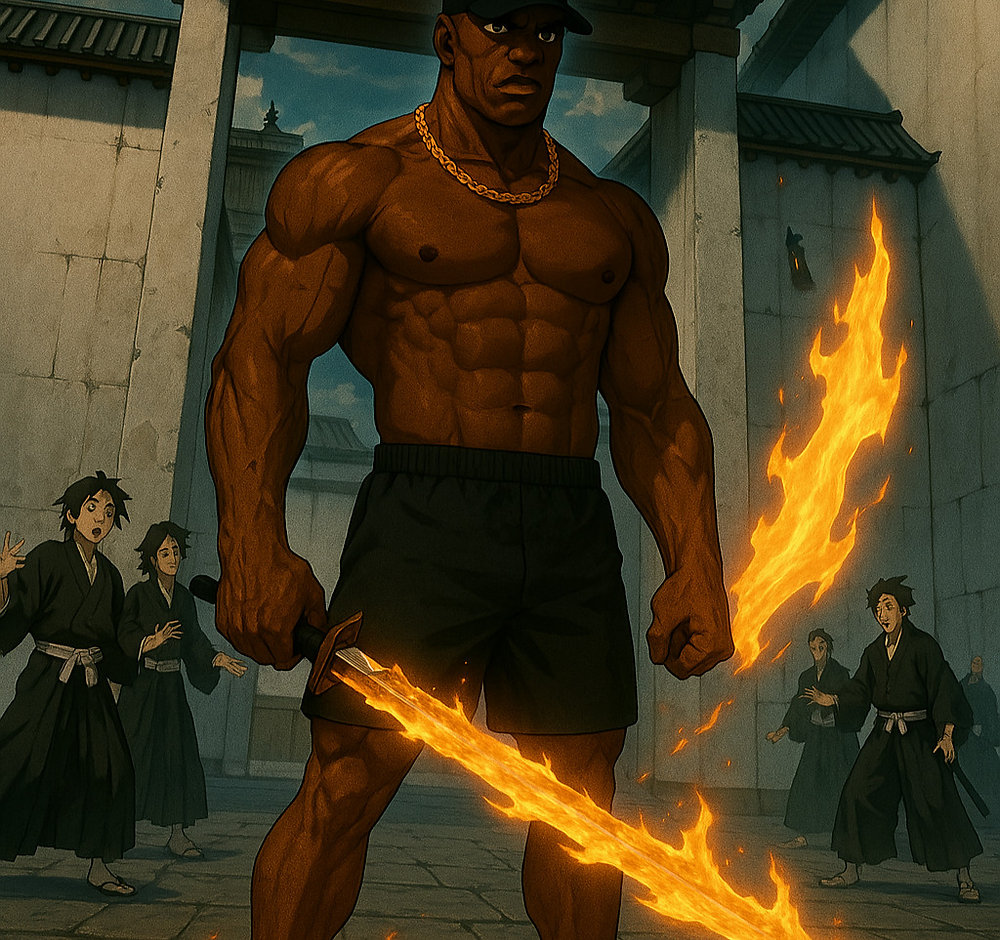
BLEACH: WHEN SPIRITUAL POWER MEETS SYSTEMATIC COMBAT EVOLUTION
Before you read another word, answer these questions honestly:
What capabilities are you expecting to develop through convenient breakthrough instead of systematic cultivation?
How does your preference for dramatic transformation prevent you from engaging with disciplined daily development?
When facing stronger opponents, do you seek power-ups or systematic evolution?
What would spiritual conditioning look like in your primary area of development?
Five years from now, when you look back at this moment, will you be grateful you cultivated systematically—or regretful you waited for awakening?
What up world, Xavier Savage here from xperformancelab.com.
Power without systematic evolution creates stagnation. Power WITH disciplined spiritual development creates Bleach—proof that authentic strength requires systematic pressure cultivation rather than convenient power-ups or dramatic breakthroughs.
I’m dissecting why Tite Kubo’s spiritual warrior epic represents systematic power development disguised as supernatural combat. While most spiritual anime focus on convenient awakening, Bleach demonstrates how real spiritual strength operates through disciplined cultivation that requires consistent training over extended periods.
Your body is your first kingdom. Your spiritual pressure is your first power. Ichigo didn’t become captain-level through convenient inheritance—he evolved through systematic combat pressure and disciplined development.
THE XPL ENERGY TIER FRAMEWORK
| Level | Focus | Icon | Client State |
|---|---|---|---|
| Level I: Awareness | Exposure | 🪞 | “I didn’t know what I didn’t know” |
| Level II: Activation | Questioning | ⚡ | “Maybe what I’ve been doing isn’t working” |
| Level III: Execution | Deployment | 🛠️ | “I execute regardless of how I feel” |
| Level IV: Elite Mode | Mastery | 🔥 | “How can I extract 10% more from this system?” |
| Level V: Peak Mastery | Integration | 🧠 | “Discipline is my default setting” |
This post is for Level IV readers. If you’re still waiting for spiritual awakening instead of cultivating daily, this analysis will expose your gaps.
XPL PERSPECTIVE FRAMEWORK
| Intensity | Icon | Purpose | When To Use |
|---|---|---|---|
| 🔍 | Surface Scan | Quick observations | Intro/transitions |
| ⚡ | Deep Cut | Tactical analysis | Main sections |
| 🔥 | Full Assault | Controversial takes | Hot takes/criticism |
| 💀 | Nuclear Option | Destroying sacred cows | Obliterating popular opinions |
BLEACH RATING BREAKDOWN
Story/Plot Development: Level III: Execution (🛠️🛠️🛠️/5)
Bleach constructs its spiritual warrior narrative like systematic exploration of power evolution through spiritual pressure cultivation. Each arc examines how authentic spiritual strength requires systematic training rather than convenient awakening.
What the series understands:
-
Power must be cultivated, not just acquired
-
Pressure reveals weakness; training addresses it
-
Evolution happens through combat, not comfort
-
Systematic development compounds over time
The Soul Society arc alone demonstrates how hierarchy creates pressure that forces growth. Ichigo enters as a intruder and leaves as a captain-level threat—not because he found hidden power, but because combat pressure forced systematic evolution.
XPL Performance Physics: Law 3—Systems Beat Intensity Over Time. Ichigo doesn’t win through emotional outbursts. He wins because each battle forces adaptation, and each adaptation builds on the last.
Savage Command: “Pressure doesn’t create diamonds from nothing. It compresses existing material into new form. Train what you have.”
Character Development: Level IV: Elite Mode (🔥🔥🔥🔥/5)
Ichigo’s evolution demonstrates how authentic spiritual power requires systematic development through combat pressure rather than convenient hollow inheritance or dramatic breakthrough.
His arc:
Phase 1—Initial Gift: Rukia’s powers awaken his potential, but potential isn’t capability. He can see spirits; he can’t fight them effectively.
Phase 2—Forced Development: Each enemy forces adaptation. Fishbone D. teaches him basics. Grand Fisher forces emotional control. Renji shows him the gap between talent and training.
Phase 3—Systematic Training: The Urahara boot camp isn’t dramatic—it’s systematic. Days of conditioning, technique development, pressure exposure. The training that looks like torture is actually progressive overload.
Phase 4—Combat Evolution: Each battle reveals new applications. Each defeat teaches new lessons. Each victory builds confidence and capability.
Phase 5—Integration: By the time he faces captain-level opponents, Ichigo isn’t relying on inherited power. He’s applying systematically developed capability.
XPL Performance Physics: Law 2—Identity Precedes Outcome. Ichigo’s identity shifts from “guy who can see ghosts” to “Soul Reaper” to “warrior” to “protector.” Each identity expansion enables new capability.
Identity Mirror: What spiritual capabilities are you expecting to develop through convenient breakthrough instead of systematic cultivation?
Animation/Fight Quality: Level IV: Elite Mode (🔥🔥🔥🔥/5)
Studio Pierrot delivers spiritual combat that serves power development themes through spectacular sword battles and spiritual pressure demonstration. Fight sequences show systematic capability evolution rather than convenient power showcase.
What the fights communicate:
-
Bankai isn’t power-up—it’s skill expression
-
Spiritual pressure reveals training quality
-
Technique beats raw power at high levels
-
Every battle has strategic layers beneath spectacle
Training translation: This is what happens when systematic training meets combat pressure. The fights aren’t just flashy—they’re demonstrations of development philosophy.
The Chain doesn’t negotiate. Neither should your training intensity.
Overall Impact/Rewatchability: Level IV: Elite Mode (🔥🔥🔥🔥/5)
Bleach rewards analysis like studying spiritual pressure cultivation rewards power understanding. Multiple viewings reveal development strategies that surface watchers miss.
What rewatching reveals:
-
Early training cues that later battles reward
-
Technique development across arcs
-
Strategic adaptation to different opponents
-
The compound effect of consistent pressure exposure
-
Character evolution through systematic combat
Savage Command: “Study what rewards rewatch. Development principles compound; spectacle fades.”
🔥 FULL ASSAULT: SYSTEMATIC EXCELLENCE VS. POPULAR TRASH
💀 Nuclear Option:
Bleach accomplishes what most spiritual warrior anime fail at: presenting authentic power development that requires systematic spiritual pressure cultivation rather than convenient awakening or dramatic breakthrough.
What the series understands about power development:
Principle 1—Potential isn’t capability.
Ichigo has massive spiritual pressure from the start. This potential means nothing without training. Kenpachi has even more potential—and remains undeveloped because he refuses systematic cultivation.
Principle 2—Pressure forces adaptation.
Combat isn’t just conflict—it’s development catalyst. Each battle exposes gaps that training can address. Characters who avoid combat avoid growth.
Principle 3—Training requires structure.
The Urahara boot camp isn’t random—it’s progressive overload. Days 1-3 build foundation. Days 4-7 increase intensity. Days 8-10 test limits. Days 11-14 integrate lessons.
Principle 4—Bankai isn’t given; it’s earned.
Achieving Bankai requires:
-
Complete understanding of your zanpakuto
-
Years of cultivation compressed through focused training
-
Forced evolution through pressure
-
Integration of spiritual aspects previously separate
Principle 5—The ceiling rises with capacity.
Each achievement reveals higher levels. Soul Reaper → seated officer → lieutenant → captain → Visored → transcendent. The path never ends; development compounds forever.
Compare this to typical power narratives:
-
Hidden power: Protagonist discovers they were special all along
-
Convenient inheritance: Power passed down, not developed
-
Emotional awakening: Strong feelings unlock capabilities
-
Dramatic breakthrough: One moment changes everything
Bleach has these elements—but surrounds them with systematic development. Ichigo’s hollow powers aren’t free; they cost control, identity, and constant training. His Quincy inheritance isn’t free; it requires integration with Soul Reaper abilities. Nothing comes without work.
The Mirror: What capabilities are you expecting to develop through convenient breakthrough instead of systematic cultivation?
The Chain: Your preference for dramatic awakening prevents systematic development. Break the pattern.
⚡ DEEP CUT: CHARACTER DEVELOPMENT PSYCHOLOGY
Ichigo: The Reluctant Warrior Who Chose Growth
Ichigo’s character represents systematic spiritual development through disciplined combat evolution rather than convenient inheritance.
His psychological foundation:
Protective instinct: His power exists to protect others, not for itself. This gives training meaning beyond personal gain.
Refusal to accept limits: Told he can’t achieve Bankai in days? He tries anyway. Told hollow powers will consume him? He integrates them anyway.
Learning through combat: Ichigo isn’t a natural student. He learns by doing, failing, adapting, trying again. Combat is his classroom.
Relationship with Zangetsu:
The Ichigo-Zangetsu dynamic is perfect spiritual partnership psychology:
-
Old Man Zangetsu: Protection, control, limitation disguised as care
-
Hollow Zangetsu: Power, instinct, chaos demanding expression
-
True Zangetsu: Integration of both—protection with power, control with chaos
The development arc:
Phase 1—External Power: Zangetsu as tool, not partner
Phase 2—Conflict: Inner struggle between protecting and fighting
Phase 3—Communication: Learning to hear, not just command
Phase 4—Integration: Accepting both aspects as self
Phase 5—True Partnership: Zangetsu as extension of Ichigo, not separate entity
XPL Performance Physics: Law 6—Identity Contradiction Creates Homeostatic Resistance. Ichigo’s human identity, Soul Reaper identity, hollow identity, and Quincy inheritance all conflict. Growth requires integration, not suppression.
Identity Mirror: What contradictory aspects of yourself need integration, not elimination?
Byakuya: Tradition That Learned to Adapt
Byakuya represents what happens when rigid systems encounter evidence they’re wrong.
His psychology:
-
Bound by law, tradition, family honor
-
Believes rules protect order
-
Sees deviation as threat
-
Executes his own sister for breaking rules
The evolution:
Phase 1—Certainty: Rules are absolute. His wife’s death, his sister’s execution—all justified by tradition.
Phase 2—Challenge: Ichigo defeats him not through greater power, but through different philosophy. Ichigo fights for people, not rules.
Phase 3—Crisis: If Ichigo can win with “wrong” philosophy, what does that say about Byakuya’s “right” philosophy?
Phase 4—Adaptation: Byakuya doesn’t abandon tradition—he integrates new understanding. Rules matter; people matter more.
Phase 5—Evolution: He becomes stronger because he’s no longer rigid. Flexibility without weakness. Principle without blindness.
XPL Application: This is what adaptation looks like at elite levels. Not abandoning what works—integrating new understanding with existing wisdom.
Kenpachi: Raw Power That Refused Development
Kenpachi represents the cost of refusing systematic cultivation.
His psychology:
-
Power through instinct, not training
-
Refuses to learn zanpakuto’s name
-
Subconsciously limits himself to make fights “fair”
-
Confuses intensity with capability
The tragedy:
Kenpachi could be the strongest in Soul Society. His raw spiritual pressure exceeds almost everyone. But because he refuses systematic development, he remains capped far below potential.
The breakthrough:
When finally forced to develop—to hear his zanpakuto, to train systematically—his power multiplies instantly. The potential was always there. The refusal to cultivate kept it locked.
XPL Performance Physics: Law 3—Systems Beat Intensity Over Time. Kenpachi’s intensity is enormous. But without system, it can’t compound. He remains exactly as strong as he was decades ago because intensity without evolution is just more of the same.
Identity Mirror: What potential are you leaving undeveloped because you refuse systematic cultivation?
⚡ DEEP CUT: WORLD-BUILDING & SYSTEMS THINKING
Soul Society as Development Hierarchy
Bleach constructs its Soul Society universe like systematic spiritual development laboratory where authentic power requires disciplined cultivation rather than convenient awakening.
The hierarchy reveals:
Shinigami Academy: Entry-level training for basic competence. Produces functional Soul Reapers, not warriors.
Seated Officers: Those who distinguished themselves through additional development. Rank reflects capability, not seniority.
Lieutenants: Elite support for captains. Required to achieve Bankai or demonstrate equivalent capability.
Captains: The peak of systematic development. All have achieved Bankai, mastered their zanpakuto, and proven capability over centuries.
Zero Division: Beyond captains—those whose development created something that protects all of Soul Society.
The lesson: Every level has requirements. You don’t advance by wanting—you advance by developing.
XPL Application: Your field has similar hierarchies. Entry level, competent, elite, master, legend. Each requires systematic development to achieve.
Savage Command: “Study your field’s hierarchy. Develop what each level requires.”
Zanpakuto as Development Partnership
Bleach presents zanpakuto as spiritual partners requiring cultivation, not tools to be wielded.
The development stages:
Stage 1—Asauchi: Blank blade requiring imprinting. Initial investment creates foundation.
Stage 2—Initial Manifestation: Name revealed, basic communication. Partnership begins.
Stage 3—Shikai: First level of true partnership. Technique development, power expression.
Stage 4—Bankai: Complete integration. Years of cultivation compressed through focused training. True partnership achieved.
Stage 5—Beyond Bankai: Post-hierarchy development. Further integration, technique refinement, capability expansion.
XPL Application: Your primary capability (physical, mental, spiritual) requires similar cultivation. You don’t just have it—you develop it through systematic partnership.
🔍 SURFACE SCAN: TRAINING/STRATEGY PHILOSOPHY
Bleach demonstrates how authentic power development requires specific approaches that casual practitioners never discover.
What the series teaches about systematic cultivation:
1. Foundation precedes technique.
Ichigo can’t learn advanced techniques without basic spiritual control. Renji can’t achieve Bankai without mastering Shikai. Foundation enables everything else.
Application: Are you attempting advanced work without solid foundation? What basics have you skipped?
2. Pressure forces adaptation.
Combat training isn’t cruelty—it’s development catalyst. Characters grow fastest under pressure they can survive but not dominate.
Application: What pressure are you exposing yourself to that forces adaptation?
3. Integration beats suppression.
Ichigo’s hollow isn’t enemy—it’s aspect of self needing integration. Characters who fight their darkness stay stuck. Those who integrate it evolve.
Application: What aspects of yourself are you fighting instead of integrating?
4. Partnership multiplies capability.
Zanpakuto partners, lieutenant-captain relationships, team formations—Bleach shows that individual capability multiplies through strategic partnership.
Application: Who’s your Zangetsu? Who multiplies your capability through partnership?
5. The ceiling is always rising.
Every achievement reveals higher levels. Bankai isn’t endpoint—it’s entry to higher competition. Those who think they’ve arrived stop growing.
Application: What’s your next level after current achievement?
6. Time compounds development.
Centuries of cultivation produce capability that years cannot match. This isn’t unfair—it’s compound interest applied to development.
Application: Are you patient enough for compound effects to accumulate?
XPL Performance Physics: Law 3—Systems Beat Intensity Over Time. The characters who develop systematically across centuries surpass those with momentary intensity.
Savage Command: “Train like development compounds across decades, not days.”
🔥 FULL ASSAULT: LEGACY & IMPACT
💀 Nuclear Option:
Bleach influenced spiritual anime to understand that authentic power requires systematic cultivation rather than convenient awakening.
What it accomplished:
Normalized training arcs as development: Showed that training isn’t preparation for story—it is story. The development itself matters.
Created zanpakuto partnership model: Demonstrated that power requires relationship, not just acquisition.
Explored integration psychology: Ichigo’s hollow integration influenced countless later protagonists.
Respected time’s role in development: Centuries of cultivation matter. Characters who’ve trained longer are stronger—unless others trained better.
The influence:
Jujutsu Kaisen‘s cursed technique mastery, Demon Slayer‘s breathing techniques, Black Clover‘s grimoire partnerships—all build on foundations Bleach helped establish.
Savage Command: “Build authentic spiritual power through systematic pressure cultivation, not convenient awakening fantasy.”
The Throne: Most people who prefer convenient spiritual awakening over systematic cultivation are revealing their unwillingness to commit to disciplined conditioning. They want power without work. Bleach proves that’s not how development works.
THE MASTERY SYMBOLS
🔗 The Chain: Your spiritual cultivation connects to your capability. Strong cultivation, strong power. Weak cultivation, weak power. No shortcuts.
🪞 The Mirror: When you watch Ichigo train while others rest, do you see any reflection of your own work ethic? What are you cultivating when no one’s watching?
👑 The Throne: How will you develop systematic spiritual cultivation in your primary area of development?
FINAL STRATEGIC ASSESSMENT
Bleach asks questions most narratives avoid:
What if power requires cultivation, not acquisition?
What if your potential means nothing without systematic development?
What if the aspects of yourself you’re fighting need integration, not suppression?
What if you could develop for centuries—are you patient enough for compound effects?
Savage Command: “Build authentic spiritual power through systematic pressure cultivation and disciplined combat evolution.”
Savage Command: “Develop spiritual capability that serves systematic power rather than dramatic breakthrough that ignores conditioning.”
Savage Command: “Choose systematic spiritual cultivation over convenient awakening that avoids disciplined development work.”
IDENTITY MIRROR QUESTIONS
What capabilities are you expecting to develop through convenient breakthrough instead of systematic cultivation?
How does your preference for dramatic spiritual awakening prevent you from engaging with systematic development?
What systematic spiritual cultivation approaches do you need for authentic power rather than seeking convenient awakening?
When do you choose spiritual fantasy over systematic cultivation that requires disciplined conditioning?
Where are you seeking awakening satisfaction instead of building authentic capability through systematic cultivation?
What contradictory aspects of yourself need integration, not elimination?
What potential are you leaving undeveloped because you refuse systematic cultivation?
ACTION TRIGGER QUESTIONS
What’s one capability you’ll start cultivating systematically instead of waiting to discover?
What foundation have you skipped that needs rebuilding?
What pressure will you expose yourself to that forces adaptation?
What aspect of yourself needs integration, not suppression?
Who’s your Zangetsu—who multiplies your capability through partnership?
What’s your next level after current achievement?
RESOURCE DROP
Follow my daily insights on Instagram @xperformancelab and YouTube @xperformancelab.
For those in Houston demanding the highest level of training, in-person sessions are available at VFit Gym, 5535 Richmond Ave, Houston, TX.
Elite online training systems at xperformancelab.com.
Take the Archetype Quiz to discover your specific body type protocol: xperformancelab.com/quiz
Inertia Over Inspiration. Always.
Execute.
Scroll to unlock levels
Level V Achieved
Now live it.
Unlocked
Leave a Reply