
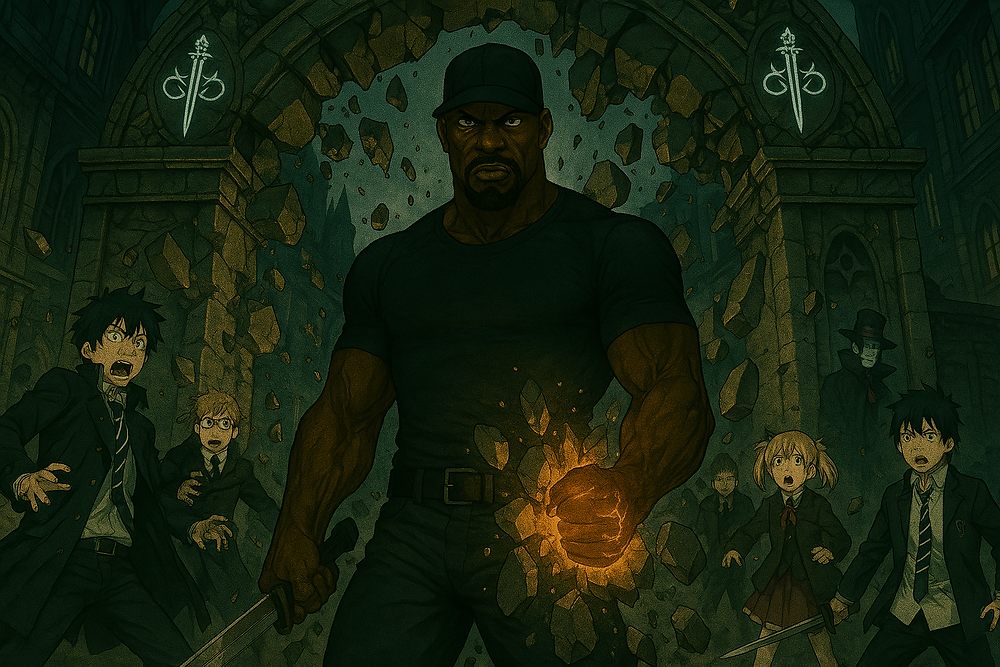
BLUE EXORCIST: WHEN DEMONIC HERITAGE MEETS SYSTEMATIC HOLY TRAINING
Before you read another word, answer these questions honestly:
What natural talents are you relying on instead of systematically developing through disciplined education?
How does your preference for “natural ability” prevent you from engaging with structured learning?
When facing your inheritance—whether genetic, social, or spiritual—do you accept it or train beyond it?
What would systematic educational development look like in your primary area of growth?
Five years from now, when you look back at this moment, will you be grateful you submitted to training—or regretful you assumed talent was enough?
What up world, Xavier Savage here from xperformancelab.com.
Power without systematic control creates destruction. Power WITH disciplined training creates Blue Exorcist—proof that authentic strength requires systematic capability development through institutional education rather than relying on natural talent or convenient supernatural inheritance.
I’m examining why this anime represents systematic supernatural education done right. While most demon power stories focus on dramatic awakening, Blue Exorcist demonstrates how real capability requires disciplined training through structured institutions rather than convenient inheritance.
Your body is your first kingdom. Your training is your first discipline. Rin inherits Satan’s power—enough to destroy everything. But inheritance without training is just destruction waiting to happen. The academy teaches him control, application, and purpose.
THE XPL ENERGY TIER FRAMEWORK
| Level | Focus | Icon | Client State |
|---|---|---|---|
| Level I: Awareness | Exposure | 🪞 | “I didn’t know what I didn’t know” |
| Level II: Activation | Questioning | ⚡ | “Maybe what I’ve been doing isn’t working” |
| Level III: Execution | Deployment | 🛠️ | “I execute regardless of how I feel” |
| Level IV: Elite Mode | Mastery | 🔥 | “How can I extract 10% more from this system?” |
| Level V: Peak Mastery | Integration | 🧠 | “Discipline is my default setting” |
This post is for Level III readers. If you’re still relying on natural talent instead of systematic training, this analysis will expose your gaps.
XPL PERSPECTIVE FRAMEWORK
| Intensity | Icon | Purpose | When To Use |
|---|---|---|---|
| 🔍 | Surface Scan | Quick observations | Intro/transitions |
| ⚡ | Deep Cut | Tactical analysis | Main sections |
| 🔥 | Full Assault | Controversial takes | Hot takes/criticism |
| 💀 | Nuclear Option | Destroying sacred cows | Obliterating popular opinions |
BLUE EXORCIST RATING BREAKDOWN
Story/Plot Development: Level III: Execution (🛠️🛠️🛠️/5)
Blue Exorcist constructs its exorcist academy narrative like systematic exploration of supernatural education through institutional structure. Each arc examines how authentic capability requires systematic education rather than natural talent or convenient inheritance.
What the series understands:
-
Inheritance without training is just potential
-
Institutions exist because individual training has limits
-
Structured education accelerates development
-
Peers provide pressure teachers cannot
Rin enters the academy with more raw power than almost anyone. He also enters with less control than almost anyone. The series asks: What good is power you can’t direct?
XPL Performance Physics: Law 2—Identity Precedes Outcome. Rin’s identity as “Satan’s son” conflicts with his goal of becoming an exorcist. The academy forces identity integration—not rejection of his heritage, but integration into a new self-definition.
Savage Command: “Inheritance determines your starting point. Training determines your finish line.”
Character Development: Level III: Execution (🛠️🛠️🛠️/5)
Rin’s evolution demonstrates how authentic supernatural strength requires systematic training rather than relying on demonic heritage.
His arc:
Phase 1—Ignorant Inheritance: He doesn’t know his true nature. He’s just a problem child with unexplained abilities and uncontrollable reactions.
Phase 2—Revelation: Learning he’s Satan’s son shatters his identity. Everything he thought he was becomes question mark.
Phase 3—Rejection of Destiny: He refuses to become what his inheritance suggests. He chooses exorcist—one who fights demons—despite being half-demon.
Phase 4—Systematic Training: The academy forces him to start from basics. His power means nothing without control. He must learn what others learned years ago.
Phase 5—Integration: He doesn’t reject his demonic side or embrace it fully. He integrates it—using demonic power for exorcist purposes, transforming curse into tool.
XPL Performance Physics: Law 6—Identity Contradiction Creates Homeostatic Resistance. Rin’s identity as demon and exorcist creates constant tension. Growth requires holding both, not choosing one.
Identity Mirror: What natural talents are you relying on instead of systematically developing through disciplined education?
Animation/Fight Quality: Level IV: Elite Mode (🔥🔥🔥🔥/5)
A-1 Pictures delivers supernatural combat that serves training themes through spectacular action sequences demonstrating systematic capability development rather than convenient power showcase.
What the fights communicate:
-
Raw power without control loses to controlled power
-
Technique developed through training beats instinct
-
Institutional education creates predictable competence
-
Inheritance without training is liability
Training translation: This is what happens when natural talent meets systematic development. The talent matters; the training matters more.
The Chain doesn’t negotiate. Neither should your commitment to education.
Overall Impact/Rewatchability: Level III: Execution (🛠️🛠️🛠️/5)
Blue Exorcist rewards analysis like studying systematic education rewards development understanding. Multiple viewings reveal training methodologies and institutional approaches that surface watchers miss.
What rewatching reveals:
-
Early educational foundations that later battles reward
-
Technique development across the academy experience
-
Peer pressure as development catalyst
-
The gap between inheritance and competence
Savage Command: “Study what rewards rewatch. Educational principles compound; supernatural spectacle fades.”
🔥 FULL ASSAULT: SYSTEMATIC EXCELLENCE VS. POPULAR TRASH
💀 Nuclear Option:
Blue Exorcist accomplishes what most supernatural education anime fail at: presenting authentic capability development that requires systematic training and institutional education rather than convenient natural talent or demonic inheritance.
What the series understands about educational development:
Principle 1—Inheritance isn’t capability.
Rin has Satan’s power. This means nothing without training. He can’t control it, can’t direct it, can’t sustain it. Power without control is just chaos waiting to happen.
Principle 2—Institutions exist for reason.
The academy isn’t bureaucracy—it’s accumulated wisdom. Generations of exorcists developed techniques, protocols, and training methods that individual discovery could never match.
Principle 3—Peers provide necessary pressure.
Teachers set curriculum; peers create competition. Rin grows not just because he’s taught, but because he sees others his age with skills he lacks. Comparison creates motivation.
Principle 4—Foundations enable everything.
Rin wants advanced techniques immediately. The academy forces basics. He resents it—until basics save his life when advanced techniques fail.
Principle 5—Integration beats rejection.
Rin could reject his demonic side (impossible, dangerous) or embrace it (becoming what he fights). Instead, he integrates—using demonic power for exorcist purposes, transforming curse into tool.
Compare this to typical supernatural narratives:
-
Hidden power revealed: Protagonist discovers they were special all along
-
Inheritance as destiny: Blood determines capability
-
Individual genius: Lone protagonist outperforms institutions
-
Rejection of darkness: Hero rejects “evil” inheritance entirely
Blue Exorcist refuses every simplicity. Rin’s inheritance is real and dangerous. Institutions have value. Peers matter. Integration, not rejection, is the path.
The Mirror: What natural talents are you relying on instead of systematically developing through disciplined education?
The Chain: Your preference for natural ability prevents engagement with systematic learning. Break the pattern.
⚡ DEEP CUT: CHARACTER DEVELOPMENT PSYCHOLOGY
Rin: The Inheritor Who Chose Training
Rin’s character demonstrates how authentic supernatural development requires systematic training and institutional education rather than relying on demonic heritage.
His psychological entry state:
-
Uncontrolled reactions to emotional triggers
-
Shame about his “problem child” reputation
-
No understanding of his own nature
-
Defensiveness masking confusion
The revelation’s impact:
Learning he’s Satan’s son doesn’t liberate him—it terrifies him. Everything he thought he was becomes question. His identity dissolves.
The choice:
He could embrace his inheritance (become what he’s “meant” to be). He could reject it entirely (impossible, dangerous). Instead, he chooses a third path: transformation through training.
The academy experience:
Phase 1—Humiliation: He’s behind everyone. His power means nothing without control. He must learn what others learned years ago.
Phase 2—Resistance: He wants shortcuts. He wants to use his power now. The academy refuses.
Phase 3—Acceptance: He realizes foundations matter. Basics enable everything else.
Phase 4—Integration: He stops seeing his demonic side as separate. It’s part of him—to be used, not rejected or embraced.
Phase 5—Purpose: Power gains meaning through direction. He fights not despite being demon, but because being demon gives him unique capability to fight demons.
XPL Performance Physics: Law 2—Identity Precedes Outcome. Rin’s identity shifts from “Satan’s son” to “exorcist who happens to have demonic power.” The identity change enables the capability.
Identity Mirror: What identities are you holding that prevent systematic development?
Yukio: The “Normal” Brother with Different Pressure
Yukio represents the opposite path—natural talent developed systematically, but with different psychological costs.
His psychology:
-
Gifted, recognized, advanced early
-
Pressure to excel constantly
-
Living in brother’s shadow despite greater achievement
-
Cannot express vulnerability because he’s “the strong one”
The contrast with Rin:
Rin has power without control. Yukio has control without power’s full expression. Rin struggles with basics; Yukio struggles with expectations. Both face development challenges; both require different training approaches.
The lesson:
There’s no single path to capability. Rin needs foundations; Yukio needs permission to struggle. Educational systems must account for individual difference.
XPL Application: Your development path is yours. Compare to others for motivation, not measurement.
Mephisto: The Institution Embodied
Mephisto represents what institutions can become—and their dangers.
His psychology:
-
Ancient, powerful, knowing
-
Plays games within games
-
Uses institution for purposes beyond education
-
Tests students in ways that feel cruel but serve growth
The ambiguity:
Is Mephisto ally or enemy? Yes. Both. Neither. He serves the institution, which serves exorcism, which serves humanity. His methods may serve multiple purposes simultaneously.
The lesson:
Institutions have agendas beyond your development. Learn from them; don’t be captured by them.
XPL Application: Your educational environment serves you and uses you. Know the difference.
⚡ DEEP CUT: WORLD-BUILDING & SYSTEMS THINKING
True Cross Academy as Development System
Blue Exorcist constructs its exorcist academy setting like systematic education laboratory where supernatural capability requires disciplined training rather than natural talent.
The academy’s structural elements:
Curriculum progression: Basics before advanced. Theory before application. Individual before team. Each stage prepares for next.
Assessment metrics: Exams, missions, peer evaluation. Multiple measures prevent gaming single system.
Specialization paths: Different exorcist classes (Dragon, Knight, Doctor, etc.) allow different capability development trajectories.
Peer pressure: Seeing others your age with advanced skills creates motivation teachers cannot.
Safety protocols: Training happens in controlled environments before real missions. Failure in training teaches; failure in missions kills.
XPL Application: This is what effective educational systems look like. Progression, measurement, specialization, competition, safety—all working together.
Savage Command: “Study your field’s educational system. Learn what it teaches; learn what it hides.”
The Exorcist Classification System
Blue Exorcist presents exorcist classes as different capability development paths:
Dragon Exorcists: Combat specialists. Direct engagement, physical techniques, close-quarters capability.
Knight Exorcists: Weapon specialists. Sword techniques, weapon-based combat, precision application.
Doctor Exorcists: Healing and support. Not all capability is combat capability.
Aria Exorcists: Ritual and sealing. Knowledge-based power, technique over strength.
Tamer Exorcists: Familiar coordination. Partnership-based capability, multiplying through relationship.
The lesson: Different capabilities require different development paths. No single path is “best”—only best for specific purposes.
XPL Application: Your field has specializations. Which fits your nature? Which develops your capability?
🔍 SURFACE SCAN: TRAINING/STRATEGY PHILOSOPHY
Blue Exorcist demonstrates how authentic capability development requires specific approaches that casual learners never discover.
What the series teaches about systematic education:
1. Foundations enable everything.
Rin wants advanced techniques immediately. The academy forces basics. He resents it—until basics save his life. Foundations aren’t preparation for training—they are training.
Application: What basics have you skipped that now limit your advanced work?
2. Institutions compress learning time.
Individual discovery takes generations. Institutions compress that into years. Rin learns in months what took centuries to discover.
Application: Are you trying to discover what you could learn? Institutions exist to accelerate development.
3. Peers create pressure teachers cannot.
Teachers set standards; peers create competition. Seeing others your age with advanced skills creates motivation no lecture can match.
Application: Who’s your peer pressure—positive or negative? Are you surrounded by people ahead of you?
4. Integration beats rejection.
Rin doesn’t reject his demonic side or embrace it fully. He integrates—using demonic power for exorcist purposes. Your “dark” aspects aren’t enemies; they’re resources needing direction.
Application: What aspects of yourself are you fighting that need integration instead?
5. Purpose directs power.
Power without purpose destroys. Rin’s power gains meaning through exorcist training. Not “what can I do” but “what should I do with what I can do.”
Application: What’s your purpose for capability? Power without direction is just destruction waiting to happen.
6. Educational systems have limits.
The academy teaches exorcism within institutional framework. Some truths lie outside that framework. Learn the system; know its boundaries.
Application: What does your educational system not teach? What lies outside its framework?
XPL Performance Physics: Law 3—Systems Beat Intensity Over Time. The academy is a system for capability development. Those who work the system develop faster than those who fight it.
Savage Command: “Train through institutions, not just despite them.”
🔥 FULL ASSAULT: LEGACY & IMPACT
💀 Nuclear Option:
Blue Exorcist influenced supernatural anime to understand that authentic capability requires systematic education rather than natural talent or convenient inheritance.
What it accomplished:
Legitimized institutional training: Showed that academies aren’t just settings—they’re development systems with value.
Explored inheritance integration: Rin’s path influenced how later protagonists handle “dark” inheritance.
Demonstrated peer effects: Showed that development happens through competition, not just instruction.
Respected educational time: No shortcuts. Rin must learn what others learned. Time in training matters.
The influence:
Jujutsu Kaisen‘s jujutsu high, My Hero Academia‘s UA, Demon Slayer‘s training arcs—all build on foundations Blue Exorcist helped establish.
Savage Command: “Build authentic supernatural capability through systematic education and disciplined training, not natural talent reliance.”
The Throne: Most people who prefer convenient supernatural inheritance over systematic education are revealing their unwillingness to commit to disciplined learning. They want capability without training. Blue Exorcist proves that’s not how development works.
THE MASTERY SYMBOLS
🔗 The Chain: Your education connects to your capability. Strong education, strong capability. Weak education, weak capability. No shortcuts.
🪞 The Mirror: When you watch Rin struggle with basics while wanting advanced techniques, do you see any reflection of your own impatience? What foundations have you skipped?
👑 The Throne: How will you develop systematic educational approaches in your primary area of development?
FINAL STRATEGIC ASSESSMENT
Blue Exorcist asks questions most narratives avoid:
What if inheritance isn’t destiny? What if what you’re born with matters less than what you develop?
What if institutions have value? What if structured education accelerates development beyond individual discovery?
What if your “dark” aspects need integration, not rejection?
What if power without purpose is just destruction waiting to happen?
Savage Command: “Build authentic supernatural capability through systematic education and disciplined training rather than natural talent reliance.”
Savage Command: “Develop institutional competence that serves systematic capability rather than natural ability that ignores disciplined learning.”
Savage Command: “Choose systematic educational development over convenient supernatural inheritance that avoids disciplined training work.”
IDENTITY MIRROR QUESTIONS
What natural talents are you relying on instead of systematically developing through disciplined education?
How does your preference for natural ability prevent you from engaging with systematic education?
What systematic educational approaches do you need for authentic capability development rather than relying on natural talent?
When do you choose convenient inheritance over systematic education that requires disciplined training?
Where are you seeking natural talent satisfaction instead of building authentic capability through systematic education?
What identities are you holding that prevent systematic development?
What foundations have you skipped that now limit advanced work?
ACTION TRIGGER QUESTIONS
What’s one capability you’ll start developing through systematic education instead of natural reliance?
What foundation have you skipped that needs rebuilding?
What educational institution could accelerate your development?
Who’s your peer pressure—positive or negative?
What aspect of yourself needs integration, not rejection?
What’s your purpose for capability development?
RESOURCE DROP
Follow my daily insights on Instagram @xperformancelab and YouTube @xperformancelab.
For those in Houston demanding the highest level of training, in-person sessions are available at VFit Gym, 5535 Richmond Ave, Houston, TX.
Elite online training systems at xperformancelab.com.
Take the Archetype Quiz to discover your specific body type protocol: xperformancelab.com/quiz
Inertia Over Inspiration. Always.
Execute.
Scroll to unlock levels
Level V Achieved
Now live it.
Unlocked
Leave a Reply