
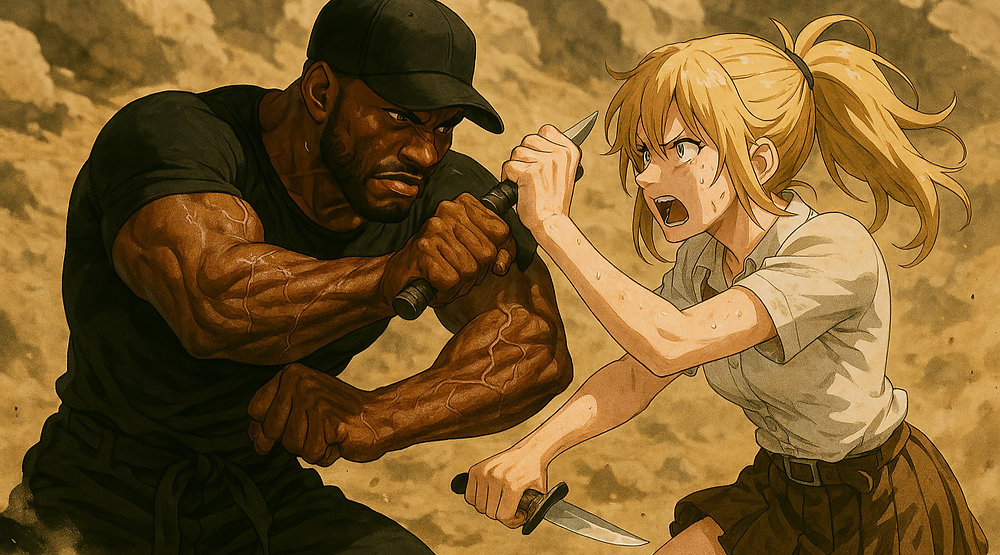
BTOOOM!: WHEN GAMING PSYCHOLOGY MEETS SYSTEMATIC SURVIVAL WARFARE
Before you read another word, answer these questions honestly:
What virtual competencies are you maintaining instead of translating to real-world application?
How does your comfort with digital achievement prevent you from developing physical capability?
When gaming skills meet real pressure, would you adapt or break?
What would systematic translation from virtual to physical look like in your primary domain?
Five years from now, when you look back at this moment, will you be grateful you translated skills—or regretful you stayed comfortable in digital spaces?
What up world, Xavier Savage here from xperformancelab.com.
Gaming without real consequences creates fantasy. Gaming WITH systematic life-or-death pressure creates Btooom!—brutal proof that authentic strategic thinking requires translating virtual skills into physical survival rather than remaining trapped in comfortable digital abstractions.
I’m breaking down why this anime exposes the gap between virtual competence and systematic real-world capability. While most gaming stories celebrate digital achievement, Btooom! demonstrates how authentic strategic thinking must transfer from virtual environments to physical survival situations that demand systematic adaptation.
Your body is your first kingdom. Your skills mean nothing if they only exist in simulations. Ryouta is ranked among the world’s best in Btooom! the game. When the game becomes real, his ranking means nothing. Adaptation means everything.
THE XPL ENERGY TIER FRAMEWORK
| Level | Focus | Icon | Client State |
|---|---|---|---|
| Level I: Awareness | Exposure | 🪞 | “I didn’t know what I didn’t know” |
| Level II: Activation | Questioning | ⚡ | “Maybe what I’ve been doing isn’t working” |
| Level III: Execution | Deployment | 🛠️ | “I execute regardless of how I feel” |
| Level IV: Elite Mode | Mastery | 🔥 | “How can I extract 10% more from this system?” |
| Level V: Peak Mastery | Integration | 🧠 | “Discipline is my default setting” |
This post is for Level III readers. If you’re still treating virtual achievement as real capability, this analysis will expose your gaps.
XPL PERSPECTIVE FRAMEWORK
| Intensity | Icon | Purpose | When To Use |
|---|---|---|---|
| 🔍 | Surface Scan | Quick observations | Intro/transitions |
| ⚡ | Deep Cut | Tactical analysis | Main sections |
| 🔥 | Full Assault | Controversial takes | Hot takes/criticism |
| 💀 | Nuclear Option | Destroying sacred cows | Obliterating popular opinions |
BTOOOM! RATING BREAKDOWN
Story/Plot Development: Level III: Execution (🛠️🛠️🛠️/5)
Btooom! constructs its survival game narrative like systematic exploration of gaming psychology translation to real-world survival situations. Each encounter examines how virtual skills must adapt to physical reality that demands authentic strategic thinking.
What the series understands:
-
Virtual competence is not real capability
-
Skills must translate across contexts
-
Pressure reveals translation gaps
-
The game teaches principles; survival teaches application
Ryouta is a world-class Btooom! player. He knows bomb types, tactical placements, psychological warfare, and strategic timing. When the game becomes real, he discovers that knowing and doing are different domains.
XPL Performance Physics: Law 3—Systems Beat Intensity Over Time. Ryouta’s virtual systems work in digital environments. Physical survival requires adapted systems—same principles, different application.
Savage Command: “Your skills only count where they’re tested. Test them everywhere.”
Character Development: Level III: Execution (🛠️🛠️🛠️/5)
Ryouta’s evolution from virtual gaming expert to real-world survivor demonstrates how authentic strategic capability requires systematic translation of digital skills to physical survival.
His arc:
Phase 1—Virtual Mastery: He’s elite in the game. Knows every bomb, every tactic, every psychological principle. His ranking proves competence—in digital space.
Phase 2—Reality Shock: Wakes up on island with BIMs (bombs) and no explanation. His first real encounter nearly kills him. Game skills don’t automatically translate.
Phase 3—Translation Crisis: He realizes the gap between knowing and doing. In game, death means restart. Here, death means death. The stakes change everything.
Phase 4—Systematic Adaptation: He doesn’t abandon game knowledge—he translates it. Bomb types still work; tactical principles still apply. But timing changes. Psychology changes. Consequences change everything.
Phase 5—Integration: By the end, he’s not just a gamer surviving—he’s a survivor who happens to have gaming skills. The identity shift enables the capability translation.
XPL Performance Physics: Law 2—Identity Precedes Outcome. Ryouta had to stop being “gamer in survival situation” and become “survivor with gaming background.” Identity shift enabled skill translation.
Identity Mirror: What virtual competencies are you maintaining instead of translating to real-world application?
Animation/Fight Quality: Level III: Execution (🛠️🛠️🛠️/5)
Madhouse delivers survival combat that serves gaming psychology themes rather than action spectacle. Fight sequences demonstrate strategic thinking adaptation rather than convenient gaming translation.
What the fights communicate:
-
BIMs (bombs) have predictable properties—if you understand them
-
Terrain matters more in reality than in games
-
Psychology shifts when stakes are real
-
The same tactic produces different results with real consequences
Training translation: This is what happens when skills meet stakes. The principles remain; the application transforms.
The Chain doesn’t negotiate. Neither should your translation work.
Overall Impact/Rewatchability: Level III: Execution (🛠️🛠️🛠️/5)
Btooom! rewards analysis like studying strategic thinking translation rewards capability understanding. Multiple viewings reveal adaptation strategies that surface watchers miss.
What rewatching reveals:
-
Early game cues that later survival moments reward
-
Translation failures that teach adaptation principles
-
Psychological shifts when stakes become real
-
The gap between knowing and doing
Savage Command: “Study what rewards rewatch. Translation principles compound; gaming spectacle fades.”
🔥 FULL ASSAULT: SYSTEMATIC EXCELLENCE VS. POPULAR TRASH
💀 Nuclear Option:
Btooom! accomplishes what most gaming anime fail at: presenting authentic skill translation that requires systematic adaptation from virtual competence to real-world survival rather than convenient gaming success.
What the series understands about skill translation:
Principle 1—Virtual competence is not real capability.
Ryouta is world-class in the game. This means nothing on the island. The game taught principles; survival teaches application. They are not the same.
Principle 2—Stakes change everything.
In game, death means restart. Here, death means death. This changes:
-
Decision-making (caution replaces experimentation)
-
Psychology (fear replaces curiosity)
-
Strategy (survival replaces victory)
-
Relationships (trust becomes life-or-death)
Principle 3—Skills must translate across contexts.
Bomb types still work. Tactical principles still apply. But:
-
Timing changes (real explosions have real physics)
-
Terrain matters more (can’t respawn)
-
Psychology shifts (opponents are desperate, not playing)
-
Consequences compound (every choice has permanent effects)
Principle 4—Translation requires systematic adaptation.
Ryouta doesn’t abandon game knowledge—he adapts it systematically. He tests principles in new context, observes differences, adjusts approach, tests again. Translation is process, not event.
Principle 5—Identity must shift.
As long as Ryouta sees himself as “gamer in survival situation,” he’s handicapped. When he becomes “survivor with gaming background,” game knowledge becomes tool rather than identity.
Compare this to typical gaming narratives:
-
Game skills automatically work: Digital competence transfers magically
-
Higher score wins: Ranking determines real-world outcomes
-
Game logic applies: Physics, consequences, psychology remain identical
-
No translation required: Virtual and real are same domain
Btooom! refuses every convenience. Translation is work. Adaptation is systematic. Identity must shift.
The Mirror: What virtual competencies are you maintaining instead of systematically translating them to real-world applications?
The Chain: Your comfort with digital achievement prevents systematic translation. Break the pattern.
⚡ DEEP CUT: CHARACTER DEVELOPMENT PSYCHOLOGY
Ryouta: The Gamer Who Had to Become Survivor
Ryouta’s character demonstrates how authentic strategic development requires systematic translation from virtual competence to real-world survival capability.
His psychological entry state:
-
Confidence based on game ranking
-
Assumes digital skills equal real capability
-
Views island as “game” initially
-
Underestimates psychological weight of real stakes
The translation crisis:
First real encounter reveals the gap. He knows what to do—but can’t execute. Hands shake. Decisions freeze. Fear replaces flow state. Game knowledge exists; game application doesn’t.
The adaptation process:
Phase 1—Recognition: He admits the gap exists. Game skills aren’t enough.
Phase 2—Observation: He watches how others survive. Some use game principles adapted; some use完全不同 approaches.
Phase 3—Systematic Testing: He tests game principles in real context. What works? What doesn’t? What needs adjustment?
Phase 4—Integration: He combines game knowledge with survival learning. BIM tactics plus terrain awareness plus psychological understanding.
Phase 5—Identity Shift: He stops being “gamer in survival situation.” He becomes survivor who happens to have gaming background.
XPL Performance Physics: Law 4—Recovery Drives Adaptation. Ryouta grows between encounters, processing what worked and what didn’t. The reflection matters as much as the action.
Identity Mirror: What identity do you need to shift to enable skill translation?
Himiko: Trauma That Demanded Adaptation
Himiko represents what happens when trauma forces translation—whether you’re ready or not.
Her psychology:
-
Sexually assaulted before island
-
Deep distrust of men
-
Survival instinct overriding everything
-
Skills developed through desperation, not training
The contrast with Ryouta:
Ryouta has systematic knowledge but must translate it. Himiko has no systematic knowledge—but her desperation creates rapid, brutal adaptation. She learns what works through immediate feedback (death or survival).
The partnership:
Together, they combine:
-
Ryouta’s systematic knowledge (bomb types, tactics, principles)
-
Himiko’s survival-tested adaptation (what actually works under pressure)
-
Mutual protection (trust as survival strategy)
XPL Application: Different paths produce different capabilities. Systematic training plus pressure-tested adaptation creates maximum capability.
The Other Players: Different Translation Strategies
Btooom! populates its island with characters representing different approaches to translation:
The Gamer Who Never Translates: Continues playing as if game, dies quickly. Game skills without adaptation = death.
The Brutal Realist: No game knowledge, pure survival instinct. Lives longer but lacks strategic depth.
The Manipulator: Uses psychology over bombs. Translates social skills to survival context.
The Team Player: Partnerships multiply capability. Trust as survival strategy.
The lesson: Multiple translation paths exist. Find yours.
⚡ DEEP CUT: WORLD-BUILDING & SYSTEMS THINKING
The Island as Translation Laboratory
Btooom! constructs its island survival setting like systematic translation laboratory where virtual gaming skills must adapt to real-world survival pressure.
The environment’s structural elements:
BIMs (bombs): Game elements made real. Same types, same properties—but real physics, real consequences, real kill radius.
Terrain: Game maps are designed for balance. Real terrain is indifferent—advantage or disadvantage based on reality, not design.
Other players: Game opponents are AI with predictable patterns. Real opponents are humans with desperation, fear, creativity, and unpredictability.
No respawns: Game’s core mechanic removed. One mistake = permanent exit. This changes everything.
The translation pressure:
The island forces translation because game rules + real consequences = new game. Those who adapt fastest survive longest.
XPL Application: Your environment similarly pressures translation. What virtual skills need real-world adaptation?
Savage Command: “Your environment will force translation whether you’re ready or not. Prepare systematically.”
BIM Combat as Strategic System
Btooom! presents BIM combat as system requiring translation, not just application:
BIM types: Different bombs serve different purposes. Game knowledge identifies them; survival wisdom deploys them appropriately.
Timing: In game, timers are predictable. In reality, terrain, movement, and human factors change timing calculus.
Placement: Game maps have optimal spots. Real terrain has infinite variables—cover, elevation, escape routes, sight lines.
Psychology: Game opponents react predictably. Real humans react with fear, desperation, creativity, and unpredictability.
The translation requirement:
Game knowledge provides principles. Survival requires application of principles to infinite variables.
XPL Application: Your training provides principles. Your environment demands application. Translation is the bridge.
🔍 SURFACE SCAN: TRAINING/STRATEGY PHILOSOPHY
Btooom! demonstrates how authentic strategic capability requires specific translation approaches that virtual-only training never develops.
What the series teaches about skill translation:
1. Virtual competence is not real capability.
Ryouta’s game ranking means nothing on the island. The skills are real; the context transforms everything.
Application: What skills do you have that only work in one context? Where else could they apply with translation?
2. Stakes change psychology.
In game, death means restart. Here, death means death. This changes decision-making, risk tolerance, and strategic approach.
Application: How do your decisions change when stakes increase? Are you training with appropriate stakes?
3. Translation requires systematic adaptation.
Ryouta doesn’t abandon game knowledge—he tests it, adjusts it, rebuilds it for new context. Translation is process, not event.
Application: What systematic process do you have for translating skills across contexts?
4. Identity must shift.
As long as Ryouta sees himself as “gamer in survival situation,” he’s handicapped. When he becomes “survivor with gaming background,” game knowledge becomes tool rather than identity.
Application: What identity do you need to shift to enable skill translation?
5. Partnership multiplies translation capability.
Ryouta and Himiko together translate faster than either alone. Different perspectives create faster adaptation.
Application: Who’s translating with you? Different perspectives accelerate everyone.
6. Failure is translation data.
Every mistake teaches something about the gap between virtual and real. Ryouta who fails and learns outlasts Ryouta who never fails but never adapts.
Application: Are you treating failure as translation data or identity threat?
XPL Performance Physics: Law 3—Systems Beat Intensity Over Time. Translation requires systematic process, not intense effort. Test, observe, adjust, repeat.
Savage Command: “Translate systematically or die accidentally.”
🔥 FULL ASSAULT: LEGACY & IMPACT
💀 Nuclear Option:
Btooom! influenced gaming anime to understand that authentic strategic capability requires systematic translation from virtual to real-world application rather than comfortable digital competence.
What it accomplished:
Exposed the translation gap: Showed that virtual skills don’t automatically transfer. Translation requires work.
Normalized adaptation narratives: Presented adaptation as heroism, not failure. Ryouta’s translation struggle is the story.
Demonstrated stakes’ effect: Made explicit how consequences change psychology, decision-making, and capability.
Respected translation difficulty: No magical transfer. Translation takes time, testing, and systematic effort.
The influence:
Later survival game narratives incorporated translation themes—showing that skills must adapt, not just apply. Sword Art Online‘s death game arcs, Darwin’s Game, and Future Diary all build on foundations Btooom! helped establish.
Savage Command: “Build authentic strategic capability through systematic translation from virtual skills to real-world application.”
The Throne: Most people who prefer virtual gaming achievement over systematic real-world translation are revealing their unwillingness to adapt. They want digital comfort without physical pressure. Btooom! proves that’s not how capability works.
THE MASTERY SYMBOLS
🔗 The Chain: Your skills connect to your capability only through translation. Weak translation, weak capability. Strong translation, strong capability.
🪞 The Mirror: When you watch Ryouta struggle with translation, do you see any reflection of your own skill gaps? What virtual competencies need real-world adaptation?
👑 The Throne: How will you develop systematic translation from virtual to physical in your primary domain?
FINAL STRATEGIC ASSESSMENT
Btooom! asks questions most narratives avoid:
What if your virtual skills don’t translate automatically?
What if stakes change everything about capability?
What if identity must shift before skills can transfer?
What if translation is systematic work, not magical transfer?
Savage Command: “Build authentic strategic capability through systematic translation from virtual skills to real-world application, not digital comfort.”
Savage Command: “Develop real-world strategic thinking that serves physical capability rather than virtual competence that ignores systematic pressure adaptation.”
Savage Command: “Choose systematic skill translation over comfortable virtual achievement that avoids real-world application work.”
IDENTITY MIRROR QUESTIONS
What virtual competencies are you maintaining instead of systematically translating to real-world applications?
How does your comfort with digital achievement prevent you from developing systematic translation?
What systematic skill translation approaches do you need for authentic real-world capability?
When do you choose comfortable virtual achievement over systematic skill translation that requires real-world application?
Where are you seeking digital competence satisfaction instead of building authentic strategic capability through systematic translation?
What identity do you need to shift to enable skill translation?
Who’s translating with you?
ACTION TRIGGER QUESTIONS
What’s one virtual skill you’ll start translating to real-world application this week?
What systematic process will you use to test, observe, and adjust?
Who’s translating with you—different perspectives accelerate everyone?
What stakes can you introduce to make translation more real?
What failure from last month can you mine for translation data?
What identity shift would enable your skills to transfer?
RESOURCE DROP
Follow my daily insights on Instagram @xperformancelab and YouTube @xperformancelab.
For those in Houston demanding the highest level of training, in-person sessions are available at VFit Gym, 5535 Richmond Ave, Houston, TX.
Elite online training systems at xperformancelab.com.
Take the Archetype Quiz to discover your specific body type protocol: xperformancelab.com/quiz
Inertia Over Inspiration. Always.
Execute.
Scroll to unlock levels
Level V Achieved
Now live it.
Unlocked
Leave a Reply