
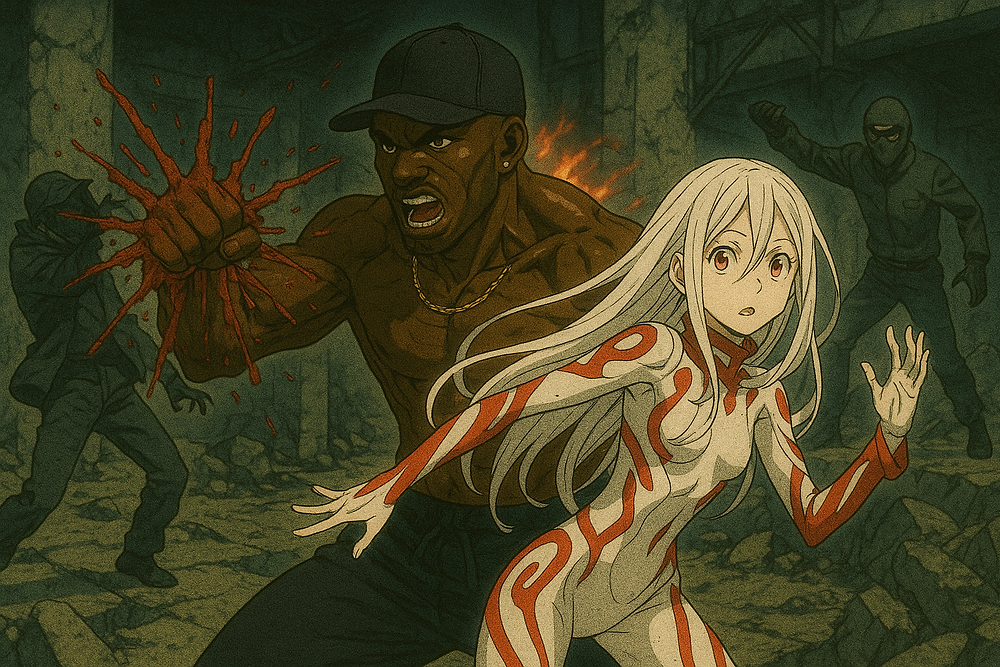
DEADMAN WONDERLAND: WHEN OPPRESSION MEANS SURVIVAL CONDITIONING — Level III: Execution
Before you read another word, answer these questions honestly:
What oppressive conditions in your life require adaptation instead of hoping for rescue?
How does your preference for “justice” fantasies prevent you from developing real survival skills?
When escape is impossible, do you break or adapt?
What would resilience look like if you accepted your environment instead of fighting it?
Five years from now, when you look back at this moment, will you have adapted or just wished things were different?
What up world, Xavier Savage here from xperformancelab.com.
Survival without adaptation creates victimhood. Survival WITH strategic conditioning creates Deadman Wonderland—brutal proof that authentic resilience requires adapting to oppressive systems rather than hoping for justice or rescue that ignores environmental reality.
I’m examining why this anime delivers uncompromising exploration of oppression and survival psychology. While most prison stories focus on escape fantasy, Deadman Wonderland demonstrates how real survival operates through strategic adaptation under impossible circumstances. The prison isn’t the problem—it’s the laboratory.
Your body is your first kingdom. Your environment is your first reality. Ganta enters prison innocent, expecting justice. The prison doesn’t care about justice. It cares about adaptation. Those who adapt survive. Those who don’t, don’t.
THE XPL ENERGY TIER FRAMEWORK
| Level | Focus | Icon | Client State |
|---|---|---|---|
| Level I: Awareness | Exposure | 🪞 | “I didn’t know what I didn’t know” |
| Level II: Activation | Questioning | ⚡ | “Maybe what I’ve been doing isn’t working” |
| Level III: Execution | Deployment | 🛠️ | “I execute regardless of how I feel” |
| Level IV: Elite Mode | Mastery | 🔥 | “How can I extract 10% more from this system?” |
| Level V: Peak Mastery | Integration | 🧠 | “Discipline is my default setting” |
This post is for Level III readers. If you’re still waiting for rescue instead of adapting to reality, this analysis will confront you.
XPL PERSPECTIVE FRAMEWORK
| Intensity | Icon | Purpose | When To Use |
|---|---|---|---|
| 🔍 | Surface Scan | Quick observations | Intro/transitions |
| ⚡ | Deep Cut | Tactical analysis | Main sections |
| 🔥 | Full Assault | Controversial takes | Hot takes/criticism |
| 💀 | Nuclear Option | Destroying sacred cows | Obliterating popular opinions |
DEADMAN WONDERLAND RATING BREAKDOWN
Story/Plot Development: Level III: Execution (🛠️🛠️🛠️/5)
Deadman Wonderland constructs its prison narrative like exploration of oppression psychology and survival adaptation under impossible circumstances. Each challenge examines how individuals adapt to oppression rather than seeking escape that ignores environmental reality.
What the series understands:
-
Justice is a luxury. Survival is a necessity.
-
Some environments don’t care about innocence
-
Adaptation isn’t surrender—it’s strategy
-
The system will break you if you let it
Ganta didn’t choose this environment. The environment chose him. His only choice is how to respond.
XPL Performance Physics: Law 2—Identity Precedes Outcome. Ganta enters as “innocent victim.” That identity keeps him weak. Survival requires becoming someone else.
Savage Command: “Your environment doesn’t care about your innocence. Adapt or break.”
Character Development: Level III: Execution (🛠️🛠️🛠️/5)
Ganta’s evolution from innocent victim to strategic survivor demonstrates how authentic resilience requires adaptation to oppressive conditions rather than maintaining moral idealism.
His arc:
Phase 1—The Victim: Framed for murder, thrown into prison, completely helpless. His innocence means nothing to the system.
Phase 2—The Target: Marked as Deadman, hunted by other prisoners, forced into the Carnival Corpse. Survival becomes immediate, not theoretical.
Phase 3—The Awakening: His Branch of Sin emerges—power born from trauma. Not gift, but adaptation.
Phase 4—The Survivor: He stops asking “why me” and starts asking “what now.” The shift from victim to player.
Phase 5—The Strategist: By the end, he’s not innocent. He’s not pure. He’s alive—and learning what that costs.
The supporting cast represents different survival strategies:
-
Shiro: The mystery. Innocence preserved—at what cost?
-
Senji: The mentor who chose violence as adaptation
-
Hibana: The insider who plays the system from within
-
The other Deadmen: Each adapted differently. Some broke. Some became monsters. Some found something else.
XPL Performance Physics: Law 6—Identity Contradiction Creates Homeostatic Resistance. Ganta’s identity as “innocent” conflicts with what survival demands. The contradiction must resolve—or destroy him.
Identity Mirror: What oppressive conditions in your life require adaptation instead of hoping for rescue?
Animation/Fight Quality: Level III: Execution (🛠️🛠️🛠️/5)
Manglobe delivers visceral animation that serves oppression themes rather than action spectacle. Fight sequences demonstrate survival adaptation rather than heroic combat.
What the visuals communicate:
-
Violence isn’t cool—it’s necessary
-
The Carnival Corpse isn’t entertainment—it’s conditioning
-
Every fight leaves marks that don’t heal
-
The prison itself is character—indifferent, crushing, eternal
Training translation: This is what adaptation looks like when comfort is gone. Not pretty. Not heroic. Just survival.
The Chain doesn’t negotiate. Neither should your willingness to adapt.
Overall Impact/Rewatchability: Level III: Execution (🛠️🛠️🛠️/5)
Deadman Wonderland rewards analysis like studying oppression psychology rewards survival understanding. Multiple viewings reveal adaptation strategies that surface watchers miss.
What rewatching reveals:
-
Early choices that predict who survives
-
The cost of every adaptation, visible only in retrospect
-
How each character’s survival strategy reflects their psychology
-
That the prison was always going to change everyone
Savage Command: “Study what rewards rewatch. Survival depth compounds; shock value fades.”
🔥 FULL ASSAULT: SURVIVAL ADAPTATION VS. ESCAPE FANTASY
💀 Nuclear Option:
Deadman Wonderland accomplishes what most prison anime fail at: presenting authentic survival adaptation that requires psychological conditioning rather than escape fantasy.
What the series understands about oppression:
Principle 1—Justice is a luxury.
Ganta is innocent. The system doesn’t care. Waiting for justice means waiting to die. Survival requires accepting that fairness isn’t coming.
Principle 2—Adaptation isn’t surrender.
Learning to survive in an oppressive system isn’t giving up—it’s strategy. You can’t fight from the grave.
Principle 3—Trauma can become power.
The Branch of Sin emerges from suffering. Not gift—adaptation. Your worst experiences can become your greatest capabilities.
Principle 4—Every choice has cost.
Surviving changes you. The person who adapts isn’t the person who entered. There’s no going back.
Principle 5—The system doesn’t care.
Deadman Wonderland isn’t evil—it’s indifferent. It doesn’t want to hurt you; it just doesn’t care if you survive. This distinction matters.
Compare this to typical prison narratives:
-
Escape fantasy: Breaking out solves everything
-
Justice fantasy: Innocence recognized, freedom restored
-
Heroic resistance: Fighting the system from within
-
Moral purity: Staying good despite everything
Deadman Wonderland refuses every comfort. Escape isn’t coming. Justice isn’t coming. The system doesn’t care. Adaptation is the only option.
The Mirror: What oppressive conditions in your life require adaptation instead of hoping for rescue?
The Chain: Your preference for justice fantasy prevents real survival development. Break the pattern.
⚡ DEEP CUT: CHARACTER PSYCHOLOGY
Ganta: The Victim Who Had to Become Player
Ganta’s psychology evolves through necessity.
His baseline:
Innocence as identity: He’s a normal kid, wrongfully accused. His sense of self depends on being not guilty.
Helplessness as reality: In prison, innocence doesn’t protect. Doesn’t feed. Doesn’t keep you alive.
The turning point:
His Branch of Sin emerges not from choice but from necessity. Survival demands power. The power comes. The question is what it costs.
The cost:
Every use of his power changes him. Every kill leaves mark. Every survival moment kills the innocent kid who entered.
XPL Application: You don’t get to stay who you were when survival demands becoming someone else.
Shiro: Innocence Preserved—At What Cost?
Shiro represents the question the series won’t answer.
Her psychology:
Childlike purity: She seems untouched by the prison’s horror. Laughs, plays, protects Ganta.
Hidden truth: She’s connected to everything—the Red Man, the prison, Ganta’s past. Her innocence is either fake or purchased at impossible price.
The mystery: Is she truly innocent? Is innocence even possible here? Or is her purity just another adaptation?
XPL Application: Some people seem untouched by their environment. Either they’re lying, or they’ve paid a price you can’t see.
Senji: Violence as Adaptation
Senji represents one survival path—become what the system rewards.
His psychology:
Chose violence: Not because he’s evil, but because violence is currency here. He adapted by becoming valuable to the system.
Mentor role: He teaches Ganta not out of kindness, but because teaching serves survival. Knowledge shared is power multiplied.
The cost: He’s become what the system made him. Can he become anything else?
XPL Application: Sometimes adaptation means becoming what the environment rewards. The question is whether you can still choose something else.
⚡ DEEP CUT: WORLD-BUILDING & OPPRESSION SYSTEMS
The Prison as Survival Laboratory
Deadman Wonderland isn’t just setting—it’s mechanism.
What the prison does:
Breaks identities: Everyone enters as someone. The prison strips that away until only survival remains.
Forces choices: Carnival Corpse, Branch of Sin, alliances and betrayals—every choice reveals who you’re becoming.
Rewards adaptation: Those who learn the system survive. Those who fight it die. This isn’t morality—it’s reality.
XPL Application: Your environment is always selecting for certain traits. The question is whether you’re being selected or choosing.
The Carnival Corpse as Conditioning
The public death games aren’t just spectacle—they’re control.
What the games accomplish:
Desensitize prisoners: Constant exposure to death makes death ordinary. Survival instinct dulls.
Create hierarchy: Winners live. Losers die. Prisoners learn their place.
Generate revenue: The prison profits from death. The system is designed to consume prisoners.
XPL Application: Systems that profit from your suffering will maintain conditions that produce it. Know the game you’re in.
🔍 SURFACE SCAN: TRAINING/STRATEGY PHILOSOPHY
Deadman Wonderland demonstrates how authentic survival requires specific approaches that comfort-zone living never teaches.
What the series teaches about adaptation:
1. Justice is a luxury.
Waiting for fairness when fairness isn’t coming is just slow suicide.
Application: What are you waiting for that isn’t coming?
2. Adaptation isn’t surrender.
Learning to survive in an oppressive system isn’t giving up—it’s strategy.
Application: What are you calling “surrender” that’s actually strategy?
3. Trauma can become power.
Your worst experiences can become your greatest capabilities. Not gift—adaptation.
Application: What trauma are you carrying that could become capability?
4. Every choice has cost.
Surviving changes you. There’s no going back to who you were.
Application: What are you willing to become to survive?
5. The system doesn’t care.
It doesn’t want to hurt you; it just doesn’t care if you survive. This distinction matters.
Application: What systems in your life are indifferent to your survival?
6. Identity must evolve.
Ganta can’t stay “innocent victim” and survive. Neither can you.
Application: What identity are you holding that needs to die?
XPL Performance Physics: Law 2—Identity Precedes Outcome. Change who you are, change what you can survive.
Savage Command: “Your environment doesn’t care about your innocence. Adapt or break.”
🔥 FULL ASSAULT: LEGACY & IMPACT
💀 Nuclear Option:
Deadman Wonderland influenced prison anime to understand that authentic survival requires adaptation rather than escape fantasy.
What it accomplished:
Rejected easy answers: No escape, no justice, no moral purity
Normalized adaptation as strategy: Showed that learning to survive isn’t surrender
Explored trauma’s potential: Branch of Sin as capability from suffering
Refused to comfort viewers: The system doesn’t care. Neither does the series.
The influence:
Every survival-in-oppression narrative since owes something to Deadman Wonderland. Its approach to adaptation, trauma, and systematic conditioning set standards for the genre.
Savage Command: “Build survival through strategic adaptation, not escape fantasy. Choose environmental reality over wishful thinking.”
The Throne: Most people who find Deadman Wonderland “too dark” are revealing their inability to engage with survival psychology. They prefer escape fantasy that avoids oppression reality.
THE MASTERY SYMBOLS
🔗 The Chain: Your adaptation connects to your survival. Weak adaptation, weak survival. Strong adaptation, strong survival. No shortcuts.
🪞 The Mirror: When you watch Ganta change to survive, do you see any reflection of your own resistance to change? What identity are you protecting?
👑 The Throne: How will you adapt to conditions you can’t change instead of waiting for rescue?
FINAL STRATEGIC ASSESSMENT
Deadman Wonderland asks questions most narratives avoid:
What if justice isn’t coming?
What if adaptation isn’t surrender?
What if trauma can become power?
What if survival changes you forever?
What if the system doesn’t care?
Savage Command: “Build authentic survival through adaptation to oppressive conditions, not escape fantasy.”
Savage Command: “Develop strategic conditioning that serves resilience rather than hoping for justice.”
Savage Command: “Your environment doesn’t care about your innocence. Adapt or break.”
IDENTITY MIRROR QUESTIONS
What oppressive conditions in your life require adaptation instead of hoping for rescue?
How does your preference for justice fantasy prevent you from developing real survival skills?
What adaptation approaches do you need for authentic survival rather than escape fantasy?
When do you choose escape fantasy over adaptation that requires strategic conditioning?
Where are you seeking justice satisfaction instead of building resilience through adaptation?
What are you waiting for that isn’t coming?
What trauma could become capability?
ACTION TRIGGER QUESTIONS
What’s one condition you’ll stop fighting and start adapting to this week?
What identity are you holding that needs to die?
What are you calling “surrender” that’s actually strategy?
What system in your life is indifferent to your survival?
What are you willing to become to survive?
RESOURCE DROP
Follow my daily insights on Instagram @xperformancelab and YouTube @xperformancelab.
For those in Houston demanding the highest level of training, in-person sessions are available at VFit Gym, 5535 Richmond Ave, Houston, TX.
Elite online training systems at xperformancelab.com.
Take the Archetype Quiz to discover your specific body type protocol: xperformancelab.com/quiz
Inertia Over Inspiration. Always.
Execute.
Scroll to unlock levels
Level V Achieved
Now live it.
Unlocked
Leave a Reply