
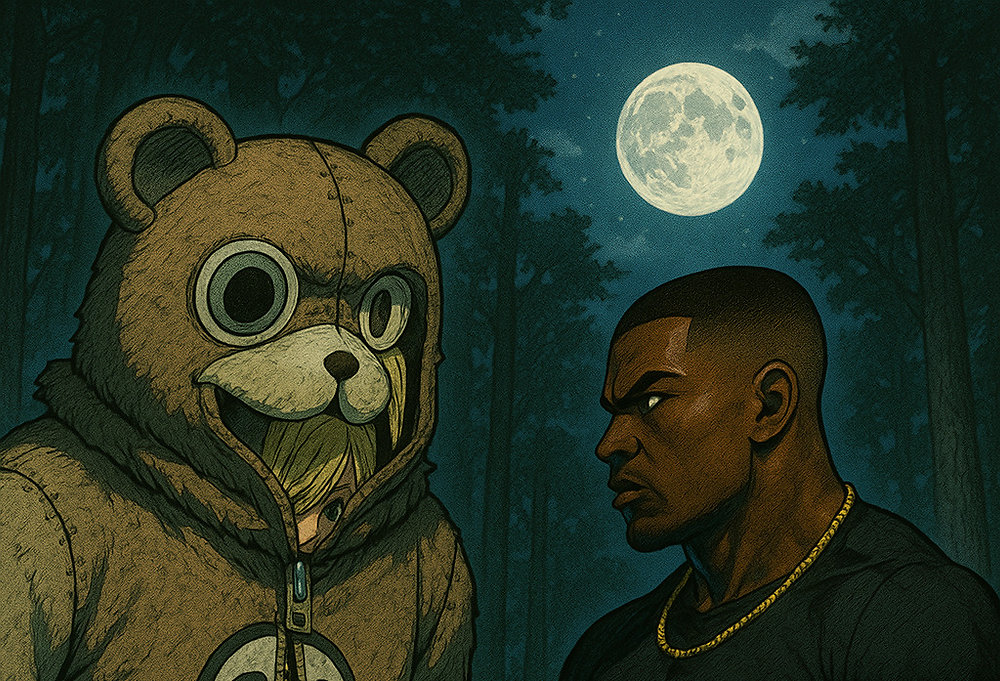
# GLEIPNIR: WHEN BODY HORROR MEANS PSYCHOLOGICAL WARFARE — Level IV: Elite Mode
—
**Before you read another word, answer these questions honestly:**
What psychological discomfort are you avoiding that might signal necessary growth?
How do your assumptions about control limit your capacity for genuine partnership?
When transformation requires surrendering who you’ve been, do you resist or adapt?
What familiar patterns are you protecting that actually keep you small?
Five years from now, when you look back at this moment, will you have chosen comfort or evolution?
—
What up world, Xavier Savage here from xperformancelab.com.
While most people are still defending *Dragon Ball Z*’s repetitive power-scaling or pretending *Sword Art Online* has meaningful character development, I’m dissecting something that actually challenges viewers: *Gleipnir*.
This isn’t your typical transformation anime, and it damn sure isn’t comfortable viewing for people who prefer their psychological horror sanitized. The series operates like advanced psychological conditioning—uncomfortable, transformative, and designed to break down your assumptions about identity, power, and human connection.
While *Death Note* gets praised for mind games, *Gleipnir* delivers actual psychological warfare wrapped in body horror that forces you to confront uncomfortable truths about dominance and submission.
**Your body is your first kingdom.** Your psychology is your first battlefield. Shuichi starts as someone who just wants to be normal. Claire forces him to become something else entirely. The question isn’t whether you’ll change—it’s *into what*.
—
## THE XPL ENERGY TIER FRAMEWORK
| Level | Focus | Icon | Client State |
|——-|——–|——|————–|
| **Level I: Awareness** | Exposure | 🪞 | “I didn’t know what I didn’t know” |
| **Level II: Activation** | Questioning | ⚡ | “Maybe what I’ve been doing isn’t working” |
| **Level III: Execution** | Deployment | 🛠️ | “I execute regardless of how I feel” |
| **Level IV: Elite Mode** | Mastery | 🔥 | “How can I extract 10% more from this system?” |
| **Level V: Peak Mastery** | Integration | 🧠 | “Discipline is my default setting” |
**This post is for Level IV readers.** If you’re still protecting your comfortable identity instead of embracing necessary transformation, this analysis will confront you.
—
## XPL PERSPECTIVE FRAMEWORK
| Intensity | Icon | Purpose | When To Use |
|———–|——|———|————-|
| 🔍 | Surface Scan | Quick observations | Intro/transitions |
| ⚡ | Deep Cut | Tactical analysis | Main sections |
| 🔥 | Full Assault | Controversial takes | Hot takes/criticism |
| 💀 | Nuclear Option | Destroying sacred cows | Obliterating popular opinions |
—
## GLEIPNIR RATING BREAKDOWN
### Story/Plot Development: Level IV: Elite Mode (🔥🔥🔥🔥/5)
*Gleipnir* doesn’t waste time with exposition dumps or convenient explanations. The alien invasion premise gets treated with psychological realism—how would ordinary people actually respond to incomprehensible cosmic horror?
**What the series understands:**
– Real horror isn’t monsters—it’s what monsters *reveal* about you
– People under pressure become who they actually are
– Comfortable morality dissolves when survival demands choices
– Transformation costs who you were
The aliens aren’t the point. The human response to them is.
**XPL Performance Physics: Law 2—Identity Precedes Outcome.** Shuichi’s identity as “passive observer” determines his early choices. Claire’s identity as “controller” determines hers. The pressure doesn’t change who they are—it *reveals* it.
**Savage Command:** “Pressure doesn’t create who you are. It exposes who you’ve always been.”
—
### Character Development: Level IV: Elite Mode (🔥🔥🔥🔥/5)
Shuichi and Claire’s relationship evolution challenges every anime relationship trope. This isn’t romance—it’s psychological symbiosis explored through body horror metaphors.
**Shuichi’s arc:**
**Phase 1—The Monster:** Transforms into a furry creature. Wants to hide, to be normal, to disappear. His form reflects his psychology—something he doesn’t understand or control.
**Phase 2—The Tool:** Claire forces him into her service. He becomes weapon, transport, means to her ends. His autonomy surrendered for purpose.
**Phase 3—The Partner:** He starts making choices. Starts wanting things. Starts becoming someone who acts rather than reacts.
**Phase 4—The Self:** By the end, he’s not just Claire’s monster or tool. He’s someone who chose—even if those choices were uncomfortable.
**Claire’s arc:**
**Phase 1—The Seeker:** Searching for her sister, burning with purpose. Uses anyone who serves her goal.
**Phase 2—The Controller:** Shuichi’s transformation gives her power she never had. She directs, commands, possesses.
**Phase 3—The Dependent:** She needs him as much as he needs her. The power dynamic reverses—she can’t function without her monster.
**Phase 4—The Human:** Beneath control, beneath rage, beneath purpose—someone who wants connection. Someone who’s terrified of needing it.
**Their dynamic:**
Not romance. Not partnership. *Symbiosis*—two broken people who function together in ways neither can alone. The series asks: is that love? Is that exploitation? Is that both?
**XPL Performance Physics: Law 6—Identity Contradiction Creates Homeostatic Resistance.** Shuichi’s identity as “autonomous person” conflicts with his identity as “Claire’s monster.” Claire’s identity as “independent seeker” conflicts with her identity as “someone who needs.” The contradictions drive every choice.
**Identity Mirror:** What psychological discomfort are you avoiding that might signal necessary growth?
—
### Animation/Fight Quality: Level III: Execution (🛠️🛠️🛠️/5)
Pine Jam delivers visceral animation that serves psychological themes. The transformation sequences feel genuinely uncomfortable, which is the point.
**What the visuals communicate:**
– Shuichi’s monster form isn’t cool—it’s *unsettling*
– Claire’s control over him isn’t empowering—it’s *disturbing*
– The fights aren’t victories—they’re *necessities*
– Every transformation costs something
**Training translation:** Real growth isn’t glamorous. It’s uncomfortable, awkward, and often ugly. The animation refuses to pretend otherwise.
**The Chain doesn’t negotiate.** Neither should your willingness to look uncomfortable truths in the face.
—
### Overall Impact/Rewatchability: Level IV: Elite Mode (🔥🔥🔥🔥/5)
*Gleipnir* rewards analysis like intensive therapy rewards honest self-examination. Multiple viewings reveal psychological layers that surface watchers miss completely.
**What rewatching reveals:**
– Early power dynamics that later arcs invert
– Claire’s vulnerability beneath her control
– Shuichi’s agency emerging before you notice it
– That every character is both victim and perpetrator
**Savage Command:** “Study what rewards rewatch. Psychological depth compounds; shock value fades.”
—
## 🔥 FULL ASSAULT: PSYCHOLOGICAL WARFARE VS. COMFORTABLE FANTASY
**💀 Nuclear Option:**
*Gleipnir* accomplishes what most psychological anime fail at: creating genuine psychological tension without relying on exposition or convenient plot devices.
**What the series understands about power dynamics:**
**Principle 1—Control is always mutual.**
Claire controls Shuichi. He also controls her—by being the only one who can fulfill her purpose. Power isn’t one-way. It never is.
**Principle 2—Dependence isn’t weakness.**
Shuichi depends on Claire for direction. Claire depends on Shuichi for capability. Neither functions alone. The series asks: is that failure, or just *reality*?
**Principle 3—Transformation requires surrender.**
Shuichi can’t transform without accepting what he becomes. He can’t accept what he becomes without surrendering who he was. Growth costs identity.
**Principle 4—Purpose can be exploitation.**
Claire’s mission consumes everyone around her. People become tools, means to ends, expendable resources. The series never pretends this is noble.
**Principle 5—Comfortable morality dissolves under pressure.**
What would you do to find your sister? What would you let someone else do? The questions aren’t theoretical in *Gleipnir*.
**Compare this to typical power narratives:**
– **Sword Art Online:** Power as fantasy, control as adventure
– **Death Note:** Intelligence as superiority, manipulation as game
– **Dragon Ball Z:** Strength as answer, fighting as solution
*Gleipnir* refuses every comfort. Power is complicated. Control costs. Dependence is real. And there are no clean answers.
**The Mirror:** What psychological discomfort are you avoiding that might signal necessary growth?
**The Chain:** Your assumptions about control limit your capacity for genuine partnership. Break the pattern.
—
## ⚡ DEEP CUT: CHARACTER PSYCHOLOGY
### Shuichi: The Monster Who Didn’t Choose
Shuichi represents what happens when transformation happens *to* you, not *for* you.
**His psychology:**
**Passive victim:** Didn’t ask for transformation, didn’t want power, didn’t seek purpose. Change happened, and he’s still processing.
**Shame as identity:** His monster form disgusts him. He hides, minimizes, apologizes for existing. His shame defines him.
**Dependence as safety:** Claire gives him direction. Without her, he’s lost. With her, he’s used. He chooses used over lost.
**Emergent agency:** Slowly, imperceptibly, he starts wanting things. Starts choosing. Starts becoming someone who acts, not just reacts.
**The uncomfortable truth:** Shuichi’s growth requires accepting that he’s complicit. He chose to stay with Claire. He chose to keep transforming. He chose—even when choices were limited.
**XPL Application:** Your circumstances may not be your fault. Your responses are your responsibility.
—
### Claire: The Controller Who Needs Control
Claire represents what happens when purpose becomes possession.
**Her psychology:**
**Trauma as fuel:** Her sister’s disappearance drives everything. Every choice, every manipulation, every sacrifice—all justified by this wound.
**Control as armor:** If she controls everything, nothing can hurt her again. This logic is flawed—and completely understandable.
**Dependence denied:** She needs Shuichi. She’ll never admit it. Her control is response to this need she can’t accept.
**Vulnerability beneath rage:** Beneath the commands, beneath the fury, beneath the purpose—someone terrified of being alone. Someone who’d rather be served than abandoned.
**The tragedy:** Claire’s control isolates her from what she actually wants. Connection requires vulnerability. Vulnerability means potential loss. She chooses control over connection—and loses both.
**XPL Application:** What are you controlling that you should be releasing?
—
### The Supporting Cast as Psychological Case Studies
**The sister:** Represents what’s lost—and the cost of finding it
**The other monsters:** Different responses to same pressure—some embrace, some resist, some break
**The aliens:** Not characters—*pressure*. The force that reveals what everyone actually is
—
## ⚡ DEEP CUT: WORLD-BUILDING & PSYCHOLOGICAL SYSTEMS
### The Transformation as Identity Metaphor
Shuichi’s monster form isn’t just visual—it’s *psychological*.
**What the form represents:**
**Loss of humanity:** Literally not human anymore. What does that mean for identity?
**Surrender of control:** The transformation happens whether he wants it or not. Just like emotions, just like trauma, just like change.
**Visibility of self:** Everyone sees what he is. No hiding. No pretending. His monster is *him*, visible to all.
**XPL Application:** What would it mean if everyone could see who you really are? What are you hiding?
—
### The Coins as Choice Architecture
The coin-gathering system isn’t just plot—it’s *pressure*.
**What the system forces:**
**Moral choices:** Save someone or take their coin? Cooperate or compete? Sacrifice or survive?
**Revelation of character:** Under pressure, people become who they actually are. The coins just make it visible.
**Cost of connection:** Every relationship has price. Every alliance can be betrayed. The system makes this explicit.
**XPL Application:** Your life has similar pressures. They reveal you too.
—
## 🔍 SURFACE SCAN: TRAINING/STRATEGY PHILOSOPHY
*Gleipnir* demonstrates how authentic psychological development requires specific approaches that comfortable growth never teaches.
### What the series teaches about transformation:
**1. Change costs who you were.**
Shuichi can’t become what he needs to become without losing who he was. Growth isn’t addition—it’s *replacement*.
**Application:** What identity are you holding that needs to die?
—
**2. Control is always mutual.**
Claire controls Shuichi. He controls her by being necessary. Power flows both ways, always.
**Application:** Who controls you? Who do you control? Be honest.
—
**3. Dependence isn’t weakness.**
Neither functions alone. Their dependence isn’t failure—it’s *reality*. Humans need humans.
**Application:** What dependencies are you denying that actually sustain you?
—
**4. Purpose can be exploitation.**
Claire’s mission consumes everyone. Purpose without ethics is just justification for using people.
**Application:** What purposes are you serving that use others without serving them?
—
**5. Comfortable morality dissolves.**
What would you do to find your sister? What would you let someone else do? The answers aren’t comfortable.
**Application:** What moral certainties would dissolve under real pressure?
—
**6. Agency emerges in small choices.**
Shuichi doesn’t have a dramatic “I choose” moment. He chooses in tiny ways, over time, until he’s someone who chose.
**Application:** What small choices are you making that shape who you’re becoming?
—
**XPL Performance Physics: Law 2—Identity Precedes Outcome.** Shuichi’s identity evolves through small choices. Yours will too.
**Savage Command:** “Transform discomfort into strategic advantage. Choose growth over comfort. Always.”
—
## 🔥 FULL ASSAULT: LEGACY & IMPACT
**💀 Nuclear Option:**
*Gleipnir* represents psychological horror for people who understand that real horror comes from internal rather than external threats.
**What it accomplished:**
**Normalized uncomfortable dynamics:** Proved that audiences can handle complex power relationships
**Used body horror as metaphor:** Transformation as psychological evolution made visible
**Challenged autonomy assumptions:** Showed that interdependence isn’t weakness
**Refused easy answers:** No clean resolutions, no moral comfort, no simple “who’s right”
**The influence:**
Every series exploring uncomfortable power dynamics since owes something to *Gleipnir*. *Wonder Egg Priority*, *Happy Sugar Life*, even elements of *Chainsaw Man* build on foundations this series established.
**Savage Command:** “Engage psychological challenges instead of avoiding them. Choose growth over comfort.”
**The Throne:** Most people who dismiss *Gleipnir* as “weird” are revealing their inability to engage with content that demands psychological honesty.
—
## THE MASTERY SYMBOLS
**🔗 The Chain:** Your psychology connects to your growth. Uncomfortable truths faced = growth. Uncomfortable truths avoided = stagnation.
**🪞 The Mirror:** When you watch Shuichi’s reluctant transformation, do you see any reflection of your own resistance to change? What are you protecting by staying the same?
**👑 The Throne:** How will you embrace uncomfortable transformation instead of avoiding it?
—
## FINAL STRATEGIC ASSESSMENT
*Gleipnir* asks questions most narratives avoid:
**What if control is always mutual?**
**What if dependence isn’t weakness?**
**What if transformation costs who you were?**
**What if purpose can be exploitation?**
**What if comfortable morality dissolves under pressure?**
**Savage Command:** “Transform discomfort into strategic advantage. Engage psychological challenges instead of avoiding them.”
**Savage Command:** “Choose growth over comfort. Always.”
**Savage Command:** “Your psychology is your first battlefield. Win there, win everywhere.”
—
## IDENTITY MIRROR QUESTIONS
What psychological discomfort are you avoiding that might signal necessary growth?
How do your assumptions about control limit your capacity for genuine partnership?
When transformation requires surrendering who you’ve been, do you resist or adapt?
What familiar patterns are you protecting that actually keep you small?
What identity are you holding that needs to die?
Who controls you? Who do you control?
What dependencies are you denying that actually sustain you?
—
## ACTION TRIGGER QUESTIONS
What’s one uncomfortable truth you’ll stop avoiding this week?
What small choice can you make today that shapes who you’re becoming?
What purpose are you serving that might be using others?
What moral certainty would dissolve under real pressure?
What are you controlling that you should be releasing?
—
## RESOURCE DROP
Follow my daily insights on Instagram **@xperformancelab** and YouTube **@xperformancelab**.
For those in Houston demanding the highest level of training, in-person sessions are available at **VFit Gym, 5535 Richmond Ave, Houston, TX**.
Elite online training systems at **xperformancelab.com**.
Take the Archetype Quiz to discover your specific body type protocol: **xperformancelab.com/quiz**
—
**Inertia Over Inspiration. Always.**
**Execute.**
Scroll to unlock levels
Level V Achieved
Now live it.
Unlocked
Leave a Reply