
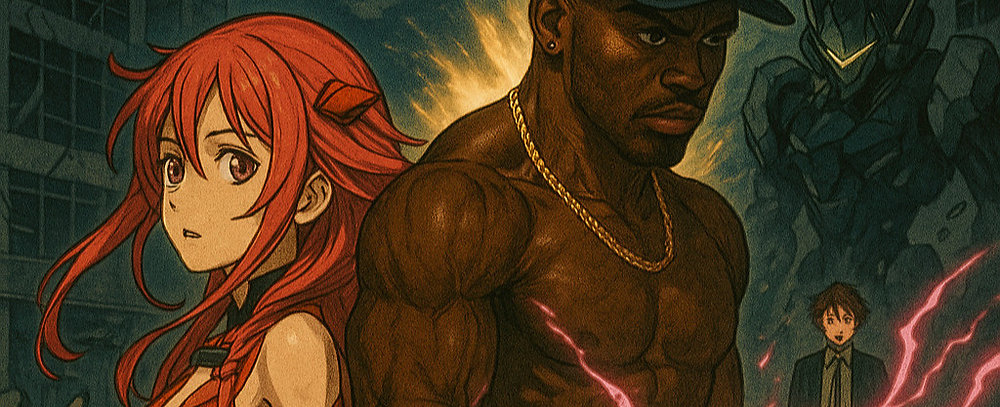
# GUILTY CROWN: WHEN VISUAL MASTERY MEANS EMOTIONAL DEVASTATION — Level V: Peak Mastery
—
**Before you read another word, answer these questions honestly:**
What artistic experiences are you avoiding because they demand emotional commitment you’re not ready to give?
How do you distinguish between spectacular presentation and transcendent artistic achievement?
When something beautiful destroys you, do you resent it—or recognize that’s exactly what art should do?
What would you risk experiencing if you stopped protecting yourself from emotional devastation?
Five years from now, when you look back at this moment, will you have chosen comfort or transcendence?
—
What up world, Xavier Savage here from xperformancelab.com.
While everyone’s arguing whether *Dragon Ball Z* earned its reputation or if *Death Note* represents peak psychological storytelling, I’m dissecting a series that delivers both spectacular presentation AND systematic emotional destruction: *Guilty Crown*.
This isn’t just outstanding anime. It’s a legendary experience that demonstrates how visual perfection can elevate already powerful storytelling into transcendent territory. The series operates like the perfect fusion of aesthetic mastery and psychological warfare. Production I.G. created visual perfection that serves systematic character breakdown and reconstruction.
While *Sword Art Online* gets praised for emotional moments, *Guilty Crown* delivers authentic psychological transformation wrapped in animation that redefines what the medium can achieve.
**Your body is your first kingdom.** Your capacity for emotional truth is your first measure. Shu Ouma starts as a passive observer, recording life instead of living it. By the end, he’s been broken, rebuilt, and broken again—and you feel every fracture.
—
## THE XPL ENERGY TIER FRAMEWORK
| Level | Focus | Icon | Client State |
|——-|——–|——|————–|
| **Level I: Awareness** | Exposure | 🪞 | “I didn’t know what I didn’t know” |
| **Level II: Activation** | Questioning | ⚡ | “Maybe what I’ve been doing isn’t working” |
| **Level III: Execution** | Deployment | 🛠️ | “I execute regardless of how I feel” |
| **Level IV: Elite Mode** | Mastery | 🔥 | “How can I extract 10% more from this system?” |
| **Level V: Peak Mastery** | Integration | 🧠 | “Discipline is my default setting” |
**This post is for Level V readers.** If you’re still choosing comfort over transcendence, this analysis will confront you.
—
## XPL PERSPECTIVE FRAMEWORK
| Intensity | Icon | Purpose | When To Use |
|———–|——|———|————-|
| 🔍 | Surface Scan | Quick observations | Intro/transitions |
| ⚡ | Deep Cut | Tactical analysis | Main sections |
| 🔥 | Full Assault | Controversial takes | Hot takes/criticism |
| 💀 | Nuclear Option | Destroying sacred cows | Obliterating popular opinions |
—
## GUILTY CROWN RATING BREAKDOWN
### Story/Plot Development: Level V: Peak Mastery (🧠🧠🧠🧠🧠/5)
*Guilty Crown* constructs its apocalyptic narrative like a systematic deconstruction of heroic fantasy. Shu’s journey from passive nobody to dictatorial leader to broken human demonstrates how power corrupts through logical psychological progression.
**What the series understands:**
– Heroism is a fantasy people tell themselves
– Power reveals who you actually are, not who you hope to be
– Leadership requires sacrifices that destroy innocence
– The line between savior and tyrant is just perspective
Shu doesn’t become a villain because he’s evil. He becomes a tyrant because he’s *human*—and humans given absolute power make absolute choices.
**XPL Performance Physics: Law 2—Identity Precedes Outcome.** Shu’s identity as “passive observer” determines his early choices. His identity as “leader” determines his middle choices. His identity as “broken survivor” determines his final choices. Change the identity, change the outcome.
**Savage Command:** “Heroism is a fantasy. Power is a truth. Choose which you’re ready to face.”
—
### Character Development: Level V: Peak Mastery (🧠🧠🧠🧠🧠/5)
Shu Ouma’s character evolution represents one of anime’s most brutal and authentic transformations. His descent from idealistic teenager to ruthless leader to psychologically shattered survivor follows systematic psychological logic.
**His arc:**
**Phase 1—The Observer:** Passive, recording life, avoiding engagement. His Void reflects this—a tool that extracts, not creates.
**Phase 2—The Reluctant Hero:** Forced into action, given power he didn’t seek. He uses it to protect, to save, to be “good.”
**Phase 3—The Leader:** Power accumulates. Responsibility compounds. He starts making choices that cost others—because protecting everyone is impossible.
**Phase 4—The Tyrant:** The weight breaks him. He stops asking permission. He starts commanding. The line between protection and control blurs, then vanishes.
**Phase 5—The Survivor:** Everything taken. Everyone lost. Himself broken. And somehow, still moving. Still choosing. Still *being*.
**Inori’s role:**
She’s not a love interest—she’s *mirror*. Her lack of humanity reflects his excess of it. Her sacrifice isn’t romance—it’s *completion*.
**Gai’s role:**
He’s what Shu could become if he never hesitated. And what Shu could never become, because Gai was always already broken. The rivalry isn’t competition—it’s *comparison*.
**XPL Performance Physics: Law 6—Identity Contradiction Creates Homeostatic Resistance.** Shu’s identity as “good person” conflicts with his identity as “effective leader.” The contradiction destroys him—and rebuilds him into someone new.
**Identity Mirror:** What artistic experiences are you avoiding because they demand emotional commitment you’re not ready to give?
—
### Animation/Fight Quality: Level V: Peak Mastery (🧠🧠🧠🧠🧠/5)
Production I.G. delivers visual perfection that elevates every emotional moment into transcendent experience. The Void powers manifest as extensions of character psychology—visual metaphors for internal emotional states rendered with artistic mastery.
**What the visuals communicate:**
– Voids aren’t weapons—they’re *souls made visible*
– Inori’s fragility and power exist in every frame
– Gai’s confidence masks emptiness you can see if you look
– The Apocalypse Virus isn’t just plot—it’s *aesthetic*
**The key sequences:**
**Episode 1, the Void extraction:** You’re not just watching power manifest. You’re watching Shu’s first real connection—with Inori, with himself, with the truth that he’s more than observer.
**Shu’s tyrannical arc:** The visual language shifts—darker, more controlled, more isolated. You feel his isolation before you understand it.
**The final episodes:** Beauty and destruction inseparable. Creation through annihilation. The animation doesn’t just show this—it *is* this.
**Training translation:** This is what happens when mastery serves meaning. Every frame matters. Every choice intentional. Nothing wasted.
**The Chain doesn’t negotiate.** Neither should your standards for artistic excellence.
—
### Overall Impact/Rewatchability: Level V: Peak Mastery (🧠🧠🧠🧠🧠/5)
*Guilty Crown* rewards multiple viewings like studying a masterpiece painting—each examination reveals new layers of symbolic meaning and emotional resonance.
**What rewatching reveals:**
– Early frames that foreshadow every betrayal
– Inori’s subtle shifts that you missed the first time
– Gai’s true motives, visible only in retrospect
– That Shu’s descent was always inevitable—you just didn’t want to see it
**Savage Command:** “Study what rewards rewatch. Emotional depth compounds; spectacle fades.”
—
## 🔥 FULL ASSAULT: ARTISTIC TRANSCENDENCE VS. COMFORTABLE ENTERTAINMENT
**💀 Nuclear Option:**
*Guilty Crown* accomplishes what most anime fail at completely: combining visual perfection with systematic psychological destruction that serves meaningful thematic purposes.
**What the series understands about artistic excellence:**
**Principle 1—Beauty serves truth.**
Production I.G.’s legendary animation doesn’t exist for its own sake. It amplifies psychological themes and emotional destruction into territory that purely narrative-focused series can’t reach.
**Principle 2—Power corrupts systematically.**
Shu’s transformation isn’t sudden. It’s *logical*. Choice by choice, compromise by compromise, necessity by necessity. The series makes you understand why he becomes what he becomes—and that you might do the same.
**Principle 3—Heroism is fantasy.**
The series systematically dismantles heroic tropes. Shu tries to be the hero. It destroys him. Gai never tries—and becomes something else entirely. The question isn’t whether you’ll be good—it’s whether you’ll survive.
**Principle 4—Connection costs.**
Every relationship in the series costs something. Inori’s love costs her existence. Gai’s mentorship costs his humanity. Shu’s leadership costs his innocence. Connection without cost is fantasy.
**Principle 5—Beauty and destruction are inseparable.**
The most beautiful moments are often the most devastating. Inori’s song. Shu’s final choices. The animation doesn’t separate them—it *unites* them.
**Compare this to typical entertainment:**
– **Dragon Ball Z:** Spectacle without substance
– **Death Note:** Pseudo-psychology without genuine emotion
– **Sword Art Online:** Manufactured moments, not earned devastation
*Guilty Crown* delivers what they only pretend to: authentic emotional destruction served through visual perfection.
**The Mirror:** What artistic experiences are you avoiding because they demand emotional commitment you’re not ready to give?
**The Chain:** Your fear of emotional devastation prevents transcendent experience. Break the pattern.
—
## ⚡ DEEP CUT: CHARACTER PSYCHOLOGY
### Shu: The Observer Who Became Tyrant
Shu’s psychology is more complex than simple hero’s journey.
**His baseline:**
**Passive observer:** Records life, doesn’t live it. His phone, his camera, his distance—all protection from engagement.
**Fear of connection:** If you don’t connect, you can’t be hurt. His isolation is armor.
**Desire for meaning:** Beneath passivity, hunger for purpose. The Void power gives him what he craves—and destroys him for wanting it.
**His transformation:**
**Phase 1—Power as gift:** The Void extraction feels like destiny. He’s special. He matters.
**Phase 2—Power as burden:** Every choice costs someone. Protection requires sacrifice. Leadership requires hardness.
**Phase 3—Power as addiction:** Once you start choosing, stopping isn’t option. Each decision requires next. He can’t go back to observer.
**Phase 4—Power as identity:** He becomes what the power demands. The observer dies. The tyrant emerges.
**Phase 5—Power as loss:** When it’s gone, what remains? Not the observer. Not the tyrant. Something new—someone who survived both.
**XPL Application:** Your power will change you. The question isn’t whether—it’s *into what*.
—
### Inori: The Vessel Who Became Human
Inori represents one of anime’s most tragic figures—a being designed to be empty, who found something to fill her.
**Her psychology:**
**Designed absence:** Created as vessel, not person. No history, no self, no desires.
**Encounter with Shu:** He sees her as person, not tool. This recognition creates something new—a self born from being seen.
**Her evolution:** She learns to want, to choose, to love. But her existence was never meant to hold these things. They destroy her—and complete her.
**The sacrifice:** She gives herself not because she must, but because she *chooses*. Her final act is the most human thing she’s ever done.
**XPL Application:** Being seen by someone who truly sees you can create you—or destroy you. Sometimes both.
—
### Gai: The Monster Who Was Right
Gai is the character most viewers misunderstand.
**His psychology:**
**Already broken:** Whatever happened before the series destroyed whatever “good” he might have been. He operates from absence, not presence.
**Clear vision:** He sees what Shu can’t—that heroism is fantasy, that power requires sacrifice, that some fights can’t be won clean.
**Love as strategy:** His feelings for Inori are real—and irrelevant. He loves her and will use her. Both true, both exist.
**The tragedy:** Gai is *right* about almost everything. His methods are monstrous. His analysis is correct. The series forces you to hold both.
**XPL Application:** Being right doesn’t make you good. Being wrong doesn’t make you innocent.
—
## ⚡ DEEP CUT: WORLD-BUILDING & SYMBOLIC SYSTEMS
### The Voids as Psychology Made Visible
The Void system is genius—every character’s deepest self manifested as weapon.
**What Voids reveal:**
**Shu’s Void (extraction):** Takes from others because he has nothing of his own. Observer by nature, taker by necessity.
**Inori’s Void (great sword):** Destructive power she never wanted, wielded for others because she has no self to wield for.
**Gai’s Void (???):** Never shown. Because he has no self left to manifest. Already empty.
**The principle:** Your deepest self becomes your greatest weapon—or your greatest weakness. Same source, different application.
**XPL Application:** What would your Void be? What would it say about you?
—
### The Apocalypse Virus as Catalyst
The virus isn’t just plot—it’s *pressure*.
**What it represents:**
**Forced evolution:** The world ending forces choices that comfortable life never would.
**Revelation of truth:** Under pressure, people become who they actually are. The virus reveals, not creates.
**Connection and destruction:** It spreads through contact, through intimacy. The thing that connects you can destroy you.
**XPL Application:** Your crises reveal you. What would your apocalypse show?
—
## 🔍 SURFACE SCAN: TRAINING/STRATEGY PHILOSOPHY
*Guilty Crown* demonstrates how authentic psychological development requires specific approaches that comfortable growth never teaches.
### What the series teaches about transformation:
**1. Power will change you.**
Shu doesn’t stay who he was. Power transforms. The question isn’t whether—it’s *into what*.
**Application:** What are you becoming as you gain capability?
—
**2. Leadership requires sacrifice.**
Every choice costs someone. Protecting everyone is impossible. Leaders make choices that leave marks.
**Application:** What are you unwilling to sacrifice? That’s what limits your leadership.
—
**3. Connection costs.**
Every relationship in the series costs something. Love without cost is fantasy.
**Application:** What are you willing to pay for connection?
—
**4. Heroism is fantasy.**
The series systematically dismantles heroic tropes. Trying to be the hero destroys Shu.
**Application:** What fantasies about yourself are you protecting?
—
**5. Beauty serves truth.**
Production I.G.’s animation amplifies meaning, not spectacle. Form follows function.
**Application:** Does your presentation serve your purpose, or just impress?
—
**6. Survival requires becoming.**
Shu doesn’t stay observer or tyrant. He becomes something new—someone who survived both.
**Application:** What are you becoming through your trials?
—
**XPL Performance Physics: Law 2—Identity Precedes Outcome.** Shu’s identity evolves through pressure. Your identity will too.
**Savage Command:** “Demand artistic excellence that serves systematic psychological exploration. Choose transcendence over comfort.”
—
## 🔥 FULL ASSAULT: LEGACY & IMPACT
**💀 Nuclear Option:**
*Guilty Crown* established new standards for combining visual excellence with systematic psychological storytelling. It proved that aesthetic mastery and emotional authenticity can amplify each other.
**What it accomplished:**
**Elevated animation’s potential:** Proved visual perfection could serve psychological depth, not just spectacle
**Normalized complex protagonists:** Shu’s transformation remains one of anime’s most honest
**Demonstrated symbolic storytelling:** Voids as psychology made visible
**Refused easy comfort:** The ending devastates because it must
**The influence:**
Every series aiming for visual-psychological fusion since owes something to *Guilty Crown*. *Fate* series, *Kabaneri*, even elements of *Demon Slayer*’s visual storytelling build on foundations this series established.
**Savage Command:** “Pursue artistic experiences that demand complete psychological and aesthetic engagement. Choose legendary achievement over comfortable entertainment.”
**The Throne:** Critics who dismiss *Guilty Crown* reveal their inability to appreciate artistic excellence that requires emotional maturity and aesthetic sophistication simultaneously.
—
## THE MASTERY SYMBOLS
**🔗 The Chain:** Your capacity for emotional truth connects to your capacity for transcendent experience. Protect it, develop it, use it.
**🪞 The Mirror:** When you watch Shu’s destruction, do you see any reflection of your own fear of transformation? What are you protecting by avoiding art that might break you?
**👑 The Throne:** How will you pursue transcendent artistic experiences that demand your complete engagement?
—
## FINAL STRATEGIC ASSESSMENT
*Guilty Crown* asks questions most narratives avoid:
**What if power doesn’t corrupt—it *reveals*?**
**What if heroism is fantasy, not possibility?**
**What if connection costs everything?**
**What if beauty and destruction are inseparable?**
**What if you could be destroyed by art—and be grateful for it?**
**Savage Command:** “Demand artistic excellence that serves systematic psychological exploration. Choose transcendent experiences over comfortable entertainment.”
**Savage Command:** “Recognize legendary achievement that redefines medium possibilities.”
**Savage Command:** “Your capacity for emotional truth determines your capacity for transcendent experience. Develop it.”
—
## IDENTITY MIRROR QUESTIONS
What artistic experiences are you avoiding because they demand emotional commitment you’re not ready to give?
How do you distinguish between spectacular presentation and transcendent artistic achievement?
When does your fear of emotional devastation prevent you from experiencing legendary excellence?
What areas of your life need systematic integration where aesthetic excellence serves deeper purposes?
Where are you choosing comfortable entertainment over transformative experiences that justify legendary status?
What would your Void be? What would it say about you?
What fantasies about yourself are you protecting?
—
## ACTION TRIGGER QUESTIONS
What’s one transcendent experience you’ve been avoiding that you’ll finally allow yourself?
What would you risk experiencing if you stopped protecting yourself from emotional devastation?
What are you becoming through your trials?
Does your presentation serve your purpose, or just impress?
What are you willing to pay for connection?
—
## RESOURCE DROP
Follow my daily insights on Instagram **@xperformancelab** and YouTube **@xperformancelab**.
For those in Houston demanding the highest level of training, in-person sessions are available at **VFit Gym, 5535 Richmond Ave, Houston, TX**.
Elite online training systems at **xperformancelab.com**.
Take the Archetype Quiz to discover your specific body type protocol: **xperformancelab.com/quiz**
—
**Inertia Over Inspiration. Always.**
**Execute.**
Scroll to unlock levels
Level V Achieved
Now live it.
Unlocked
Leave a Reply