
WHEN PEAK PERFORMANCE MEANS EXISTENTIAL BOREDOM — Level IV: Elite Mode
Before you read another word, answer these questions honestly:
What areas of your life have you mastered to the point where lack of challenge creates boredom instead of satisfaction?
How does your pursuit of effortless success prevent you from engaging with struggles that would restore meaning?
When you achieve a goal, do you celebrate—or immediately feel empty?
What would purpose look like if it required creating your own challenges instead of just conquering existing ones?
Five years from now, when you look back at this moment, will you have built meaning or just accumulated capability?
What up world, Xavier Savage here from xperformancelab.com.
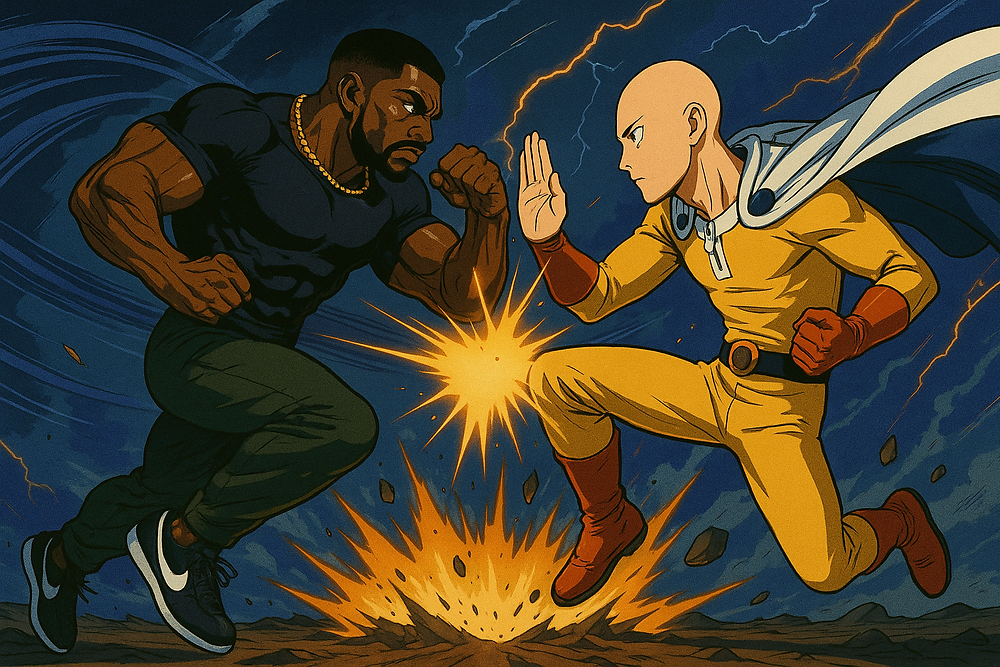
Peak performance without worthy challenges creates existential emptiness. Peak performance WITH purpose creates meaning. One Punch Man exposes the brutal truth that most high achievers discover too late: reaching the summit often means losing the climb that gave life meaning.
I’m examining why Saitama’s journey represents every elite performer’s nightmare scenario. While most anime celebrate power acquisition, One Punch Man explores what happens when you achieve ultimate capability and discover it doesn’t solve the psychological hunger that drove you to excellence.
The strongest man alive is also the most bored. And that’s terrifying.
Your body is your first kingdom. Your purpose is your first crown. Saitama trained so hard his hair fell out and he became unbeatable. Now he stands at the peak, looks around, and asks: “Is this all there is?” That’s not comedy. That’s existential horror.
THE XPL ENERGY TIER FRAMEWORK
| Level | Focus | Icon | Client State |
|---|---|---|---|
| Level I: Awareness | Exposure | 🪞 | “I didn’t know what I didn’t know” |
| Level II: Activation | Questioning | ⚡ | “Maybe what I’ve been doing isn’t working” |
| Level III: Execution | Deployment | 🛠️ | “I execute regardless of how I feel” |
| Level IV: Elite Mode | Mastery | 🔥 | “How can I extract 10% more from this system?” |
| Level V: Peak Mastery | Integration | 🧠 | “Discipline is my default setting” |
This post is for Level IV readers. If you’re still chasing capability without considering what comes after, this analysis will confront you.
XPL PERSPECTIVE FRAMEWORK
| Intensity | Icon | Purpose | When To Use |
|---|---|---|---|
| 🔍 | Surface Scan | Quick observations | Intro/transitions |
| ⚡ | Deep Cut | Tactical analysis | Main sections |
| 🔥 | Full Assault | Controversial takes | Hot takes/criticism |
| 💀 | Nuclear Option | Destroying sacred cows | Obliterating popular opinions |
ONE PUNCH MAN RATING BREAKDOWN
Story/Plot Development: Level IV: Elite Mode (🔥🔥🔥🔥/5)
One Punch Man constructs its superhero narrative like systematic exploration of peak performance psychology and the existential emptiness that accompanies ultimate capability. Each encounter examines how strength without challenge creates meaning loss.
What the series understands:
-
The climb matters more than the summit
-
Challenge creates meaning; its absence destroys it
-
Ultimate capability without purpose is just advanced boredom
-
The strongest person in the world might also be the most empty
The series isn’t about the fights. It’s about the space between fights—the moments when Saitama stands alone, wondering what it was all for.
XPL Performance Physics: Law 3—Systems Beat Intensity Over Time. Saitama achieved peak intensity. He maxed out the system. Now he’s discovering that the system was never the point—the process was.
Savage Command: “The climb matters more than the summit. If you skip the climb, the summit is just empty ground.”
Character Development: Level IV: Elite Mode (🔥🔥🔥🔥/5)
Saitama’s character represents examination of what happens when peak performance eliminates struggle, challenge, and growth opportunity.
His arc:
Phase 1—The Grind: 100 push-ups, 100 sit-ups, 100 squats, 10km run. Every day. No shortcuts. No magic. Just discipline.
Phase 2—The Achievement: He becomes unbeatable. One punch ends every fight. The goal he sacrificed everything for is achieved.
Phase 3—The Emptiness: No challenge. No growth. No struggle. Just endless victories that feel like nothing.
Phase 4—The Search: He looks for meaning—recognition, purpose, a worthy opponent. Nothing fills the void.
Phase 5—The Glimmer: Through Genos, through hero work, through small moments, he finds fragments of purpose. Not in victory—in connection.
Genos’s role:
He’s what Saitama used to be—hungry, driven, willing to sacrifice everything for power. His presence reminds Saitama of who he was and asks whether who he became was worth it.
The supporting heroes represent different relationships to strength:
-
Those who seek recognition (the meaning is external)
-
Those who seek growth (the meaning is internal)
-
Those who seek justice (the meaning is service)
-
Those who seek belonging (the meaning is connection)
XPL Performance Physics: Law 2—Identity Precedes Outcome. Saitama’s identity as “the strongest” determines his experience. Without challenge, that identity becomes prison.
Identity Mirror: What areas of your life have you mastered to the point where lack of challenge creates boredom instead of satisfaction?
Animation/Fight Quality: Level V: Peak Mastery (🧠🧠🧠🧠🧠/5)
Madhouse delivers animation mastery that serves psychological themes through spectacular contrast—epic battles that end with anticlimactic resolution, demonstrating how overwhelming capability eliminates excitement and meaning.
What the visuals communicate:
-
The fights are beautiful—and meaningless
-
Every enemy, no matter how epic, falls to one punch
-
The spectacle is for everyone except Saitama
-
He’s always outside the frame, slightly bored, slightly apart
The Boros fight: The most epic battle in the series. Saitama’s reaction? “That was a good fight.” Not joy. Not satisfaction. Just… acknowledgment.
Training translation: This is what achievement without challenge feels like. The world celebrates while you stand apart, wondering why you don’t feel what they feel.
The Chain doesn’t negotiate. Neither should your understanding of what achievement actually costs.
Overall Impact/Rewatchability: Level IV: Elite Mode (🔥🔥🔥🔥/5)
One Punch Man rewards analysis like studying peak performance psychology rewards excellence understanding. Multiple viewings reveal meaning-creation strategies that surface watchers miss.
What rewatching reveals:
-
Saitama’s emptiness in moments others celebrate
-
Genos’s hunger as mirror of what Saitama lost
-
The quiet moments where purpose flickers
-
That the comedy masks something genuinely tragic
Savage Command: “Study what rewards rewatch. Meaning compounds; spectacle fades.”
🔥 FULL ASSAULT: PEAK PERFORMANCE VS. EXISTENTIAL EMPTINESS
💀 Nuclear Option:
One Punch Man accomplishes what most power fantasy anime fail at: presenting authentic consequences of ultimate capability rather than convenient strength celebration.
What the series understands about achievement:
Principle 1—The climb creates meaning.
Saitama’s happiest moments are flashbacks to training. Why? Because training had purpose. Every rep meant something. Every day was progress. Now progress is impossible.
Principle 2—Challenge defines identity.
Without worthy opponents, Saitama doesn’t know who he is. He’s “the strongest” in a world where strength no longer matters. His identity has no referent.
Principle 3—Recognition doesn’t fill the void.
Saitama wants people to know who he is. He gets recognition eventually. It doesn’t change how he feels. External validation can’t replace internal meaning.
Principle 4—Connection offers fragments of purpose.
Genos, King, Mumen Rider—these relationships give Saitama reasons to exist beyond fighting. Not solutions, but possibilities.
Principle 5—Ultimate capability is not ultimate happiness.
This is the series’ core truth. You can achieve everything you trained for and still feel nothing. Power doesn’t heal psychological hunger.
Compare this to typical power fantasy:
-
Dragon Ball Z: More power solves everything
-
Sword Art Online: Strength brings friends, purpose, happiness
-
Most shonen: Achievement equals fulfillment
One Punch Man refuses every comfort. Achievement without challenge is empty. Power without purpose is just advanced boredom.
The Mirror: What areas of your life have you mastered to the point where lack of challenge creates boredom instead of satisfaction?
The Chain: Your pursuit of effortless mastery prevents engaging with challenges that restore meaning. Break the pattern.
⚡ DEEP CUT: SAITAMA’S PSYCHOLOGY — THE EMPTINESS OF ULTIMATE POWER
Saitama’s psychology is the series’ hidden depth.
His baseline:
The grind made him: 100 push-ups, 100 sit-ups, 100 squats, 10km run. Every day. No shortcuts. He earned everything.
The cost: His hair fell out. His emotions flattened. His capacity for joy diminished. Power extracted payment.
The result: He stands at the peak, alone, wondering what it was for.
His moments of meaning:
-
Genos becoming his disciple: Someone to teach, to guide, to pour into
-
Mumen Rider’s courage: Reminder that heroism isn’t about power
-
King’s friendship: Connection without competition
-
The sales: Ordinary life that continues despite his power
The tragedy: These moments don’t solve his emptiness. They just make it bearable.
XPL Application: Your achievements won’t fill you. They’ll just create space that must be filled with something else. Choose that something wisely.
Genos: The Hunger Saitama Lost
Genos represents what Saitama used to be—and what he can never get back.
His psychology:
Driven by loss: His family, his home, his humanity—all destroyed. Power is his only path to meaning.
Willing to sacrifice: He gives up everything for strength. Body parts, identity, connection. The cost doesn’t matter.
Looking for purpose in power: He believes that becoming stronger will solve his emptiness. Saitama’s existence proves otherwise.
The tragedy: Genos is running toward a destination that Saitama already reached—and found empty.
XPL Application: The hunger for achievement can blind you to what achievement actually delivers. Ask those who’ve arrived before you assume the journey ends well.
Mumen Rider: The Hero Without Power
Mumen Rider represents the series’ deepest truth: heroism isn’t about strength.
His psychology:
No special power: Just a bicycle and determination. He loses every fight. Badly.
Unbreakable will: He stands against enemies he can’t defeat because someone must stand. His courage isn’t strategic—it’s existential.
The meaning: He doesn’t win. He doesn’t need to. His heroism is in the attempt, not the outcome.
Saitama’s respect: The one hero Saitama genuinely admires. Why? Because Mumen Rider has what Saitama lost—purpose beyond victory.
XPL Application: Strength without purpose is just advanced capability. Purpose without strength can still be heroic.
⚡ DEEP CUT: WORLD-BUILDING & MEANING SYSTEMS
The Hero Association as Meaning Factory
The Hero Association attempts to create meaning through structure, ranking, and recognition.
What the system provides:
-
Clear hierarchy (S-Class, A-Class, etc.)
-
External validation (rankings, recognition)
-
Purpose through service (protecting citizens)
-
Community (other heroes)
What the system fails to provide:
-
Internal meaning
-
Authentic challenge
-
Genuine growth
-
Connection that transcends function
Saitama’s position: He’s the strongest hero, unrecognized, underappreciated, and still empty. The system can’t give him what he needs because what he needs isn’t external.
XPL Application: No external system can fill internal void. Rankings, recognition, rewards—they’re decorations on an empty room.
The Monster Association as Existential Threat
The monsters represent what Saitama lacks—purpose through opposition.
Their psychology:
-
Driven by hatred, ambition, hunger
-
Every monster has a reason to fight
-
Their existence gives heroes meaning
-
Without them, what are heroes for?
The paradox: The monsters give heroes purpose. Saitama’s power makes monsters irrelevant. So he’s also made himself irrelevant.
XPL Application: Your enemies often give you more purpose than your allies. When you eliminate all opposition, what’s left?
🔍 SURFACE SCAN: TRAINING/STRATEGY PHILOSOPHY
One Punch Man demonstrates how authentic excellence requires specific approaches that pure capability-building never teaches.
What the series teaches about meaning:
1. The climb matters more than the summit.
Saitama’s happiest moments are flashbacks to training. The process, not the outcome, created meaning.
Application: What are you rushing through that you should be savoring?
2. Challenge defines identity.
Without worthy opponents, Saitama doesn’t know who he is. His identity depends on resistance.
Application: Who would you be without your struggles?
3. Recognition doesn’t fill void.
Saitama wants people to know who he is. When they do, nothing changes.
Application: What are you seeking externally that only internal work can provide?
4. Connection offers fragments of purpose.
Genos, King, Mumen Rider—these relationships give Saitama reasons to exist beyond fighting.
Application: Who are you connected to beyond your achievements?
5. Ultimate capability is not ultimate happiness.
Saitama achieved everything he trained for and still feels empty. Power doesn’t heal psychological hunger.
Application: What are you assuming achievement will solve that it won’t?
6. Purpose can exist without power.
Mumen Rider has no power—and more purpose than most heroes. Strength isn’t prerequisite for meaning.
Application: What are you waiting to become before you let yourself matter?
XPL Performance Physics: Law 3—Systems Beat Intensity Over Time. Saitama maxed intensity. Now he needs a new system—one that creates meaning, not just capability.
Savage Command: “The climb matters more than the summit. If you skip the climb, the summit is just empty ground.”
🔥 FULL ASSAULT: LEGACY & IMPACT
💀 Nuclear Option:
One Punch Man influenced superhero anime to understand that authentic strength exploration requires meaning examination rather than convenient power fantasy.
What it accomplished:
Exposed achievement’s emptiness: Showed that ultimate capability doesn’t equal ultimate fulfillment
Normalized existential questioning: Proved that heroes can be bored, empty, searching
Valued purpose over power: Mumen Rider as counterpoint to Saitama’s strength
Refused easy answers: No simple solution to Saitama’s emptiness
The influence:
Every series examining the psychology of power since owes something to One Punch Man. Its approach to achievement, meaning, and purpose set standards for the genre.
Savage Command: “Recognize that peak performance without systematic challenge creates existential emptiness. Build purpose that transcends capability.”
The Throne: Most people who find One Punch Man “just comedy” are revealing their inability to examine their own achievement psychology. They prefer power fantasy that avoids confronting emptiness.
THE MASTERY SYMBOLS
🔗 The Chain: Your achievements connect to your meaning. Without purpose, they’re just decorations on an empty room.
🪞 The Mirror: When you watch Saitama stand alone after victories, do you see any reflection of your own achievement patterns? What are you assuming victory will solve?
👑 The Throne: How will you build purpose that transcends individual capability—through service, teaching, or creating challenges that restore meaning?
FINAL STRATEGIC ASSESSMENT
One Punch Man asks questions most narratives avoid:
What if achieving everything doesn’t feel like anything?
What if the climb mattered more than the summit?
What if your greatest enemy is the absence of enemies?
What if purpose requires struggle?
What if you’re running toward a destination that’s empty?
Savage Command: “The climb matters more than the summit. If you skip the climb, the summit is just empty ground.”
Savage Command: “Build purpose that transcends individual capability through service, teaching, and challenge creation.”
Savage Command: “Power without purpose is just advanced boredom.”
IDENTITY MIRROR QUESTIONS
What areas of your life have you mastered to the point where lack of challenge creates boredom instead of satisfaction?
How does your pursuit of effortless mastery prevent you from engaging with struggles that would restore meaning?
What purpose development approaches do you need for restoring meaning to areas where capability has eliminated challenge?
When do you choose comfortable achievement celebration over meaning creation that requires purpose beyond capability?
Where are you seeking power fantasy satisfaction instead of building authentic purpose through service and connection?
What are you rushing through that you should be savoring?
Who would you be without your struggles?
ACTION TRIGGER QUESTIONS
What’s one area where you’ll stop chasing mastery and start seeking meaning this week?
Who can you serve with the capability you’ve already built?
What challenge can you create for yourself that isn’t about winning?
Who are you connected to beyond your achievements?
What are you assuming achievement will solve that it won’t?
RESOURCE DROP
Follow my daily insights on Instagram @xperformancelab and YouTube @xperformancelab.
For those in Houston demanding the highest level of training, in-person sessions are available at VFit Gym, 5535 Richmond Ave, Houston, TX.
Elite online training systems at xperformancelab.com.
Take the Archetype Quiz to discover your specific body type protocol: xperformancelab.com/quiz
📊 SEO OPTIMIZATION DATA
Meta Description (155 chars max):
Xavier Savage analyzes One Punch Man as a brutal examination of peak performance psychology—and why ultimate capability without purpose creates existential emptiness.
URL Slug:
one-punch-man-peak-performance-existential-boredom
Primary Keyword:
One Punch Man psychological analysis
Secondary Keywords:
peak performance psychology, Saitama analysis, existential boredom anime, achievement emptiness, Xavier Savage anime review
Target Search Intent:
Informational
🖼️ IMAGE OPTIMIZATION GUIDE
Featured Image:
-
File Name: xavier-savage-one-punch-man-xpl-featured.jpg
-
Alt Text: “Xavier Savage analyzing One Punch Man peak performance psychology at XPerformanceLab”
-
Dimensions: 1200x630px minimum
🎨 MIDJOURNEY VISUAL PROMPTS
Prompt 1: The Empty Summit
/imagine lone figure standing on mountain peak, vast empty landscape below, dramatic clouds, alone against sky, sense of achievement mixed with isolation, cinematic lighting, philosophical atmosphere –ar 16:9 –style raw –v 6
🔗 INTERNAL LINKING STRATEGY
-
Anchor Text: “peak performance psychology”
-
Target: https://www.xperformancelab.com/post/peak-performance-psychology
-
Purpose: Connect Saitama’s psychology to excellence development
-
-
Anchor Text: “building authentic purpose”
-
Target: https://www.xperformancelab.com/post/authentic-purpose
-
Purpose: Address meaning creation beyond capability
-
-
Anchor Text: “systematic excellence maintenance”
-
Target: https://www.xperformancelab.com/post/excellence-maintenance
-
Purpose: Explore how to sustain meaning at peak levels
-
Inertia Over Inspiration. Always.
Execute.
Scroll to unlock levels
Level V Achieved
Now live it.
Unlocked
Leave a Reply