
Before you read another word, answer these questions honestly:
-
What parts of yourself have you locked away because you’re afraid of what they reveal?
-
When someone shows you a truth about yourself, do you integrate it or attack the messenger?
-
How many “positive thinking” courses have you taken while your shadow self grows stronger in the dark?
-
What would happen if the people closest to you met the version of yourself you refuse to acknowledge?
-
Are you building self-knowledge or just curating a self-image you can tolerate?
Five years from now, when you look back at this moment, will you be grateful you integrated every part of yourself, or regretful you kept feeding the shadow by refusing to face it?
What up world, Xavier Savage here from xperformancelab.com.
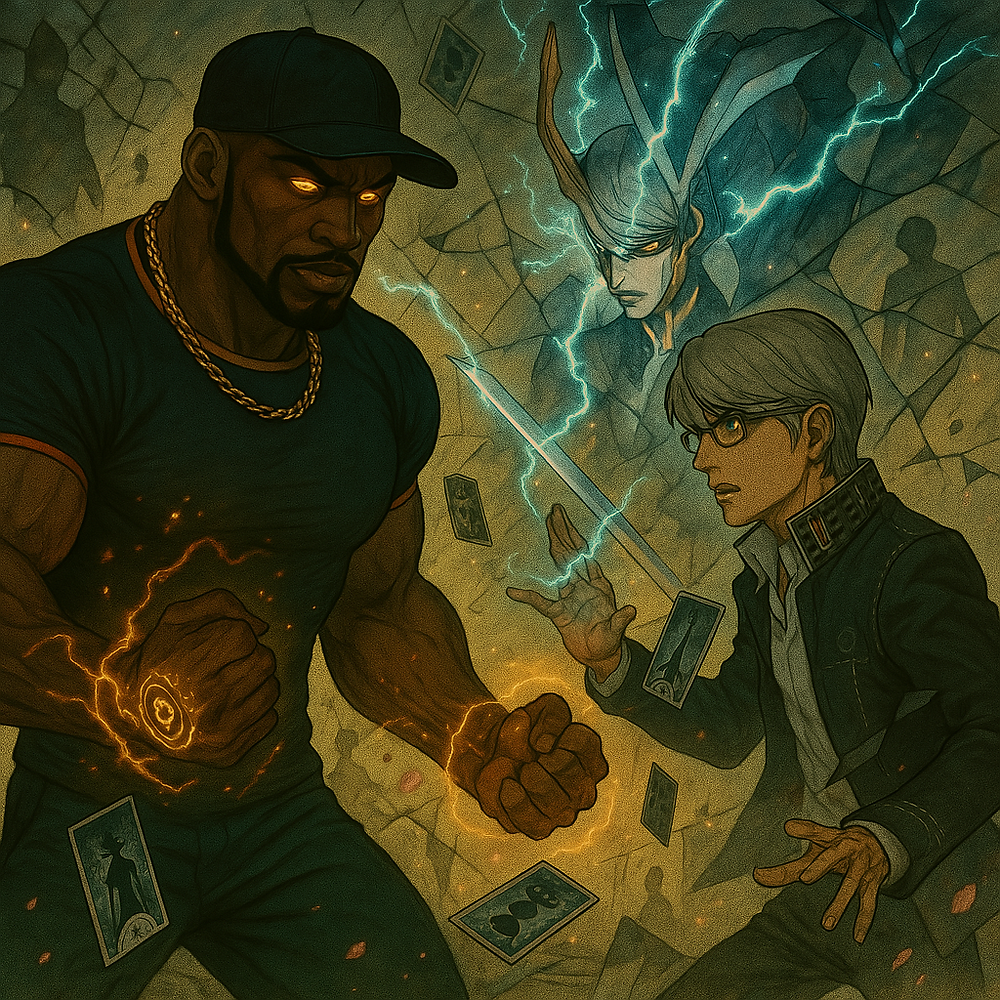
Truth without shadow integration is incomplete self-knowledge. Truth with systematic shadow work creates Persona 4—a masterclass in how authentic self-discovery requires confronting rather than suppressing the psychological darkness you’ve been hiding from yourself and others.
Most self-improvement content sells you “positive thinking.” Visualize success. Affirm your greatness. Manifest your destiny.
Persona 4 understands this is psychological cowardice dressed as wisdom.
Real strength emerges from integrating your shadow aspects through systematic truth confrontation. The TV World isn’t fantasy—it’s systematic psychological conditioning. Every character who refuses to face their shadow stays trapped. Every character who confronts it gains power.
Your body is your first kingdom. Your psyche is your first battlefield. You cannot win the external war while losing the internal one.
XPL Energy Tier Framework
| Level | Focus | Icon | Client State |
|---|---|---|---|
| Level I: Awareness | Exposure | 🪞 | “I didn’t know what I didn’t know” |
| Level II: Activation | Questioning | ⚡ | “Maybe what I’ve been doing isn’t working” |
| Level III: Execution | Deployment | 🛠️ | “I execute regardless of how I feel” |
| Level IV: Elite Mode | Mastery | 🔥 | “How can I extract 10% more from this system?” |
| Level V: Peak Mastery | Integration | 🧠 | “Discipline is my default setting” |
This analysis targets Level IV and Level V readers. If you’re still chasing affirmations, prepare to meet yourself.
XPL Perspective Framework
| Intensity | Icon | Purpose |
|---|---|---|
| 🔍 | Surface Scan | Quick observations |
| ⚡ | Deep Cut | Tactical analysis |
| 🔥 | Full Assault | Controversial takes |
| 💀 | Nuclear Option | Destroying sacred cows |
PERSONA 4: THE ANIMATION RATING BREAKDOWN
Story/Plot Development: Level IV: Elite Mode (🔥🔥🔥🔥/5)
Persona 4 constructs its mystery narrative like a systematic psychological investigation. Each case serves larger themes about shadow integration, truth confrontation, and authentic self-knowledge development.
XPL Performance Physics: Law 6—Identity Contradiction Creates Homeostatic Resistance. Every murder victim in Inaba died because they couldn’t integrate their shadow. The fog that swallows the town isn’t supernatural weather—it’s the collective refusal to see clearly. The series literalizes what happens psychologically when people spend their lives running from themselves.
The mystery structure isn’t just entertainment. It’s a framework for understanding how truth emerges through systematic investigation—of cases, of others, of yourself.
Character Development: Level V: Peak Mastery (🧠🧠🧠🧠🧠/5)
Yu Narukami’s development demonstrates how authentic leadership requires systematic shadow integration rather than maintaining comfortable self-image.
He arrives in Inaba as a blank slate—the silent protagonist trope. But the silence isn’t emptiness. It’s receptivity. He listens, observes, and most importantly, he accepts. When others confront their shadows, he doesn’t judge. He stands with them. This is leadership through presence rather than force.
XPL Performance Physics: Law 2—Identity Precedes Outcome. Yu’s identity as “one who accepts” allows him to facilitate others’ integration. He doesn’t need to fix them. He creates space for them to fix themselves.
Each Investigation Team member represents different shadow integration approaches:
-
Yosuke wants acceptance but fears inadequacy. His shadow reveals the performer hiding behind the joke.
-
Chie projects strength but fears weakness. Her shadow exposes the dependence beneath the independence.
-
Yukiko plays the perfect heir but craves freedom. Her shadow shows the prisoner who never left the castle.
-
Kanji performs masculinity but fears rejection. His shadow reveals the sensitivity beneath the aggression.
-
Rise embodies the idol but fears intimacy. Her shadow shows the person behind the persona.
-
Naoto enforces logic but fears vulnerability. Her shadow reveals the child beneath the genius.
Every single one must confront the truth they’ve been running from. Not once. Systematically. Until integration becomes identity.
Animation/Fight Quality: Level III: Execution (🛠️🛠️🛠️/5)
AIC A.S.T.A. delivers animation that serves psychological themes rather than spectacular presentation. The Persona battles visualize shadow integration through symbolic combat.
When Yu summons Izanagi, he’s not calling an external savior. He’s manifesting integrated selfhood. The Persona is the part of you that emerges when you stop fighting yourself. The battles are internal work made visible.
The animation quality is competent. The symbolism is elite.
Overall Impact/Rewatchability: Level IV: Elite Mode (🔥🔥🔥🔥/5)
Persona 4 rewards analysis like studying shadow psychology rewards self-knowledge development. Multiple viewings reveal integration techniques and truth confrontation strategies that surface watchers miss.
This is content designed for people who understand that authentic growth requires systematic shadow work. It doesn’t entertain you—it initiates you.
🔥 FULL ASSAULT: Positive Psychology Is Psychological Avoidance
The self-help industry has convinced you that growth means focusing on the positive. Affirm your worth. Visualize success. Eliminate negative thoughts.
This is cowardice packaged as wisdom.
Persona 4 presents the uncomfortable truth: what you refuse to face owns you. The shadow doesn’t disappear because you ignore it. It grows. It waits. And eventually, it takes form—in your relationships, your habits, your unexplained failures, your recurring patterns of self-sabotage.
XPL Performance Physics: Law 1—Energy Debt Compounds Faster Than Discipline. Every psychological truth you suppress creates energy debt. The shadow doesn’t forget. It accumulates. And when it finally manifests, it manifests as crisis—the fight you can’t win, the relationship you can’t sustain, the goal you can’t reach despite all your effort.
The characters in Persona 4 don’t die because they’re evil. They die because they refuse to look. The shadow kills them—or more accurately, their refusal to integrate it kills them.
Command: Stop running. Turn around. Look at what you’ve been hiding from yourself. The shadow isn’t your enemy. It’s the part of you that’s been waiting to be acknowledged.
⚡ DEEP CUT: The Investigation Team as Accountability Structure
The Investigation Team functions as an accountability structure—a group committed to truth even when truth is uncomfortable.
XPL Performance Physics: Law 7—Accountability Structures Determine Execution Rates. Alone, each character would likely fail. Yosuke would keep performing. Chie would keep projecting. Kanji would keep hiding. But together, they create a container for integration.
This is why elite performers join teams, hire coaches, build networks. Not because they’re weak, but because they understand: you cannot see your own blind spots. The shadow is called shadow because it’s behind you. You need others to help you face it.
The team’s dynamic demonstrates something crucial: they don’t judge each other’s shadows. They witness. They accept. They fight alongside the integrated self that emerges.
This is what real accountability looks like. Not criticism. Not performance monitoring. Standing with someone while they face what terrifies them.
🔍 SURFACE SCAN: The TV World as Training Ground
The TV World functions as systematic psychological conditioning. Characters don’t enter once and transform. They return repeatedly, facing increasingly difficult challenges as they integrate more of themselves.
This mirrors elite training methodology. You don’t do one hard workout and achieve mastery. You expose yourself to progressive overload—systematic stress that forces adaptation.
XPL Performance Physics: Law 4—Recovery Drives Adaptation. Between trips into the TV World, characters return to normal life. They process. They integrate. They prepare for the next confrontation. The rhythm of exposure and recovery builds psychological resilience that single exposure never could.
Your shadow work operates the same way. You don’t face your deepest fear once and transcend it forever. You face it, integrate what you can, recover, and prepare for the next layer. The process never ends. The payoff is that each layer reveals more of your actual capacity.
💀 NUCLEAR OPTION: You’re Not the Hero, You’re the One Refusing to Enter
Most viewers identify with the Investigation Team. They see themselves as brave truth-seekers facing darkness to save others.
The truth: you’re probably one of the townspeople who stays inside when the fog comes.
You consume content about shadow work. You understand the theory intellectually. You can explain Jungian psychology to friends. But when your own shadow manifests—through a triggered reaction, a defensive outburst, a pattern you can’t break—you retreat.
XPL Performance Physics: Law 5—Inconsistency Trains Failure Tolerance. Every time you glimpse a truth about yourself and look away, you train yourself to tolerate incomplete integration. Every time you feel the shadow rise and choose distraction, you strengthen the pattern of avoidance.
The nuclear truth: understanding shadow psychology without doing shadow work is just sophisticated avoidance. You’re using knowledge to feel like you’re growing while remaining exactly where you started.
THE MASTERY SYMBOLS
🔗 The Chain: Every suppressed truth connects to every unexplained failure. You cannot break the chain by ignoring its links. You must examine each one, understand its place, and integrate what it reveals.
🪞 The Mirror: When you watch Kanji face his shadow, do you see your own fear of being seen as you actually are? Or do you tell yourself your case is different, your shadow isn’t that bad, your avoidance is justified?
👑 The Throne: How will you build the accountability structure required to face what you cannot face alone? The throne doesn’t accept half-truths. Neither does your psyche.
IDENTITY MIRROR QUESTIONS
-
What truth about myself have I been running from longest?
-
Which of my reactions reveal shadows I haven’t integrated?
-
Who in my life could serve as witness while I face what terrifies me?
-
What patterns of self-sabotage am I still explaining away instead of examining?
-
If my shadow manifested physically, what would it look like and what would it say?
ACTION TRIGGER QUESTIONS
-
What one shadow aspect will you name aloud this week to someone who can witness without judgment?
-
Which positive thinking practice will you abandon in favor of actual confrontation?
-
What accountability structure will you join or create to support systematic integration?
-
How will you measure not just your comfort but your courage this month?
-
What conversation are you avoiding because it might reveal something about yourself you’re not ready to see?
Follow my daily insights on Instagram @xperformancelab and YouTube @xperformancelab.
For those in Houston demanding the highest level of training, in-person sessions are available at VFit Gym, 5535 Richmond Ave, Houston, TX.
Elite online training systems at xperformancelab.com.
Take the Archetype Quiz to discover your specific body type protocol: xperformancelab.com/quiz
📊 SEO OPTIMIZATION DATA
Meta Description (155 chars max):
Xavier Savage analyzes Persona 4 through XPL frameworks: shadow integration, psychological truth, and why facing darkness creates authentic power. Level IV analysis.
URL Slug:
persona-4-shadow-psychology-xpl-analysis
Primary Keyword:
Persona 4 analysis
Secondary Keywords:
shadow psychology anime, Jungian psychology in Persona 4, Yu Narukami character study, XPL Performance Physics, Xavier Savage anime breakdown, psychological integration training
Target Search Intent:
Informational
🖼️ IMAGE OPTIMIZATION GUIDE
Featured Image:
-
File Name: xavier-savage-persona-4-shadow-psychology-xpl-featured.jpg
-
Alt Text: “Xavier Savage analyzing Persona 4 shadow psychology and truth integration at XPerformanceLab”
-
Dimensions: 1200x630px minimum
🎨 MIDJOURNEY VISUAL PROMPTS
Prompt 1: Shadow Confrontation
/imagine a character standing before their shadow self in a fog-filled TV world, the shadow reaching out with both accusation and invitation, psychological tension, surreal neon lighting reflecting off wet surfaces, Yoshitaka Amano meets cyberpunk aesthetic –ar 16:9 –style raw –v 6
Prompt 2: Persona Manifestation
/imagine a Persona erupting from its user in a burst of blue flame, the design blending classical mythology with modern psychological symbolism, the user’s expression showing equal parts pain and liberation, dramatic spiritual awakening atmosphere –ar 16:9 –style raw –v 6
📚 SCIENTIFIC REFERENCES
-
Jung, C.G. “Aion: Researches into the Phenomenology of the Self.” Princeton University Press, 1959. https://press.princeton.edu/books/paperback/9780691018263/aion — Supports: Shadow integration as essential for psychological wholeness and individuation.
-
Brown, B. “Daring Greatly: How the Courage to Be Vulnerable Transforms the Way We Live, Love, Parent, and Lead.” Gotham Books, 2012. https://brenebrown.com/book/daring-greatly/ — Supports: Vulnerability and truth-telling as prerequisites for genuine connection and psychological growth.
-
Linehan, M.M. “Cognitive-Behavioral Treatment of Borderline Personality Disorder.” Guilford Press, 1993. https://www.guilford.com/books/Cognitive-Behavioral-Treatment-of-Borderline-Personality-Disorder/Marsha-Linehan/9780898621838 — Supports: Systematic exposure to avoided psychological content as mechanism for integration and symptom reduction.
-
Kegan, R. & Lahey, L.L. “Immunity to Change: How to Overcome It and Unlock the Potential in Yourself and Your Organization.” Harvard Business Press, 2009. https://www.hbs.edu/faculty/Pages/item.aspx?num=35091 — Supports: Hidden commitments and assumptions (shadow aspects) prevent genuine change despite conscious desire for growth.
🔗 INTERNAL LINKING STRATEGY
-
Anchor Text: “identity contradiction creates homeostatic resistance”
-
Target: https://www.xperformancelab.com/post/identity-contradiction-homeostatic-resistance
-
Purpose: Deep dive on Law 6 and psychological resistance mechanisms
-
-
Anchor Text: “shadow integration through systematic truth confrontation”
-
Target: https://www.xperformancelab.com/post/truth-confrontation-framework
-
Purpose: Provide practical protocol for readers to apply Persona 4 psychology to their lives
-
-
Anchor Text: “accountability structures determine execution rates”
-
Target: https://www.xperformancelab.com/post/accountability-structures-execution-rates
-
Purpose: Expand on Law 7 applications for psychological development
-
-
Anchor Text: “progressive overload—systematic stress that forces adaptation”
-
Target: https://www.xperformancelab.com/post/progressive-overload-psychological-training
-
Purpose: Connect physical training principle to psychological development
-
-
Anchor Text: “Archetype Quiz to discover your specific body type protocol”
-
Purpose: Convert psychological content to assessment/lead generation
Scroll to unlock levels
Level V Achieved
Now live it.
Unlocked
Leave a Reply