
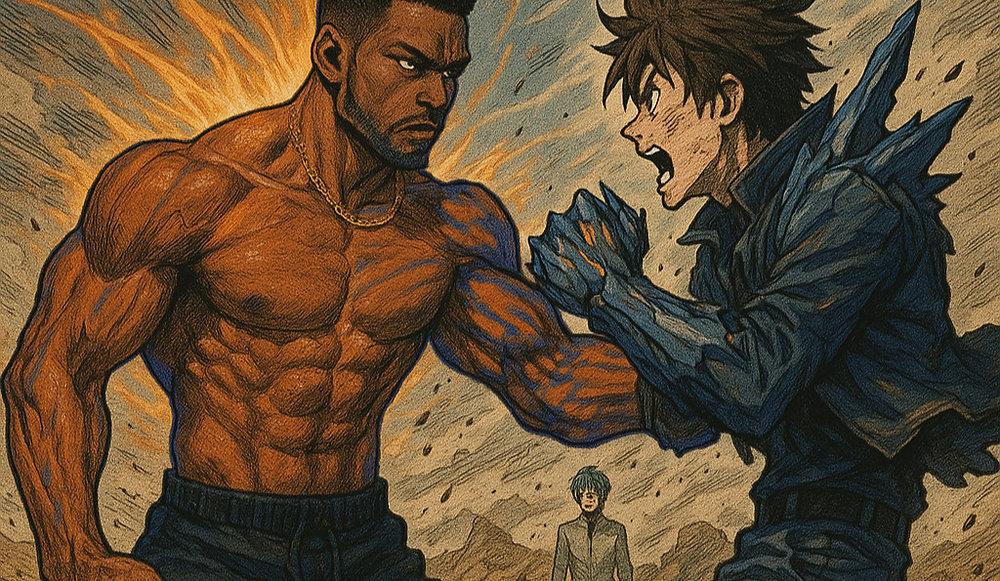
S-CRY-ED: WHEN INDIVIDUAL WILL MEETS UNCOMPROMISING REBELLION – Level V: Peak Mastery
Before you read another word, answer these questions honestly:
What authentic aspects of who you are do you suppress to avoid conflict with authority or social pressure?
How does your need for group acceptance prevent you from developing the kind of strength that requires standing alone?
When faced with institutional pressure to conform, do you bend or do you break—or do you fight?
What would individual conviction look like if you had to defend it without anyone backing you up?
Five years from now, when you look back at this moment, will you be grateful you stayed true to yourself—or regretful you sold out for comfort?
What up world, Xavier Savage here from xperformancelab.com.
Individual will without foundation creates chaos. Individual will WITH conviction creates s-CRY-ed—absolute proof that authentic strength requires unwavering personal commitment backing resistance to oppressive authority.
I’m breaking down why this anime demonstrates what happens when pure fighting spirit meets tactical intelligence. Most rebellion stories present resistance as group effort or heroic sacrifice. s-CRY-ed presents rebellion as individual psychological warfare that requires personal strength development and unwavering commitment to authentic self-expression. The difference separates real warriors from protest performers.
Your body is your first kingdom. Your will is your first weapon. Kazuma doesn’t fight for a cause, a group, or an ideology. He fights because being told what to be is unacceptable. That’s the only reason that lasts.
THE XPL ENERGY TIER FRAMEWORK
| Level | Focus | Icon | Client State |
|---|---|---|---|
| Level I: Awareness | Exposure | 🪞 | “I didn’t know what I didn’t know” |
| Level II: Activation | Questioning | ⚡ | “Maybe what I’ve been doing isn’t working” |
| Level III: Execution | Deployment | 🛠️ | “I execute regardless of how I feel” |
| Level IV: Elite Mode | Mastery | 🔥 | “How can I extract 10% more from this system?” |
| Level V: Peak Mastery | Integration | 🧠 | “Discipline is my default setting” |
This post is for Level V readers. If you’re still looking for groups to validate your existence, this analysis will confront you.
XPL PERSPECTIVE FRAMEWORK
| Intensity | Icon | Purpose | When To Use |
|---|---|---|---|
| 🔍 | Surface Scan | Quick observations | Intro/transitions |
| ⚡ | Deep Cut | Tactical analysis | Main sections |
| 🔥 | Full Assault | Controversial takes | Hot takes/criticism |
| 💀 | Nuclear Option | Destroying sacred cows | Obliterating popular opinions |
S-CRY-ED RATING BREAKDOWN
Story/Plot Development: Level V: Peak Mastery (🧠🧠🧠🧠🧠/5)
s-CRY-ed constructs its rebellion narrative like exploration of individual will versus institutional control. Every conflict serves themes about authentic self-expression, personal conviction, and resistance to authority that attempts to control or suppress individual strength.
What the series understands:
-
Institutions don’t care about you—they care about your compliance
-
Real resistance isn’t ideological—it’s personal
-
Fighting for yourself is more sustainable than fighting for abstractions
-
Conviction without capability is just attitude
The HOLY organization isn’t evil for evil’s sake. It’s efficient. It identifies, categorizes, and utilizes Alter users for its purposes. Those who don’t fit get eliminated. This is how power works everywhere—just less visibly.
XPL Performance Physics: Law 2—Identity Precedes Outcome. Kazuma’s identity as “someone who refuses to be controlled” determines every choice. He doesn’t fight because he hates HOLY. He fights because being told what to be is unacceptable.
Savage Command: “If your identity depends on permission, you have no identity.”
Character Development: Level V: Peak Mastery (🧠🧠🧠🧠🧠/5)
Kazuma’s unwavering commitment to personal freedom demonstrates how authentic rebellion requires individual strength rather than group identity or ideological conformity.
His arc:
Phase 1—Survival Mode: Living in the Lost Ground, using his Alter to survive. No ideology, no rebellion—just making it through.
Phase 2—Confrontation: HOLY enters his life, demands submission. His first response isn’t strategic—it’s visceral. Something in him refuses.
Phase 3—Individual Stand: He fights alone, wins alone, loses alone. No backup, no cause, no justification except “I won’t.”
Phase 4—Rivalry as Growth: His conflict with Ryuho forces evolution. Not through cooperation—through opposition. Each battle refines both.
Phase 5—Integration: By the end, he’s not just refusing control—he’s affirming himself. The rebellion becomes positive expression, not just negative resistance.
XPL Performance Physics: Law 3—Process Beats Intensity Over Time. Kazuma doesn’t win through emotional outbursts. Each battle teaches something. Each opponent reveals a gap. Each loss forces adaptation.
Identity Mirror: What authentic aspects of yourself are you suppressing to avoid conflict with authority or social pressure?
Animation/Fight Quality: Level V: Peak Mastery (🧠🧠🧠🧠🧠/5)
Sunrise delivers combat that visualizes pure fighting spirit through dynamic action choreography and visual metaphor. Every battle serves character psychology and rebellion themes.
What the fights communicate:
-
Alters reflect psychological state, not just power level
-
Kazuma’s fighting style is raw, instinctive, relentless
-
Ryuho’s is refined, controlled, intellectual
-
Their clashes are philosophical arguments made physical
Training translation: This is what happens when conviction meets capability. Not technique showcase—will made visible.
The Chain doesn’t negotiate. Neither should your fighting spirit.
Overall Impact/Rewatchability: Level V: Peak Mastery (🧠🧠🧠🧠🧠/5)
s-CRY-ed rewards analysis like studying individual psychology rewards personal strength understanding. Multiple viewings reveal rebellion strategies and will development that surface watchers miss.
What rewatching reveals:
-
Early choices that foreshadow Kazuma’s refusal to bend
-
Ryuho’s tragedy—trapped by his own need for control
-
How each opponent represents different ways institutions break people
-
The cost of standing alone—and why it’s worth it
Savage Command: “Study what rewards rewatch. Individual strength compounds; groupthink fades.”
🔥 FULL ASSAULT: INDIVIDUAL WILL VS. INSTITUTIONAL CONTROL
💀 Nuclear Option:
s-CRY-ed accomplishes what most rebellion anime fail at: presenting authentic individual resistance that requires personal strength development rather than group movement participation.
What the series understands about resistance:
Principle 1—Institutions want compliance, not justice.
HOLY doesn’t care about good or evil. It cares about order. Alters that fit its system get used. Alters that don’t get eliminated. This is how power works.
Principle 2—Groups dilute conviction.
Movements require compromise. Ideologies require conformity. Kazuma fights for himself—which means he never has to water down his position for coalition politics.
Principle 3—Opposition can serve growth.
Kazuma and Ryuho’s rivalry isn’t obstacle—it’s catalyst. Each forces the other to evolve. The best opponents make you better.
Principle 4—The cost of standing alone is real.
Kazuma gets no backup, no comfort, no validation. He wins alone, loses alone, and keeps going alone. This isn’t romantic—it’s expensive. But it’s the only path that doesn’t require selling out.
Principle 5—Authentic expression is rebellion.
The Alters reflect who people really are. HOLY wants to categorize and control them. Kazuma just wants to be his. The most fundamental rebellion is refusing to be someone else’s version of you.
Compare this to typical rebellion narratives:
-
Group uprising: Many people together fight the power
-
Heroic sacrifice: One person dies for the cause
-
Ideological victory: The right ideas win
-
Inclusion fantasy: The institution reforms to include you
s-CRY-ed refuses every comfort. Institutions don’t reform. Groups compromise. Ideas don’t fight. Only individuals, standing alone, refusing to bend.
The Mirror: What authentic aspects of your individual expression are you suppressing to avoid conflict with authority?
The Chain: Your need for group acceptance prevents individual strength. Break the pattern.
⚡ DEEP CUT: CHARACTER DEVELOPMENT PSYCHOLOGY
Kazuma: The Man Who Wouldn’t Bend
Kazuma’s character represents individual strength through unwavering personal conviction rather than institutional approval seeking.
His psychology:
No ideology: He doesn’t fight for freedom, justice, or any abstraction. He fights because being told what to do is unacceptable. That’s more sustainable than any cause.
Pure instinct: His decisions aren’t calculated—they’re visceral. He feels wrong and acts. Thinking comes later, if at all.
Relentless forward motion: Lose? Get up. Win? Next opponent. No dwelling, no celebrating, no stopping.
His relationship with Ryuho:
The rivalry is perfect opposition psychology:
-
Ryuho represents control, order, institutional power
-
Kazuma represents freedom, chaos, individual will
-
Each needs the other to become complete
-
Neither wins permanently—they just keep evolving
XPL Performance Physics: Law 4—Recovery Drives Adaptation. Kazuma grows between battles, processing what each opponent taught him. The reflection is quick, but it happens.
Identity Mirror: What would you fight for if you had no group backing you?
Ryuho: The Believer Trapped by His Belief
Ryuho represents the tragedy of institutional capture—someone with individual strength who sold it for order.
His psychology:
-
Believes in HOLY’s mission
-
Uses his power to enforce its will
-
Sees chaos as enemy, control as solution
-
His Alter reflects this—crystalline, ordered, beautiful
The tragedy:
Ryuho has immense individual strength. He could stand alone. Instead, he stands for the institution. His conviction is real—but it’s conviction in something that uses him.
The evolution:
Through fighting Kazuma, he begins to see. The institution isn’t order—it’s control. His belief isn’t freedom—it’s captivity. By the end, he’s not HOLY’s enforcer. He’s his own man.
XPL Application: This is what happens when you attach your strength to something that doesn’t care about you. The institution will use you, then discard you. Kazuma’s path—standing alone—is harder but safer.
The Alters: Psychology Made Visible
Each Alter in s-CRY-ed reflects its user’s psychological state:
Kazuma’s Alter: Raw, evolving, unpredictable. Starts as basic shell, develops through conflict, reflects his growth.
Ryuho’s Alter: Refined, controlled, beautiful. Reflects his need for order—and its limits.
Kunieda’s Alter: Weaponized trauma. Her power comes from pain she hasn’t processed.
Mima’s Alter: Envy made physical. He steals others’ powers because he has none of his own.
The lesson: Your power reflects who you are. You can’t develop capability without developing yourself.
⚡ DEEP CUT: WORLD-BUILDING & RESISTANCE PSYCHOLOGY
Lost Ground as Freedom Laboratory
s-CRY-ed constructs its Lost Ground setting like pressure laboratory where individual will gets tested against institutional control.
What Lost Ground represents:
Freedom’s cost: Outside HOLY’s control, but also outside protection. You’re free to be yourself—and free to die.
Natural selection: Only those with sufficient will and capability survive. The weak don’t make it.
Authentic expression: Without institutional pressure, people become what they actually are—not what they’re told to be.
The HOLY/Holy conflict:
HOLY (the organization) versus holy (sacred, individual). The series plays with this deliberately. Institutions claim sacred purpose while crushing individual spirit.
XPL Application: Your environment either demands authenticity or enables hiding. Lost Ground forces you to be real. What does your environment force?
Savage Command: “Freedom costs. Pay it or live owned.”
The Alter Ranking System
HOLY’s classification of Alters mirrors how institutions categorize people:
Ranking creates hierarchy: Some Alters are “better” than others. This justifies resource allocation, privilege, control.
Measurement enables management: If you can measure it, you can control it. HOLY’s rankings aren’t neutral—they’re tools.
The unclassifiable are threats: Alters that don’t fit the system can’t be managed. They must be eliminated or contained.
XPL Application: Every institution has its ranking system. The question isn’t whether you’re ranked—it’s whether you let the ranking define you.
🔍 SURFACE SCAN: TRAINING/STRATEGY PHILOSOPHY
s-CRY-ed demonstrates how authentic individual strength requires specific approaches that group-dependent thinking never develops.
What the series teaches about individual will:
1. Conviction is more sustainable than ideology.
Kazuma doesn’t fight for abstractions. He fights because being told what to do is unacceptable. This never needs updating, never requires reinterpretation, never depends on circumstances.
Application: What do you believe so deeply you’d fight without anyone backing you?
2. Opposition can serve growth.
Kazuma and Ryuho’s rivalry isn’t obstacle—it’s catalyst. Each forces the other to evolve. The best opponents make you better.
Application: Who’s your Ryuho? Who forces you to grow through opposition?
3. Standing alone has costs—and benefits.
No backup means no dilution. No support means no dependency. No validation means no permission needed. The costs are real; the benefits are real.
Application: Are you willing to stand alone for what you believe?
4. Your power reflects who you are.
Alters develop through personal growth, not external acquisition. You can’t have Kazuma’s power without Kazuma’s willingness to fight.
Application: What does your capability say about who you are?
5. Institutions use you.
Ryuho believed in HOLY. HOLY used him. The institution doesn’t care about him—only about what he can do. This is always true.
Application: What institutions are you serving that don’t serve you?
6. Refusal is the first rebellion.
Before any strategy, before any victory, before any movement—there’s refusal. The moment you say “no” to being controlled. Everything follows from that.
Application: What have you refused lately?
XPL Performance Physics: Law 2—Identity Precedes Outcome. Kazuma’s identity as “someone who refuses to be controlled” determines everything. Capability follows identity.
Savage Command: “Refuse first. Plan second. Act third.”
🔥 FULL ASSAULT: LEGACY & IMPACT
💀 Nuclear Option:
s-CRY-ed influenced rebellion anime to understand that authentic resistance requires individual strength rather than group movement participation.
What it accomplished:
Rejected groupthink: Showed that individuals, not movements, create real change
Normalized standing alone: Kazuma’s isolation isn’t weakness—it’s purity of conviction
Demonstrated opposition as growth: Ryuho and Kazuma’s rivalry proved that enemies can make you stronger
Respected individual psychology: Alters as psychological reflection, not just powers
The influence:
Every “individual vs. system” narrative since owes something to s-CRY-ed. Code Geass, Akame ga Kill!, even elements of My Hero Academia‘s hero-villain dynamics build on foundations this series established.
Savage Command: “Build individual rebellion through personal conviction, not group identity.”
The Throne: Most people who find s-CRY-ed “too individualistic” are revealing their inability to develop authentic personal conviction. They prefer group identity because it requires less strength. s-CRY-ed refuses that comfort.
THE MASTERY SYMBOLS
🔗 The Chain: Your will connects to your freedom. Strong will, strong freedom. Weak will, weak freedom. No shortcuts.
🪞 The Mirror: When you watch Kazuma stand alone against HOLY, do you see any reflection of your own willingness to refuse? What would you fight without backup?
👑 The Throne: How will you develop individual conviction that doesn’t depend on group validation?
FINAL STRATEGIC ASSESSMENT
s-CRY-ed asks questions most narratives avoid:
What if groups dilute more than they amplify?
What if your enemies could make you stronger?
What if standing alone is the only way to stand for anything real?
What if institutions don’t care about you—ever?
What if refusal is the first and most important rebellion?
Savage Command: “Build individual rebellion through disciplined personal conviction and authentic self-expression.”
Savage Command: “Develop authentic resistance that requires individual strength rather than group identity.”
Savage Command: “Choose personal conviction over comfortable authority acceptance.”
IDENTITY MIRROR QUESTIONS
What authentic aspects of your individual expression are you suppressing to avoid conflict with authority?
How does your preference for group acceptance prevent you from developing individual strength?
What individual strength approaches do you need for authentic resistance to institutional pressure?
When do you choose comfortable group identity over individual development that requires standing alone?
Where are you seeking ideological conformity instead of building authentic personal conviction?
What would you fight for with no one backing you?
Who’s your Ryuho—who forces you to grow through opposition?
ACTION TRIGGER QUESTIONS
What’s one thing you’ll refuse this week—not strategically, just refuse?
What institution are you serving that doesn’t serve you?
Who forces you to grow through opposition—and are you using that pressure?
What does your capability say about who you are?
Are you willing to stand alone for what you believe?
What have you refused lately?
RESOURCE DROP
Follow my daily insights on Instagram @xperformancelab and YouTube @xperformancelab.
For those in Houston demanding the highest level of training, in-person sessions are available at VFit Gym, 5535 Richmond Ave, Houston, TX.
Elite online training systems at xperformancelab.com.
Take the Archetype Quiz to discover your specific body type protocol: xperformancelab.com/quiz
Inertia Over Inspiration. Always.
Execute.
Scroll to unlock levels
Level V Achieved
Now live it.
Unlocked
Leave a Reply