
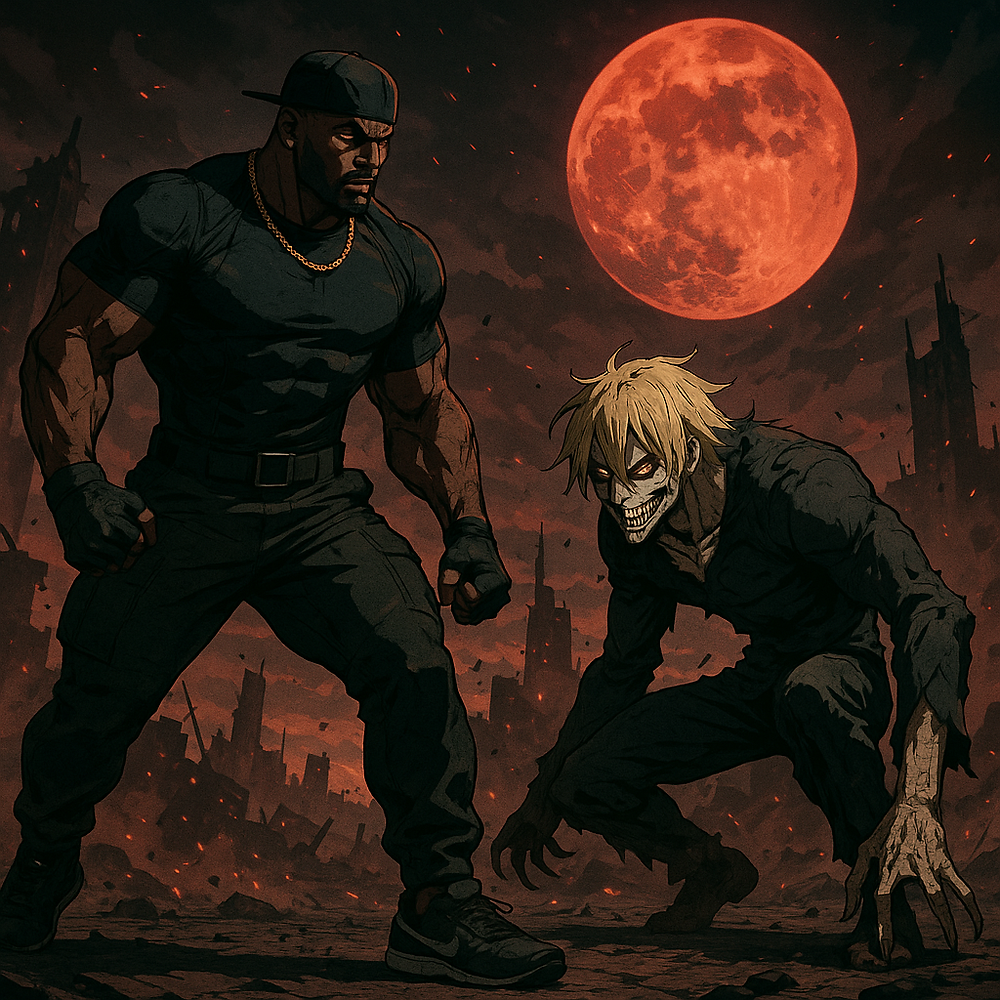
# TOKYO GHOUL: WHEN IDENTITY CRISIS MEANS RELENTLESS TRANSFORMATION — Level V: Peak Mastery
—
**Before you read another word, answer these questions honestly:**
What comfortable aspects of your identity are you protecting that actually need to die?
How do you distinguish between temporary discomfort and pressure designed to force growth?
When your sense of self crumbles, do you resist or rebuild?
What would you become if you stopped pretending to be who you’ve always been?
Five years from now, when you look back at this moment, will you have chosen identity comfort or authentic transformation?
—
What up world, Xavier Savage here from xperformancelab.com.
While everyone’s still defending *Dragon Ball Z*’s repetitive power scaling or pretending *Sword Art Online* has meaningful character development, I’m analyzing a series that actually delivers psychological transformation through relentless pressure: *Tokyo Ghoul*.
This isn’t your typical monster anime, and it damn sure isn’t comfortable viewing for people who prefer their identity crises sanitized for mass consumption. The series operates like intensive psychological conditioning designed to break down and rebuild identity from the foundation up.
While *Death Note* gets praised for mind games between geniuses, *Tokyo Ghoul* delivers actual psychological warfare against the self—the most brutal battlefield of all.
**Your body is your first kingdom.** Your identity is your first fortress. Kaneki’s fortress crumbles in the first episode. What rises from the rubble isn’t who he was—it’s who he was always becoming.
—
## THE XPL ENERGY TIER FRAMEWORK
| Level | Focus | Icon | Client State |
|——-|——–|——|————–|
| **Level I: Awareness** | Exposure | 🪞 | “I didn’t know what I didn’t know” |
| **Level II: Activation** | Questioning | ⚡ | “Maybe what I’ve been doing isn’t working” |
| **Level III: Execution** | Deployment | 🛠️ | “I execute regardless of how I feel” |
| **Level IV: Elite Mode** | Mastery | 🔥 | “How can I extract 10% more from this system?” |
| **Level V: Peak Mastery** | Integration | 🧠 | “Discipline is my default setting” |
**This post is for Level V readers.** If you’re still protecting your comfortable identity instead of embracing necessary destruction, this analysis will confront you.
—
## XPL PERSPECTIVE FRAMEWORK
| Intensity | Icon | Purpose | When To Use |
|———–|——|———|————-|
| 🔍 | Surface Scan | Quick observations | Intro/transitions |
| ⚡ | Deep Cut | Tactical analysis | Main sections |
| 🔥 | Full Assault | Controversial takes | Hot takes/criticism |
| 💀 | Nuclear Option | Destroying sacred cows | Obliterating popular opinions |
—
## TOKYO GHOUL RATING BREAKDOWN
### Story/Plot Development: Level IV: Elite Mode (🔥🔥🔥🔥/5)
*Tokyo Ghoul* constructs its narrative like a deliberate breakdown and reconstruction protocol. Ken Kaneki’s transformation doesn’t follow convenient plot progression—it mirrors actual psychological adaptation under extreme pressure.
**What the series understands:**
– Identity isn’t changed—it’s *destroyed and rebuilt*
– Comfortable selves die before authentic selves emerge
– Transformation requires pressure that breaks you
– There’s no going back to who you were
Kaneki doesn’t choose to become half-ghoul. It happens *to* him. The entire series is him catching up to what he’s already become.
**XPL Performance Physics: Law 2—Identity Precedes Outcome.** Kaneki’s identity as “human” determines his early choices. His identity as “half-ghoul” determines his later choices. The change isn’t gradual—it’s *catastrophic*.
**Savage Command:** “You don’t evolve into who you need to be. You’re destroyed into it.”
—
### Character Development: Level V: Peak Mastery (🧠🧠🧠🧠🧠/5)
Kaneki’s evolution from passive victim to strategic predator represents one of anime’s most authentic psychological transformations. This isn’t character development—it’s identity demolition and reconstruction under pressure.
**His arc:**
**Phase 1—The Human:** Bookish, passive, wants to be left alone. His defining characteristic is *not choosing*. Things happen to him.
**Phase 2—The Breaking:** Rize’s organs, the torture, the white hair. Every comfortable assumption destroyed. Every identity stripped away.
**Phase 3—The Acceptance:** “It’s not my fault I was born this way.” First moment of genuine choice—accepting what he is.
**Phase 4—The Predator:** Centipede, eye covers, strategic cruelty. He becomes what the world demanded. The question is whether he’s still *him*.
**Phase 5—The Integration:** By the end, he’s neither human nor ghoul. He’s *Kaneki*—someone new, built from the rubble of who he was.
**The supporting cast as psychological mirrors:**
**Touka:** Represents the possibility of integration without losing self. She’s further along the path—and her presence shows what’s possible.
**Hide:** Represents the human connection Kaneki can’t maintain. His role is tragic because he’s the one thing Kaneki can’t keep.
**Rize:** Not a character—*infection*. The thing inside him that’s also him. She’s what he becomes when he stops fighting.
**Jason:** Represents what Kaneki could become if he embraces cruelty without purpose. The torture arc is Kaneki meeting his possible future.
**Amon:** Represents the other side’s humanity. He’s what Kaneki could have been if things reversed.
**XPL Performance Physics: Law 6—Identity Contradiction Creates Homeostatic Resistance.** Kaneki’s human identity and ghoul identity can’t coexist. The contradiction destroys him—and creates someone new.
**Identity Mirror:** What comfortable aspects of your identity are you protecting that actually need to die?
—
### Animation/Fight Quality: Level IV: Elite Mode (🔥🔥🔥🔥/5)
Pierrot delivers visceral animation that serves psychological themes rather than existing for spectacle. The kagune battles feel like extensions of character psychology—violent expressions of internal conflict made manifest.
**What the visuals communicate:**
– Kaneki’s kagune changes as he changes
– The centipede isn’t just imagery—it’s *identity*
– White hair marks moments of transformation
– Every fight reveals psychological state, not just combat capability
**The torture sequence:** Not entertainment—*conditioning*. You’re meant to feel every moment. To understand that this is what breaking looks like.
**Training translation:** Real transformation isn’t montage. It’s ugly, painful, and you don’t come out the same.
**The Chain doesn’t negotiate.** Neither should your understanding of what growth costs.
—
### Overall Impact/Rewatchability: Level IV: Elite Mode (🔥🔥🔥🔥/5)
*Tokyo Ghoul* rewards analysis like intensive therapy rewards honest self-examination. Multiple viewings reveal psychological layers and symbolic elements that surface watchers miss completely.
**What rewatching reveals:**
– Early choices that foreshadow Kaneki’s breaking
– The humanity in characters you dismissed as monsters
– Hide’s quiet tragedy—visible only when you know
– That Kaneki was always becoming what he becomes
**Savage Command:** “Study what rewards rewatch. Psychological depth compounds; shock value fades.”
—
## 🔥 FULL ASSAULT: AUTHENTIC TRANSFORMATION VS. POWER FANTASY
**💀 Nuclear Option:**
*Tokyo Ghoul* accomplishes what most transformation anime fail at: showing actual psychological breakdown and reconstruction rather than convenient power-ups wrapped in dramatic moments.
**What the series understands about transformation:**
**Principle 1—Real change requires destruction.**
Kaneki doesn’t get stronger—he gets *remade*. The difference separates authentic development from power fantasy. Comfortable identities must die.
**Principle 2—Pressure reveals, not creates.**
The torture arc doesn’t make Kaneki a predator. It *reveals* the predator always present. Pressure doesn’t change you—it shows what you already were.
**Principle 3—Acceptance precedes integration.**
“It’s not my fault I was born this way.” The moment Kaneki stops fighting what he is, he starts becoming what he could be.
**Principle 4—There’s no going back.**
Kaneki can’t become human again. Neither can you, once you’ve seen what you’re capable of. Transformation is permanent.
**Principle 5—Identity is negotiation.**
Between human and ghoul, between Kaneki and centipede, between victim and predator. Who he is emerges from conflict, not choice.
**Compare this to typical transformation narratives:**
– **Dragon Ball Z:** Power-ups without psychological cost
– **Sword Art Online:** Convenient strength when plot demands
– **Naruto:** Hidden power revealed, not identity destroyed
*Tokyo Ghoul* delivers what they only pretend to: transformation that costs everything you were.
**The Mirror:** What comfortable aspects of your identity are you protecting that actually need to die?
**The Chain:** Your resistance to psychological breakdown limits authentic reconstruction. Break the pattern.
—
## ⚡ DEEP CUT: CHARACTER PSYCHOLOGY
### Kaneki: The Victim Who Became Predator
Kaneki’s psychology is more complex than simple hero’s journey.
**His baseline:**
**Passive existence:** Things happen to him. He reads, he waits, he doesn’t choose. His defining characteristic is *receiving* rather than *acting*.
**Intellectual armor:** Books, knowledge, thinking—all protection from feeling. If he understands, he doesn’t have to experience.
**Fear of rejection:** His mother’s death, his aunt’s rejection—he learned that being himself means being abandoned. So he hides.
**The breaking:**
Rize’s organs force him to become what he fears. The torture forces him to experience what he’s avoided. Jason forces him to choose—fight or die.
**The white hair moment:**
Not power-up. *Surrender*. He stops fighting what he is and becomes it fully. The centipede isn’t enemy—it’s *self*.
**The cost:**
Every transformation costs. He loses Hide’s trust. He loses his humanity. He loses the person he was trying to be. What remains is someone new.
**XPL Application:** Your comfortable self is protecting you from becoming what you need to be. Let it die.
—
### Touka: The Integration Already Achieved
Touka represents what’s possible—and what Kaneki can’t yet see.
**Her psychology:**
**Already integrated:** She’s accepted what she is. Doesn’t fight it, doesn’t celebrate it. Just *is*.
**Protective armor:** Her aggression protects vulnerability. She’s learned that softness gets you killed.
**Hope despite everything:** She keeps the café running. Keeps connections alive. Keeps believing in something—even when evidence says don’t.
**Her role in Kaneki’s arc:**
She’s what he could become. Not predator, not victim—someone who just *is* what they are and lives anyway.
**XPL Application:** The goal isn’t becoming monster or human. It’s becoming *you*—whoever that turns out to be.
—
### Hide: The Connection That Can’t Survive
Hide represents the tragedy of transformation—some things don’t survive who you become.
**His psychology:**
**Unconditional acceptance:** He loves Kaneki regardless. This should be salvation. It becomes tragedy.
**Witness to destruction:** He watches his friend become something else. Can’t stop it, can’t join it, can’t look away.
**The sacrifice:** His role in the story is ultimately to be lost. Because some connections can’t survive transformation.
**XPL Application:** Your growth will cost you relationships. The question is whether what you become is worth what you lose.
—
### Jason: The Mirror of Possible Future
Jason isn’t just villain—he’s *warning*.
**His psychology:**
**Embraced cruelty:** He stopped fighting his nature and became it fully. No restraint, no purpose, just predation.
**Torture as identity:** His methods reflect who he is. Not means to end—*expression*.
**The lesson:** This is what Kaneki could become if he embraces power without purpose. The torture arc is him meeting his possible future.
**XPL Application:** Power without purpose is just destruction. Know why you’re becoming before you become it.
—
## ⚡ DEEP CUT: WORLD-BUILDING & TRANSFORMATION SYSTEMS
### The Ghoul-Human Divide as Identity Metaphor
The conflict isn’t just plot—it’s *psychological*.
**What the divide represents:**
**The other within:** Ghouls are what humans fear becoming. Kaneki becomes what he feared. The external conflict mirrors internal.
**Impossible choice:** Neither side accepts hybridity. Kaneki must choose—or create something new.
**Revealed humanity:** The most human moments often come from ghouls. The most monstrous from humans. The series refuses easy categories.
**XPL Application:** The thing you fear becoming may already be within you. The question is what you do when it emerges.
—
### The Kagune as Psychology Made Visible
Each ghoul’s kagune reflects who they are.
**Kaneki’s centipede:** Not random—*identity*. The thing he fears becomes his power. His weapon is his trauma.
**Touka’s speed:** Reflects her nature—quick, defensive, avoiding confrontation.
**Jason’s brutality:** His kagune reflects who he is—overwhelming, cruel, torturous.
**The principle:** Your power expresses your psychology. Change your psychology, change your power.
—
## 🔍 SURFACE SCAN: TRAINING/STRATEGY PHILOSOPHY
*Tokyo Ghoul* demonstrates how authentic transformation requires specific approaches that comfortable growth never teaches.
### What the series teaches about identity change:
**1. Comfortable selves must die.**
Kaneki can’t become who he needs to be without losing who he was. Addition isn’t transformation—*replacement* is.
**Application:** What identity are you holding that needs to die?
—
**2. Pressure reveals, not creates.**
The torture arc doesn’t make Kaneki a predator. It reveals the predator always present. Your pressure reveals you.
**Application:** What would your pressure reveal about you?
—
**3. Acceptance precedes integration.**
“It’s not my fault I was born this way.” The moment Kaneki stops fighting, he starts becoming. Acceptance enables evolution.
**Application:** What are you fighting that you need to accept?
—
**4. There’s no going back.**
Kaneki can’t become human again. Neither can you, once you’ve seen what you’re capable of. Transformation is permanent.
**Application:** Are you ready for permanent change?
—
**5. Identity is negotiated, not chosen.**
Between human and ghoul, between Kaneki and centipede. Who he is emerges from conflict, not choice.
**Application:** What conflicts are negotiating your identity?
—
**6. Transformation costs relationships.**
Hide can’t survive Kaneki’s change. Some connections can’t survive who you become.
**Application:** What relationships are you willing to lose for growth?
—
**XPL Performance Physics: Law 2—Identity Precedes Outcome.** Kaneki’s identity determines everything. Change it, change everything.
**Savage Command:** “Embrace identity destruction as prerequisite for authentic transformation.”
—
## 🔥 FULL ASSAULT: LEGACY & IMPACT
**💀 Nuclear Option:**
*Tokyo Ghoul* influenced discussions about identity, transformation, and psychological authenticity in communities willing to engage with complex psychological themes.
**What it accomplished:**
**Normalized transformation as destruction:** Proved that real change requires losing who you were
**Refused comfortable resolution:** Kaneki doesn’t become hero or villain—he becomes *something else*
**Explored identity negotiation:** Showed that who we are emerges from conflict, not choice
**Demanded psychological honesty:** No power-ups, no convenient strength—just brutal transformation
**The influence:**
Every identity-focused psychological narrative since owes something to *Tokyo Ghoul*. *Parasyte*, *Devilman Crybaby*, even elements of *Chainsaw Man* build on foundations this series established.
**Savage Command:** “Choose psychological growth over comfort zone entertainment. Transform pressure into evolutionary advantage.”
**The Throne:** Most people who dismiss *Tokyo Ghoul* as “too dark” are revealing their inability to engage with transformation narratives that require surrendering comfortable identities.
—
## THE MASTERY SYMBOLS
**🔗 The Chain:** Your identity connects to your capability. Protect comfortable identity, limit capability. Destroy and rebuild, expand capability.
**🪞 The Mirror:** When you watch Kaneki’s white hair moment, do you see any reflection of your own resistance to change? What comfortable self are you protecting?
**👑 The Throne:** How will you embrace identity destruction as necessary for authentic transformation?
—
## FINAL STRATEGIC ASSESSMENT
*Tokyo Ghoul* asks questions most narratives avoid:
**What if transformation requires destruction, not addition?**
**What if pressure reveals who you really are?**
**What if there’s no going back?**
**What if your power expresses your trauma?**
**What if you have to lose yourself to find yourself?**
**Savage Command:** “Embrace identity destruction as prerequisite for authentic transformation. Choose psychological growth over comfort.”
**Savage Command:** “Transform pressure into evolutionary advantage. Let your comfortable self die.”
**Savage Command:** “Your identity will change whether you choose it or not. Choose the direction.”
—
## IDENTITY MIRROR QUESTIONS
What comfortable aspects of your identity are you protecting that actually need to die?
How do you distinguish between temporary discomfort and pressure designed to force growth?
When your sense of self crumbles, do you resist or rebuild?
What safe spaces in your life are actually obstacles to necessary psychological evolution?
Where are you choosing identity comfort over transformation authenticity?
What identity needs to die?
What would your pressure reveal about you?
What are you fighting that you need to accept?
—
## ACTION TRIGGER QUESTIONS
What’s one comfortable identity you’ll stop protecting this week?
What relationship are you willing to lose for growth?
What conflict is negotiating your identity right now?
Are you ready for permanent change?
What would you become if you stopped pretending?
—
## RESOURCE DROP
Follow my daily insights on Instagram **@xperformancelab** and YouTube **@xperformancelab**.
For those in Houston demanding the highest level of training, in-person sessions are available at **VFit Gym, 5535 Richmond Ave, Houston, TX**.
Elite online training systems at **xperformancelab.com**.
Take the Archetype Quiz to discover your specific body type protocol: **xperformancelab.com/quiz**
—
**Inertia Over Inspiration. Always.**
**Execute.**
Scroll to unlock levels
Level V Achieved
Now live it.
Unlocked
Leave a Reply