
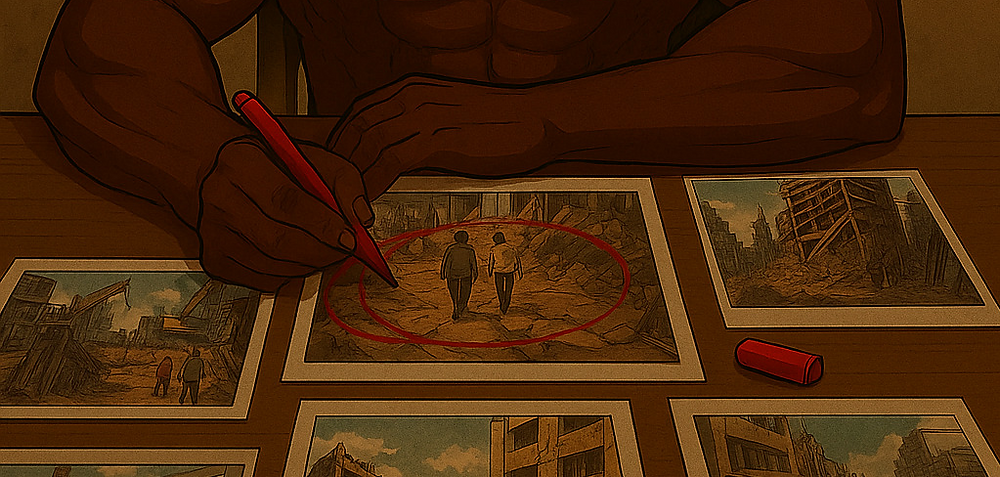
# TOKYO MAGNITUDE 8.0: WHEN DISASTER MEANS SYSTEMATIC RESILIENCE — Level V: Peak Mastery
—
**Before you read another word, answer these questions honestly:**
How does your current physical preparation serve family protection versus personal achievement?
What systematic dependencies in your life would become致命 vulnerabilities during infrastructure collapse?
When systems fail, do you have a plan—or just hope?
What would resilience look like if it required strategic thinking under pressure, not just physical capability?
Five years from now, when you look back at this moment, will you have built authentic preparedness or comfortable fantasy?
—
What up world, Xavier Savage here from xperformancelab.com.
While anime fans debate fantasy adventures and supernatural power fantasies like *Death Note*’s psychological manipulation games, *Tokyo Magnitude 8.0* delivers uncompromising examination of disaster response and human survival psychology through storytelling that redefines crisis anime.
This isn’t just earthquake disaster—this is psychological architecture about family bonds, individual resilience, and the methodical approach to surviving catastrophic system collapse.
**Your body is your first kingdom.** Your family is your first responsibility. Mirai starts as a selfish teenager complaining about a trip to the robot museum. By the end, she’s carrying the weight of survival for people she loves. That’s what pressure does—it reveals who you actually are.
—
## THE XPL ENERGY TIER FRAMEWORK
| Level | Focus | Icon | Client State |
|——-|——–|——|————–|
| **Level I: Awareness** | Exposure | 🪞 | “I didn’t know what I didn’t know” |
| **Level II: Activation** | Questioning | ⚡ | “Maybe what I’ve been doing isn’t working” |
| **Level III: Execution** | Deployment | 🛠️ | “I execute regardless of how I feel” |
| **Level IV: Elite Mode** | Mastery | 🔥 | “How can I extract 10% more from this system?” |
| **Level V: Peak Mastery** | Integration | 🧠 | “Discipline is my default setting” |
**This post is for Level V readers.** If you’re still treating disaster preparedness like fantasy entertainment, this analysis will confront you.
—
## XPL PERSPECTIVE FRAMEWORK
| Intensity | Icon | Purpose | When To Use |
|———–|——|———|————-|
| 🔍 | Surface Scan | Quick observations | Intro/transitions |
| ⚡ | Deep Cut | Tactical analysis | Main sections |
| 🔥 | Full Assault | Controversial takes | Hot takes/criticism |
| 💀 | Nuclear Option | Destroying sacred cows | Obliterating popular opinions |
—
## TOKYO MAGNITUDE 8.0 RATING BREAKDOWN
### Story/Plot Development: Level V: Peak Mastery (🧠🧠🧠🧠🧠/5)
Systematic exploration of disaster survival through realistic human psychology and strategic resource management. Each episode examines deeper questions about family responsibility, individual resilience, and crisis response. The earthquake serves authentic character development, not disaster spectacle.
**What the series understands:**
– Crisis doesn’t create character—it *reveals* it
– Infrastructure collapse exposes every dependency you never thought about
– Survival requires strategy, not just strength
– The people you love become both your motivation and your vulnerability
The earthquake happens in episode one. The rest of the series is about what comes after—the walking, the waiting, the wondering, the slow accumulation of trauma and triumph that defines real survival.
**XPL Performance Physics: Law 3—Systems Beat Intensity Over Time.** Mirai doesn’t survive through dramatic heroics. She survives through consistent decision-making, resource management, and refusing to quit when quitting would be easier.
**Savage Command:** “Crisis doesn’t build character. It *reveals* it. Build yours before it’s tested.”
—
### Character Development: Level V: Peak Mastery (🧠🧠🧠🧠🧠/5)
Mirai’s evolution from selfish teenager to protective sister demonstrates growth through crisis pressure and family responsibility.
**Her arc:**
**Phase 1—The Brat:** Complaining about a museum trip, annoyed by her little brother, counting down until she can go home. She’s not evil—she’s *ordinary*.
**Phase 2—The Rupture:** The earthquake hits. Everything she counted on—safety, structure, adult protection—vanishes in seconds.
**Phase 3—The Wanderer:** Lost in the city, searching for family, discovering that no one’s coming to save them. She has to become the person she needed.
**Phase 4—The Protector:** Yuuki’s safety becomes her mission. Not because she’s heroic—because there’s no one else.
**Phase 5—The Carrier:** The weight she carries isn’t just physical. It’s psychological. Every choice, every loss, every moment of fear—she carries it all.
**Yuuki’s role:**
He’s not just comic relief. He’s *hope made visible*—the reason Mirai keeps moving, the light in the darkness, the innocent who must be protected at any cost.
**Mari’s function:**
The stranger who becomes family. She represents what community looks like when systems fail—people choosing to help because help is needed, not because it’s convenient.
**XPL Performance Physics: Law 7—Accountability Structures Determine Execution Rates.** Mirai doesn’t survive for herself. She survives because Yuuki needs her. Accountability to another person is the strongest motivator there is.
**Identity Mirror:** How does your current physical preparation serve family protection versus personal achievement?
—
### Animation/Fight Quality: Level IV: Elite Mode (🔥🔥🔥🔥/5)
Realistic animation that serves psychological storytelling over disaster spectacle. Visual destruction emphasizes human impact and infrastructure collapse. Animation prioritizes emotional authenticity over action entertainment.
**What the visuals communicate:**
– The city isn’t just damaged—it’s *silent*
– Every familiar landmark becomes obstacle or shelter
– The destruction isn’t beautiful—it’s *terrifying*
– People aren’t heroes or villains—they’re just trying to survive
**Training translation:** This is what real crisis looks like. Not dramatic—*overwhelming*.
**The Chain doesn’t negotiate.** Neither should your understanding of what survival actually requires.
—
### Overall Impact/Rewatchability: Level V: Peak Mastery (🧠🧠🧠🧠🧠/5)
Defines excellence in realistic disaster storytelling. Every rewatch reveals deeper layers of survival psychology and crisis analysis. Influences how you evaluate preparedness, family responsibility, and authentic human resilience under pressure.
**What rewatching reveals:**
– Early choices that later survival depends on
– Mari’s true nature, visible only in retrospect
– The weight Mirai carries, heavier each time
– That the ending was always the only possible truth
**Savage Command:** “Study what rewards rewatch. Preparedness compounds; spectacle fades.”
—
## 🔥 FULL ASSAULT: AUTHENTIC CRISIS VS. DISASTER FANTASY
**💀 Nuclear Option:**
*Tokyo Magnitude 8.0* exposes the psychological reality of disaster that most anime and media completely avoids examining.
**What the series understands about crisis:**
**Principle 1—Infrastructure collapse exposes every dependency.**
Phones don’t work. Trains don’t run. Water doesn’t flow. Suddenly, everything you took for granted becomes a life-or-death variable. Most people have no idea how dependent they are until dependence becomes impossible.
**Principle 2—Survival requires strategy, not just strength.**
Mirai doesn’t win through physical power. She wins through resource management, route planning, priority setting, and refusing to panic. Strategic thinking beats heroic action every time.
**Principle 3—Psychological trauma is inevitable.**
The series doesn’t pretend characters walk away unscathed. Mirai carries every moment, every loss, every decision. Real survival leaves marks that don’t show on x-rays.
**Principle 4—Family creates both strength and vulnerability.**
Yuuki gives Mirai reason to keep moving. He also slows her down, requires resources, creates impossible choices. Love is both advantage and liability.
**Principle 5—Community emerges when systems fail.**
Mari isn’t obligated to help. She chooses to. The series shows that crisis doesn’t just reveal selfishness—it also reveals the capacity for connection when connection is all anyone has.
**Compare this to typical disaster narratives:**
– **Sword Art Online:** Virtual crisis without real consequence
– **Attack on Titan:** Fantasy monsters, not realistic collapse
– **Hollywood disaster films:** Spectacular destruction, shallow psychology
*Tokyo Magnitude 8.0* delivers what they only simulate: authentic examination of what happens when everything stops working.
**The Mirror:** How does your current physical preparation serve family protection versus personal achievement?
**The Chain:** Your systematic dependencies create strategic vulnerabilities. Break the pattern of unexamined reliance.
—
## ⚡ DEEP CUT: FAMILY RESPONSIBILITY AS SURVIVAL FRAMEWORK
Mirai’s transformation demonstrates how crisis reveals authentic character and creates strategic responsibility that transcends personal comfort.
**The psychology:**
**Pre-crisis Mirai:** Self-centered, annoyed by family, focused on personal desires. She’s not bad—she’s *unawakened*.
**Crisis Mirai:** Forced to become the protector. Not because she’s ready—because there’s no alternative.
**The weight:** Every decision affects Yuuki’s survival. Every risk assessment includes his safety. Her strategic thinking evolves because it must.
**XPL Application:** Real strength development serves family protection, not just personal capability. Training becomes responsibility preparation.
**The lesson:** You don’t know what you’re capable of until someone needs you to be capable. The question is whether you’ll be ready when that moment comes.
—
## ⚡ DEEP CUT: INFRASTRUCTURE COLLAPSE PSYCHOLOGY
The series demonstrates how systematic breakdown affects individual psychology and strategic decision-making.
**What collapse reveals:**
– **Resource scarcity** forces choices you’d never make otherwise
– **Communication failure** creates isolation that compounds fear
– **Authority vacuum** requires self-reliance most people never develop
– **Time compression** makes every decision feel permanent
**The adaptation curve:**
**Phase 1—Denial:** This can’t be happening. Someone will come. Things will return to normal.
**Phase 2—Desperation:** No one’s coming. We have to move. Now.
**Phase 3—Strategy:** Resources are limited. Prioritize. Ration. Plan.
**Phase 4—Acceptance:** This is life now. Adapt or don’t survive.
**XPL Application:** Modern dependence on systems creates strategic vulnerability. Real resilience requires reducing that dependence while building capability that functions under constraint.
**Savage Command:** “What systems are you dependent on that you couldn’t live without? Those are your vulnerabilities.”
—
## 🔍 SURFACE SCAN: RESOURCE MANAGEMENT UNDER PRESSURE
The series examines how scarcity affects decision-making and psychological stability.
**What the characters learn:**
– Water is worth more than gold
– Food must be rationed, not consumed
– Energy must be conserved for movement
– Information is survival—and it’s almost always wrong
**The tragedy:** They learn these lessons through necessity, not preparation. The series asks: why wait until crisis to develop capability?
**XPL Application:** Effective development requires understanding resource management that serves long-term capability building, not immediate comfort.
—
## 🔥 FULL ASSAULT: REALISTIC PREPAREDNESS VS. FANTASY SURVIVALISM
**💀 Nuclear Option:**
*Tokyo Magnitude 8.0* forces examination of authentic preparedness that most disaster media completely avoids.
**What real preparedness requires:**
– **Psychological conditioning** for trauma you can’t imagine
– **Family cooperation** because solo survival is almost impossible
– **Resource management** skills most people never practice
– **Strategic thinking** under pressure that can’t be simulated
**What fantasy survivalism sells:**
– Individual heroism that ignores human psychology
– Technological solutions that fail when systems fail
– Comfortable distance from actual crisis reality
– The illusion that preparation is optional until needed
**The series’ message:** This could happen to you. To your family. Today. Are you ready?
**Savage Command:** “Prepare for authentic crisis through systematic training. Build family resilience, not individual fantasy.”
—
## THE MASTERY SYMBOLS
**🔗 The Chain:** Your dependencies connect to your vulnerabilities. Unexamined reliance becomes crisis liability.
**🪞 The Mirror:** When you watch Mirai carry Yuuki through the ruined city, do you see any reflection of your own capacity? Who would you carry? Who would carry you?
**👑 The Throne:** How will you build authentic preparedness that serves family protection instead of just personal achievement?
—
## FINAL STRATEGIC ASSESSMENT
*Tokyo Magnitude 8.0* asks questions most narratives avoid:
**What if everything stopped working today?**
**What if no one was coming to help?**
**What if survival required strategy, not just strength?**
**What if the people you love became both your motivation and your vulnerability?**
**What if you’re not as prepared as you think?**
**Savage Command:** “Crisis doesn’t build character. It *reveals* it. Build yours before it’s tested.”
**Savage Command:** “What systems are you dependent on that you couldn’t live without? Those are your vulnerabilities.”
**Savage Command:** “Prepare for authentic crisis through systematic training. Build family resilience, not individual fantasy.”
—
## IDENTITY MIRROR QUESTIONS
How does your current physical preparation serve family protection versus personal achievement?
What systematic dependencies in your life would become fatal vulnerabilities during infrastructure collapse?
When systems fail, do you have a plan—or just hope?
What would resilience look like if it required strategic thinking under pressure, not just physical capability?
Who would you carry? Who would carry you?
What are you dependent on that you couldn’t live without?
—
## ACTION TRIGGER QUESTIONS
What’s one dependency you’ll examine and reduce this week?
Who in your family needs you to be more prepared?
What resource management skill will you practice today?
When will you have the conversation about crisis planning with the people who matter?
—
## RESOURCE DROP
Follow my daily insights on Instagram **@xperformancelab** and YouTube **@xperformancelab**.
For those in Houston demanding the highest level of training, in-person sessions are available at **VFit Gym, 5535 Richmond Ave, Houston, TX**.
Elite online training systems at **xperformancelab.com**.
Take the Archetype Quiz to discover your specific body type protocol: **xperformancelab.com/quiz**
—
## 📊 SEO OPTIMIZATION DATA
**Meta Description (155 chars max):**
Xavier Savage analyzes Tokyo Magnitude 8.0 as a masterclass in disaster psychology, family resilience, and the strategic thinking real survival requires.
**URL Slug:**
tokyo-magnitude-8-0-disaster-resilience-analysis
**Primary Keyword:**
Tokyo Magnitude 8.0 analysis
**Secondary Keywords:**
disaster anime review, survival psychology anime, family resilience, Xavier Savage anime review, crisis preparedness
**Target Search Intent:**
Informational
—
## 🖼️ IMAGE OPTIMIZATION GUIDE
**Featured Image:**
– **File Name:** xavier-savage-tokyo-magnitude-xpl-featured.jpg
– **Alt Text:** “Xavier Savage analyzing Tokyo Magnitude 8.0 disaster psychology at XPerformanceLab”
– **Dimensions:** 1200x630px minimum
—
## 🎨 MIDJOURNEY VISUAL PROMPTS
**Prompt 1: Tokyo Aftermath**
/imagine wide shot of devastated Tokyo cityscape after earthquake, crumbling buildings, cracked streets, dust in air, lone figures walking through ruins, muted color palette, photorealistic style, emotional weight, cinematic composition –ar 16:9 –style raw –v 6
—
## 🔗 INTERNAL LINKING STRATEGY
1. **Anchor Text:** “nervous system mastery principles”
– **Target:** https://www.xperformancelab.com/post/master-your-nervous-system
– **Purpose:** Connect disaster psychology to stress conditioning
2. **Anchor Text:** “family leadership and protection training”
– **Target:** https://www.xperformancelab.com/post/family-resilience-training
– **Purpose:** Support family preparedness theme
3. **Anchor Text:** “systematic independence training”
– **Target:** https://www.xperformancelab.com/post/systematic-preparedness
– **Purpose:** Address infrastructure dependency theme
—
**Inertia Over Inspiration. Always.**
**Execute.**
Scroll to unlock levels
Level V Achieved
Now live it.
Unlocked
Leave a Reply