The check list for mastering your nervous system
Ready to transform in Houston? Book your identity engineering consultation. In-person sessions available. Online coaching open nationwide.
Master Your Nervous System: The Tactical Guide to Elite Performance By Xavier Savage aka xperformancelab Your nervous system controls everything.Thoughts. Focus. Fatigue. Recovery.It ’s the software behind every result you create. Most people run this system on autopilot.They crash into burnout, live stressed, and stay reactive.Not you. You’re here to take the controls. This isn’t breathwork hype or mindfulness fluff.This is about dominating your autonomic nervous system—The fight-or-flight system (sympathetic).The rest-and-digest system (parasympathetic). If you want elite performance, you have to master both. Why Your Nervous System Is the Key to Everything Your nervous system is trainable.That’s the truth most people miss. Heart rate. Core temperature. Blood pressure. Recovery speed.You can influence it all. Monks in Tibet dried wet sheets in the cold with body heat.Elite athletes today use HRV monitors to gauge readiness.Same principle. Different tools. What matters is this:You can stretch your body’s ability to handle chaoswithout breaking. Your focus, mood, recovery, and stress toleranceall depend on one thing:The regulation of your internal state. When the sympathetic system dominates, you’re wired.High alert. High cortisol. Burnout coming. When the parasympathetic system is weak, you stay drained.You can’t recharge. You can’t recover. This isn’t optional. It’s foundational. Ask yourself:Are you operating on a narrow road, one lane,constantly swerving and crashing?Or a wide freeway—smooth, stable, adaptable? The Three Tactical Pillars To master your nervous system, you need three weapons: Investigate : Know what’s going on under the hood. Interpret : Read the signals correctly. Intervene : Shift your system on command. Let’s break each one down. PILLAR 1: INVESTIGATE — Know Your State You can’t fix what you don’t track. Data is the doorway to domination. Three key metrics matter: HRV (Heart Rate Variability) Respiratory Rate CO2 Tolerance HRV tells you how well your system switches between calm and alert.High = adaptable.Low = stressed, rigid. Respiratory rate tells you if you’re breathing like a machine gun or a sniper.12-14 breaths per minute is ideal.16+? You’re likely over-breathing. CO2 tolerance shows how long you can exhale and hold before gasping.Under 20 seconds? You’re hypersensitive to stress. Track it. Use the Polar H10 strap with the Optimal HRV app. Track HRV every morning before food or caffeine. Watch your 30-day trend , not daily fluctuations. Breathe test daily . CO2 tolerance test weekly . Are you running hot and stressed every day?Or are you in control of your internal climate? PILLAR 2: INTERPRET — Decode the Signals Data means nothing without context. Your HRV isn’t “bad” or “good.”It’s relative. To you . A daily dip is normal.A 5-day crash is a signal. Same with breathing.High rate? Check the cause:Stuffy nose? Fine.Chronic stress? Fix it. CO2 tolerance below 20 seconds?That’s not just bad breathing—it’s a red flag for stress sensitivity. Here’s what to look for: Trend drops over time ? You’re overreaching. Feel good but score low ? Something’s brewing. Feel awful and score low ? You’re crashing. Match your data with lifestyle.Bad sleep. Overtraining. Under-eating.All show up in the nervous system. You can’t lie to the mirror, and you can’t lie to your metrics. Ask yourself:What’s destabilizing your system right now?Are you avoiding the truth? PILLAR 3: INTERVENE — Shift Your State This is where you take control.Two categories: 1. ACUTE INTERVENTIONS Use these when stress spikes. Modified Valsalva Maneuver Inhale. Hold tight for 10 seconds with abdominal pressure.Exhale slow.Immediate vagal activation. Instant calm. Cold Water Exposure 30–50°F, 2–5 minutes.HR spikes. Then drops.Your body gets stronger under shock. Eye Resets Eye circles or tracing shapes.30 seconds. Reset your focus. Reset your system. Nasal Breathing Only 5 minutes, all nose.Drop your respiratory rate.Shift into parasympathetic mode. Ask:Are you prepared to shift yourself instantly—on command? 2. CHRONIC INTERVENTIONS These build resilience.They harden your system over time. Strength Training & Conditioning Smart programming.3–4x a week.Mix low-intensity, hypertrophy, and short HIIT. Resonant Breathing Find your rhythm—usually 4–6 breaths/min.20 minutes morning and night.Boost HRV. Strengthen the vagus nerve. Gear 1 Walking 30–45 minutes.Nasal-only. 2s inhale, 2s exhale.No distractions. Walk. Breathe. Focus. Sensory Decompression 10–15 minutes.No phone. No screen. No input.Sit. Breathe. Reset. Don’t expect overnight change.This is nervous system reprogramming.It takes 4–6 weeks.But it sticks. Ask:Are you willing to commit to the process? Your Tactical Assignment You now have the map.Three weapons: Measure Decode Shift Here’s what to do next: Step 1 Track your HRV daily.Use the same conditions. 30 days. No exceptions. Step 2 Pick one acute intervention —Valsalva, Cold, Eye Reset, or Nasal breathing.Use it today under pressure. Step 3 Pick one chronic intervention —Resonant breathing, Gear 1 walking, or strength training.Stick with it daily for 30 days. Step 4 Log everything. Notice the changes. Optional but powerful :Share your results. Show your data.Lead with clarity. Final Reflection You can’t outsource this.You either command your nervous system,or it commands you. The soft get swallowed by stress.The reactive burn out fast.The sovereign regulate.They adapt.They lead. Which one are you? You’ve got the tools.Now move.Dominate.Control your state.And make your nervous system your weapon.
Scroll to unlock levels
Level V Achieved
Now live it.
Unlocked

Xavier Savage
Founder, XPERFORMANCELAB
I do not shape muscle. I shape structure. The person you become is the person you construct.
Related Insights
How runners use carbs to fuel themselves
Runners use carbs to fuel their body during tough training days. How runners use carbs as fuel Glucose, is what carbs turn into in the...
What is the ketogenic diet?
The Complete Guide to Ketogenic Diet: Body Type-Specific Implementation for Maximum Results The ketogenic diet isn't just another...
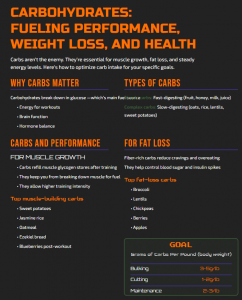
Fuel Your Fitness in Houston: Carbohydrate Guide by Xavier Savage of xperformancelab
As Xavier Savage , owner and trainer at xperformancelab.com , I train out of V-Fit Gym in the Galleria area of Houston, TX . When it comes...