Are Microplastics Harmful? Should You Worry About Your Tupperware?
Microplastics are in air, water and food, and researchers have found them in human lungs, blood vessels and brain tissue. Whether they harm health at everyday levels is still unclear. The FDA says current evidence does not show that levels in food pose a risk. Cutting easy sources, like heating food in plastic, is reasonable.
What are microplastics?
They are tiny plastic pieces under 5 millimeters, from broken-down packaging, synthetic clothing, tires, cosmetics and dust. Nanoplastics are even smaller. You cannot avoid them completely. The goal is to reduce exposure where it is easy.
Where are microplastics found in the body?
- Lung tissue from living patients (Jenner et al., 2022)
- Brain tissue from people who had died (Nihart et al., 2025)
- Artery plaque in people having surgery on neck arteries. Those with plastic particles in their plaque had a higher risk of heart attack, stroke or death over about three years (Marfella et al., 2024)
These findings are worrying, but they show links, not proof that plastic caused the harm. Measuring tiny plastic in tissue is hard, and methods are still being debated.
What does the FDA say?
The FDA states that current scientific evidence does not demonstrate that the levels of microplastics or nanoplastics detected in foods pose a risk to human health, and that there is not enough evidence to show they migrate from food packaging into food. Research is ongoing.
What about the credit card a week claim?
You may have heard that people eat a credit card’s worth of plastic every week. That number came from a 2019 estimate. A later study estimated adults take in a median of about 583 nanograms of microplastic a day (Mohamed Nor et al., 2021), which is roughly a million times less than a 5 gram credit card each week. I would not quote the credit card figure.
How can I reduce microplastic exposure?
These are low-effort changes I use:
- Do not microwave food in plastic. Use glass or ceramic.
- Store hot food in glass or stainless steel, not plastic.
- Replace scratched or worn plastic containers.
- Drink filtered tap water instead of bottled water when you can.
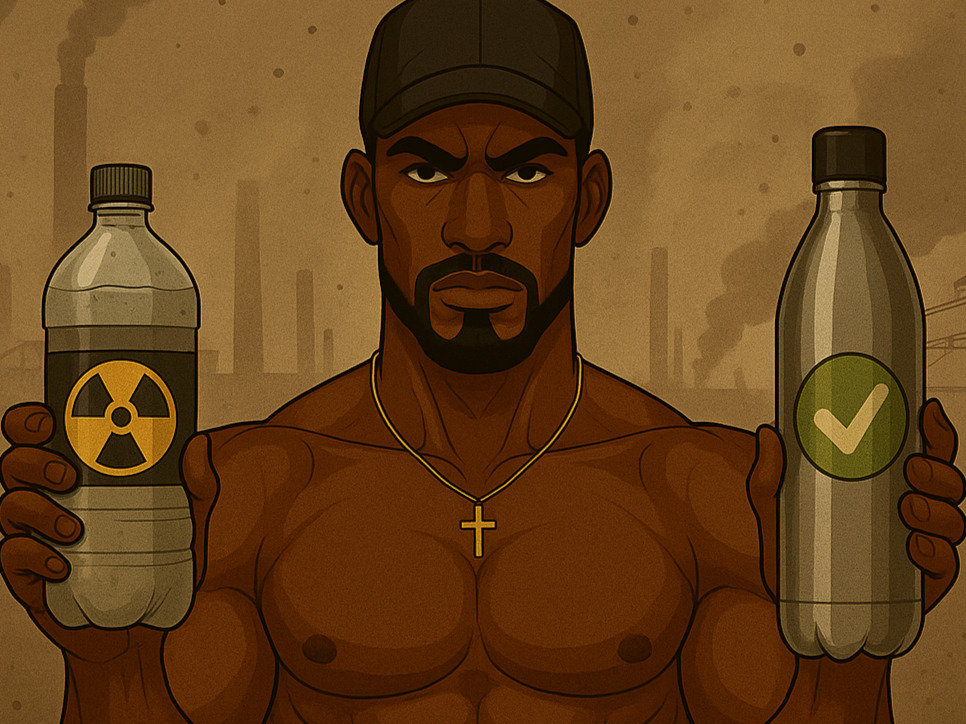
- Use a stainless or glass bottle for water and shakes.
- Eat more whole foods and fewer packaged ones.
- Vacuum and dust regularly, since household dust carries microplastics.
Should I throw out all my Tupperware?
No. Cold storage in plastic is the lowest risk use. Swap containers you heat, and replace them as they wear out. Focus first on the habits that matter more for your health: sleep, training, protein and less ultra-processed food.
For more, read why is it so hard to lose weight. If you want a plan built on simple habits, take the XPL quiz.
Scroll to unlock levels
Level V Achieved
Now live it.
Unlocked
Frequently asked questions
Is bottled water full of microplastics?
Bottled water often contains plastic particles. Filtered tap water is a good option.
Are glass protein shakers better?
Glass or stainless steel avoids plastic contact, especially with hot liquids.
Can my body get rid of microplastics?
Some are passed out, but how much stays in tissue is still being studied. Written by Zavier King, personal trainer in Houston and online coach at XPL. ISSA Certified Personal Trainer and NASM Nutrition Coach. This article is general education, not medical advice.

Zavier King
Founder, XPERFORMANCELAB
I do not shape muscle. I shape structure. The person you become is the person you construct.
Related Insights
The Best Quad Exercises for Every Level and Body Type
What are the best quad exercises? Front squats, high bar squats, split squats, leg press and leg extensions. Here is a plan by level and goal.
4 Weight Loss Mistakes That Keep You Stuck (and What to Do Instead)
What weight loss mistakes keep you stuck? Detox diets, cardio without lifting, starving yourself and poor recovery. Here is what to do instead of each.
Good Gut Bacteria vs Bad Gut Bacteria: Can Your Gut Affect Weight Loss?
Can gut bacteria affect weight loss? Your gut microbes play a role in digestion and appetite. Fiber and fermented foods help more than most supplements.