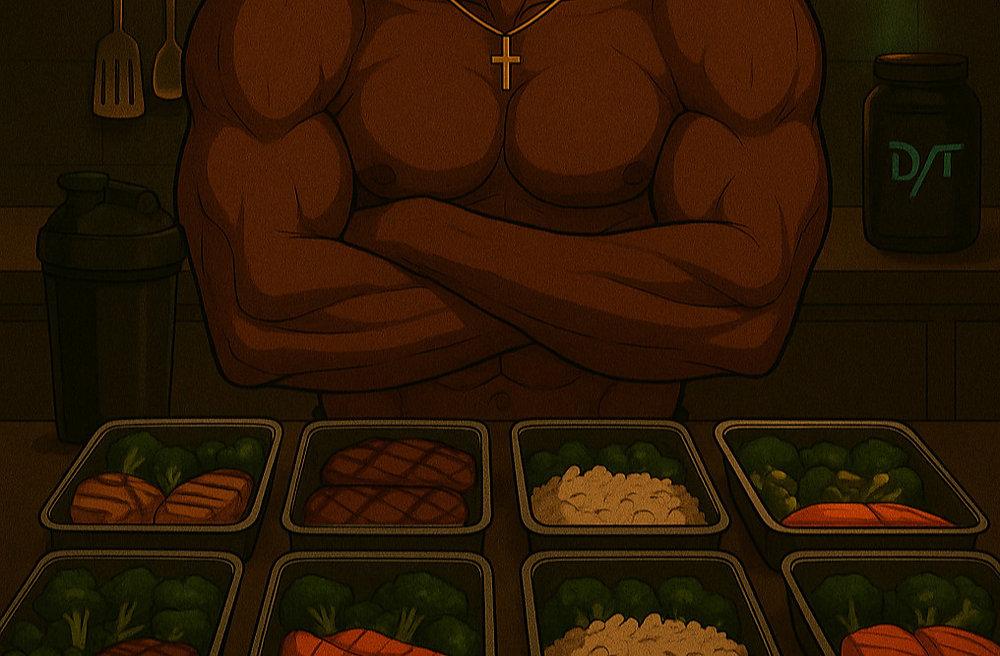
How to Fuel Your Body for Training: A No-Nonsense Nutrition Guide
Eat for a specific goal, build each meal around protein, carbs, healthy fats and vegetables, spread protein across the day, and plan for the meals that will not be perfect. Most people do not need a trendy diet. They need a simple system they can repeat on busy weeks. Here is the one I use with clients.
Why does most nutrition advice fail?
You have probably tried something already. Low carb, no sugar, a meal plan from an influencer. Maybe it worked for a while. Then life got busy, stress showed up, and you were back to fast food and skipped meals.
That is not a willpower problem. Most plans fail because they are not built for the person following them. They ignore your schedule, your training and the mental side of eating. The problems I hear about most are:
- Too much conflicting information
- Starting strong, then falling off when life gets hectic
- Energy crashes in the afternoon or during workouts
- Guilt every time a meal goes off plan
The answer is a plan that works with your life instead of against it.
What is the CoreSelf Evolution approach to eating?
This is the framework I use with clients. It has three parts:
- Clarity. Know what your body needs for your specific goal, whether that is strength, endurance, fat loss or steady energy.
- Balance. No food is banned. Carbs are not the enemy, and dessert has a place in a structured plan.
- Sustainability. Build habits that survive bad weeks. Consistency beats perfection every time.
You do not have to weigh every gram of food to make this work. You do need a plan.
How do you set a nutrition goal?
Start with why you are eating. Training for a race, building muscle and losing fat all call for different numbers.
As a rough guide:
- Building muscle: a small calorie surplus, often around 250 to 500 calories above maintenance.
- Losing fat: a moderate deficit, often around 300 to 500 calories below maintenance.
- Recomposition or performance: close to maintenance, with high protein.
Your body type and size change those numbers. That is why I built the XPL quiz, which places you in a weight class and phase.
Action step: write down one specific goal. “Add 20 pounds to my deadlift in 8 weeks” or “No more 3 p.m. crashes” both work. Then estimate your maintenance calories with a reputable calculator and adjust for your goal.
How much protein do you need?
For people who lift, the International Society of Sports Nutrition recommends about 1.4 to 2.0 grams of protein per kilogram of body weight per day, which is roughly 0.6 to 0.9 grams per pound (Jager et al., 2017). The same position stand says to spread it out across the day.
In practice, that means a palm-sized or larger portion of protein at every meal. If you want to run your own numbers, read how to figure out your protein needs.
How should you build your plate?
I use a simple plate model:
- Protein, about a third of the plate: chicken, fish, eggs, lean beef, tofu, Greek yogurt.
- Carbs, about a third: oats, sweet potatoes, rice, quinoa, whole-grain bread, fruit.
- Healthy fats, a smaller portion: avocado, nuts, seeds, olive oil.
- Vegetables, fill the rest: as many non-starchy vegetables as you can fit.
If you do not want to measure, use your hand:
- Protein: one to two palms
- Vegetables: one to two fists
- Carbs: one to two cupped hands
- Fats: one to two thumbs
Action step: plan one meal today this way. Grilled salmon, a serving of rice, a quarter of an avocado and a big pile of asparagus is a good example. For the macro math behind it, see what percentage of fats, carbs and protein should I eat.
When should you eat around workouts?
Timing matters less than most people think, but it still helps.
- Before training: a meal with carbs and protein 2 to 3 hours out, like oatmeal with Greek yogurt or rice with chicken. If you are short on time, a banana and a protein shake an hour before works.
- After training: get a protein-rich meal in within a couple of hours. The old idea of a strict 30-minute window is overstated. Research suggests the window is wider than once believed, and total daily intake matters more (Aragon and Schoenfeld, 2013).
- Through the day: 3 to 4 meals spaced 3 to 4 hours apart. The ISSN suggests 20 to 40 grams of protein every 3 to 4 hours for people who train (Kerksick et al., 2017).
If you are sluggish in afternoon workouts, try moving more carbs to lunch.
How do you know if your plan is working?
Your body gives you feedback. Constant hunger, low energy or stalled lifts usually mean you are under-eating, under-recovering or missing something.
Action step: keep a simple food journal for 3 days. Write what you ate, when, and how you felt. People who track what they eat tend to have more success managing their weight (Burke et al., 2011). Look for patterns and make small changes.
How do you stay consistent when life gets messy?
Plan for it. I recommend that 10 to 20 percent of your weekly meals be flexible. That might be pizza night with your family or dinner out with friends. Planned flexibility makes binges less likely and keeps the plan livable. I break down how to handle those meals in that one free meal hits harder than you think.
The other common problems and how I fix them:
- Too busy to cook: batch-cook proteins, carbs and chopped vegetables twice a week, and keep protein bars or shakes for emergencies.
- Cravings: they often come from under-eating or being too strict. Eat enough, include carbs and fats, and plan small treats.
- No results: you may be eating more or less than you think. Track honestly for a week before changing anything.
What does this look like for real clients?
Jenna is a busy mom who came to me drained and stuck. She skipped breakfast, grabbed fast food for lunch and crashed hard every afternoon around 3 p.m. I had her build balanced plates (eggs, oats and berries in the morning, grilled chicken, quinoa and vegetables at lunch), meal prep twice a week and keep one planned free meal, usually pizza with her kids. Within 4 weeks her energy held up through the day, she was down 5 pounds, and she started enjoying her workouts again.
Mike is a strength athlete who thought he was eating enough. His carbs were too low, so he was flat during heavy lifts and slow to recover. I moved more carbohydrate into his pre-workout meals, using foods like sweet potatoes, and tightened up his protein after training. Within 6 weeks he felt stronger and hit a new personal record on his deadlift.
What should you do next?
- Write down one clear goal.
- Plan one balanced plate for tomorrow.
- Track food and energy for 3 days.
- Make one small change based on what you see.
Start small and start now. If you want me to build the plan with you, take the XPL quiz first, then check my pricing or contact me. For carb-specific guidance, read my carbohydrate guide.
Scroll to unlock levels
Level V Achieved
Now live it.
Unlocked
Frequently asked questions
Do I need to count calories to eat well for training?
Not always. Hand portions and a balanced plate work for many people. Tracking for a week or two helps when progress stalls.
What should I eat before a morning workout?
If you train within an hour of waking, something light with carbs and some protein, like a banana and a shake, usually works. Bigger meals need 2 to 3 hours.
Is the 30-minute post-workout window real?
It is less strict than people think. Getting enough protein across the day matters most, with a protein meal within a couple of hours of training.
How many free meals can I have?
I suggest about 10 to 20 percent of your weekly meals, as long as the rest of the week is consistent.
Do I need supplements?
No. A protein shake can help you hit your target, but whole food should do most of the work. Names and identifying details changed for client privacy. These results are not typical for everyone. How much you lose and how fast depends on your starting point, health, schedule and consistency. Written by Zavier King, personal trainer in Houston and online coach at XPL. ISSA Certified Personal Trainer and NASM Nutrition Coach. This article is general education, not medical advice. Talk to your doctor before major diet changes if you have a health condition.

Zavier King
Founder, XPERFORMANCELAB
I do not shape muscle. I shape structure. The person you become is the person you construct.
Related Insights
Small Is the New Big: and 193 Other Riffs, Rants, and Remarkable Business Ideas by Seth Godin
Why Should you get Small is the New Big Small is the new big , is the perfect book for those who need inspiration when writing. Whether...
The Number One Reason Your Arms Are Small (and How to Fix It)
Why are your arms small? Most guys curl and skip triceps, the bigger part of the arm. Train triceps more, use full range and progress your weights.
How to Make BBQ Healthier: Grilling Tips That Fit Your Goals
How do you make a BBQ healthier? Grill lean protein, load up on vegetables and grilled fruit, go easy on buns and sides, and avoid charring meat.